


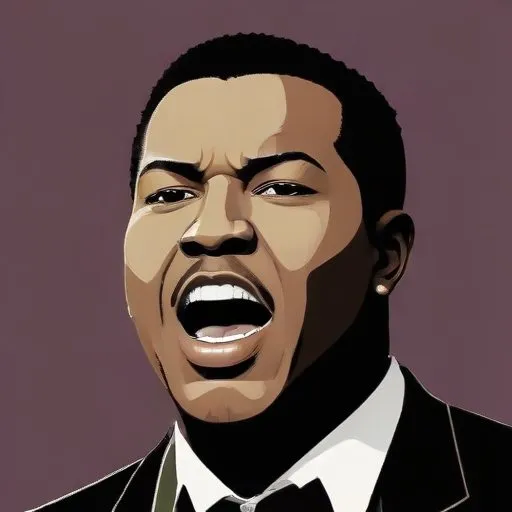
A soulful baritone singer known for his smooth, velvety voice and hit songs like "Unchained Melody" and "After the Lights Go Down Low". He was a popular vocalist in the 1940s and 1950s, performing with top jazz musicians and orchestras.
Al Hibbler, the American baritone vocalist, is renowned for his smooth, velvety voice that effortlessly bridged the gap between rhythm and blues and traditional pop music. With a career spanning over four decades, Hibbler's soulful renditions of popular songs left an indelible mark on the music world.
Born on August 16, 1915, in Tyro, Mississippi, Hibbler was blind from birth. Despite this challenge, he was drawn to music and began singing in his school choir at the Arkansas School for the Blind, where he attended at the age of 12. Hibbler's early life was a testament to his determination and passion for music, which eventually led him to audition for Duke Ellington's orchestra in 1935, although he was initially rejected.
Hibbler's big break came when he won an amateur talent contest in Memphis, Tennessee, which led to him joining Dub Jenkins and his Playmates. His talent soon caught the attention of Jay McShann, and in 1942, Hibbler became a part of McShann's band. However, it was his association with Duke Ellington's orchestra in 1943 that catapulted him to fame. Hibbler's unique voice and style soon made him an integral part of Ellington's ensemble, replacing Herb Jeffries.
Hibbler's time with Ellington's orchestra was marked by several notable performances and recordings. His rendition of "Do Nothin' Till You Hear From Me" (1944) reached #6 on the Billboard pop chart and #1 for eight weeks on the Harlem Hit Parade. Other notable hits during this period included "I Ain't Got Nothin' But the Blues" and "I'm Just a Lucky So-and-So." Hibbler's distinctive style, although often described as mannered and full of idiosyncrasies, earned him critical acclaim and numerous awards, including the Esquire New Star Award (1947) and the Down Beat award for Best Band Vocalist (1949).
In 1951, Hibbler left Ellington's orchestra to pursue a solo career, which saw him release several successful albums and singles. His music continued to blend R&B and traditional pop, earning him a loyal fan base. Hibbler's influence can be seen in many modern-day artists who have drawn inspiration from his unique style.
Hibbler's music was not only a reflection of his talent but also his philosophy. He believed that music had the power to bring people together and transcend boundaries. Throughout his career, Hibbler remained committed to his art, never compromising on his unique style or values.
Al Hibbler's remarkable journey is a testament to the power of passion, perseverance, and dedication. His velvety voice and unique style continue to inspire generations of musicians and music lovers alike, cementing his place as a legendary figure in the world of music.
Born in 1899
A legendary jazz pianist, composer, and bandleader who revolutionized the genre with his unique style and iconic compositions, such as "Take the A Train" and "Mood Indigo".
Born in 1915
A renowned pianist and composer, he was Duke Ellington's right-hand man, creating iconic jazz standards like "Take the A Train" and "Lush Life".
Born in 1906
A renowned jazz musician, celebrated for his smooth, melodic sound and virtuosic improvisations on the alto saxophone and clarinet, particularly with Duke Ellington's Orchestra.
Born in 1911
A virtuosic trumpeter and bandleader, known for his smooth, melodic style and influential work with Duke Ellington and Benny Goodman. He was a key figure in the development of modern jazz trumpet playing.
Born in 1920
A legendary saxophonist who played with Duke Ellington's orchestra, famous for his epic 27-chorus solo on "Diminuendo and Crescendo in Blue" at the 1956 Newport Jazz Festival.
