


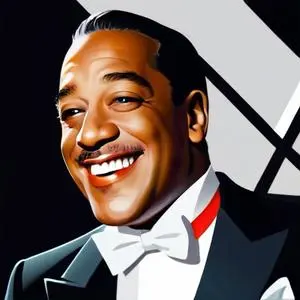
A legendary jazz pianist, composer, and bandleader who revolutionized the genre with his unique style and iconic compositions, such as "Take the A Train" and "Mood Indigo".
Duke Ellington is renowned as one of the most prolific and influential jazz musicians of all time, leading his eponymous orchestra for over five decades and generating an unparalleled body of work that transcends genre and time. With over 1,000 compositions to his credit, Ellington's music continues to captivate audiences with its unique blend of jazz, blues, and classical elements.
Born on April 29, 1899, in Washington, D.C., Ellington was exposed to music from an early age, with his mother, Daisy, playing piano and singing in the home. He began taking piano lessons at the age of seven and was soon drawing inspiration from the likes of ragtime and stride pianists James P. Johnson and Willie "The Lion" Smith.
In the mid-1920s, Ellington relocated to New York City, where he formed his first orchestra and began performing at the legendary Cotton Club in Harlem. The orchestra's unique sound, which blended African-American music traditions with European instrumentation, quickly gained popularity, and Ellington's name became synonymous with jazz.
In 1939, Ellington began a nearly thirty-year collaboration with composer, arranger, and pianist Billy Strayhorn, whom he affectionately referred to as his "writing and arranging companion." This partnership yielded some of Ellington's most iconic compositions, including the suites "Black, Brown, and Beige" and "Such Sweet Thunder."
Ellington's music defied categorization, incorporating elements of jazz, blues, swing, and classical music to create a unique sound that he dubbed "American Music." This philosophy, which emphasized the importance of artistic freedom and innovation, earned Ellington the respect and admiration of his peers and critics alike.
Duke Ellington's contributions to music were recognized with numerous awards and honors, including three Grammy Awards, the National Medal of Arts, and a Pulitzer Prize Special Citation in 1965. In 1969, Ellington was awarded the Presidential Medal of Freedom, the highest civilian honor in the United States.
Duke Ellington's impact extends far beyond the world of jazz, with his music and philosophy influencing artists, musicians, and creatives across genres. His commitment to innovation, collaboration, and artistic expression continues to inspire new generations, cementing Ellington's legacy as a true American original.
Born in 1904
A legendary jazz pianist and bandleader who led a iconic orchestra, blending swing and blues to create a unique sound that influenced generations of musicians. Known for his distinctive "less-is-more" style and hits like "April in Paris" and "One O'Clock Jump".
Born in 1904
A virtuosic pianist and singer-songwriter who blended jazz, blues, and stride piano to create infectious, energetic tunes that still delight audiences today. Known for his soulful, raspy vocals and iconic hits like "Ain't Misbehavin'" and "Honeysuckle Rose".
Born in 1901
A legendary jazz musician who revolutionized the genre with his unique trumpet playing and raspy vocals, leaving an indelible mark on American music.
Born in 1917
A virtuosic jazz vocalist known for her pure, expressive tone, impeccable phrasing, and incredible scat singing abilities. She won 13 Grammy Awards and recorded over 200 albums.
Born in 1915
Legendary jazz vocalist and actress known for her expressive, emotive singing style and iconic songs like "God Bless the Child" and "Strange Fruit".
Born in 1920
A pioneering jazz saxophonist and composer, known for his lightning-fast solos and innovative bebop style that revolutionized jazz music. 82
Born in 1917
A jazz legend who revolutionized piano playing and composition with unorthodox techniques and harmonies, creating a unique, improvisational style that continues to inspire generations of musicians.
Born in 1926
A legendary jazz musician who revolutionized the genre with his improvisational style and iconic albums like "Kind of Blue". He's synonymous with cool, jazzy sophistication.
