


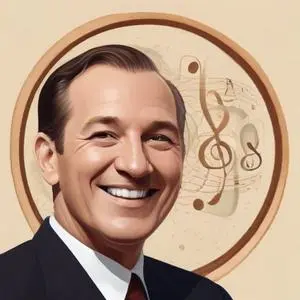
The 42nd Governor of New York was a prominent figure in American politics, known for being the first Catholic to run for President and a strong advocate for social justice and progressive reforms. He played a significant role in shaping the Democratic Party's platform during the 1920s and 1930s.
Alfred Emanuel Smith, affectionately known as the "Happy Warrior," was a prominent American politician who served four terms as the 42nd governor of New York and became the first Roman Catholic to be nominated for president of the United States by a major party in 1928. Smith's commitment to progressive reforms and his championing of urban issues earned him a reputation as a trailblazer in the Efficiency Movement, a nationwide effort to modernize and streamline government operations.
Born on December 30, 1873, to an Irish-American mother and an Italian-American father, Smith grew up on the Lower East Side of Manhattan, near the Brooklyn Bridge. His humble beginnings instilled in him a strong sense of community and a desire to improve the lives of ordinary citizens. Smith's entry into politics began in 1904, when he was elected to the New York State Assembly, where he served for 11 years, including a stint as Speaker of the Assembly in 1913.
Smith's dedication to public service led to his election as sheriff of New York County in 1916, a position he held until 1917. His leadership and vision eventually propelled him to the governor's office, where he served four non-consecutive terms from 1918 to 1926. As governor, Smith implemented a wide range of reforms, including the creation of a state highway system, the establishment of a state park system, and the expansion of social services for the poor and vulnerable.
In 1928, Smith's popularity and reputation as a progressive leader earned him the Democratic Party's presidential nomination. His campaign, however, was marked by controversy and religious bigotry, as many Protestants feared that his Catholic faith would influence his policy decisions. Despite these challenges, Smith remained committed to his vision for a more just and equitable society, campaigning on issues such as affordable housing, workers' rights, and the repeal of Prohibition.
Although Smith lost the presidential election to Herbert Hoover, his legacy as a champion of urban reform and social justice continues to inspire generations of politicians and policymakers. Smith's commitment to the Efficiency Movement helped to modernize government operations and improve the lives of millions of Americans. Today, he is remembered as a trailblazer in American politics, a leader who dared to challenge the status quo and push for a more just and equitable society.
"The greatest danger to our democracy is not the inauguration of a new President, but the perpetuation of ignorance."
"We must awaken the spirit of the people, and the people must be awakened to the realization of their own power."
Al Smith's life and career spanned a tumultuous period in American history, marked by rapid urbanization, social change, and political upheaval. His commitment to progressive reforms and social justice helped to shape the course of American politics, inspiring future generations of leaders to continue his work. Today, Smith's legacy serves as a testament to the power of vision, perseverance, and dedication to the greater good.
Born in 1882
Led the United States through the Great Depression and World War II, implementing a series of reforms known as the New Deal and helping to establish the country as a global superpower.
Born in 1858
A pioneering leader who championed progressive reforms, trust-busting, and conservation, earning a Nobel Peace Prize for mediating the Russo-Japanese War. He's also famous for his rugged outdoorsmanship and "big stick" diplomacy.
Born in 1782
The first president born after American independence, he's known for being a skilled politician and statesman who navigated the country through the Panic of 1837. He's also remembered for being the first president born a citizen of the United States.
Born in 1837
The first Democrat elected after the Civil War, he served two non-consecutive terms, earning him a unique spot in history, and is often remembered for his strong leadership and commitment to limited government.
Born in 1862
A prominent lawyer and politician who served as the 44th Secretary of State, known for his influential decisions and diplomatic efforts in shaping international relations. He played a key role in resolving the Mexican Revolution crisis.
Born in 1908
A wealthy businessman and politician who served as Vice President under Gerald Ford, known for his moderate Republican views and influential role in shaping US foreign policy.
94 Years Old
A lawyer-turned-politician who served as Governor of New York, known for his impassioned speeches and progressive policies, particularly his advocacy for social justice and education.
68 Years Old
The 56th Governor of New York, a prominent Democratic politician who championed progressive policies, including same-sex marriage and gun control, while facing controversy over his handling of the COVID-19 pandemic.
