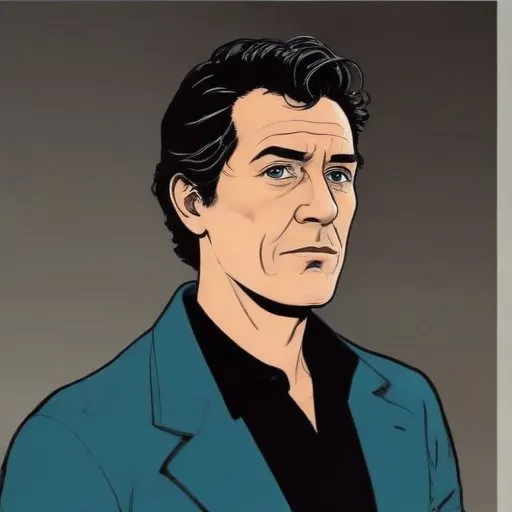
Alan Clarke: The Maverick Director of British Television
A Pioneer of Social Realism
Alan Clarke was a renowned English television and film director, producer, and writer, best known for his gritty and thought-provoking works that explored the lives of oppressed communities and the darker aspects of human nature. With a career spanning over three decades, Clarke established himself as a master of social realism, tackling complex issues that resonated with audiences and sparked controversy.
Early Life and Career
Born on October 28, 1935, in Wallasey, Wirral, England, Clarke's fascination with the arts began at an early age. He started his career in the entertainment industry as a stage manager at the Questors Theatre in Ealing, London, where he directed several plays between 1962 and 1966. This experience laid the foundation for his future work in television, where he would go on to make a lasting impact.
Television Work
Clarke's television career was marked by his association with the esteemed play strands,
The Wednesday Play and
Play for Today. These platforms allowed him to explore a range of subjects, from the struggles of deprived communities to the harsh realities of oppression. Some of his notable works during this period include:
- (1970), a play that delved into the lives of a group of soldiers stationed in Northern Ireland.
- The Hallelujah Handshake (1970), a drama that explored the relationships between a group of young people in a rundown London neighborhood.
- Pendas Fen (1974), a critically acclaimed play that tackled themes of fascism, racism, and youth culture.
- Scum (1977), a powerful drama that exposed the harsh realities of life in a borstal, a British youth prison.
Documentaries and Controversy
Clarke's documentaries often pushed the boundaries of what was considered acceptable on television, leading to controversy and debate. One such work was
To Encourage the Others (1972), a dramadocumentary about the Derek Bentley case, which sparked a national discussion on the death penalty. Another documentary,
Vodka Cola (1981), criticized multinational corporations, further cementing Clarke's reputation as a provocative filmmaker.
Awards and Legacy
Throughout his career, Clarke received numerous awards and nominations for his work, including a BAFTA TV Award for Best Single Drama for
Scum. His legacy extends beyond his own body of work, influencing a generation of filmmakers and writers who continue to explore the complexities of human nature.
Personal Life and Milestones
Clarke's personal life was marked by his dedication to his craft and his commitment to social justice. He was known for his strong convictions and unwavering stance on issues that mattered to him. Clarke passed away on July 24, 1990, leaving behind a rich body of work that continues to inspire and provoke audiences to this day.
Impact on Modern Society
Alan Clarke's work may have been rooted in the social and political landscape of his time, but its significance extends far beyond. His films and documentaries continue to resonate with contemporary audiences, offering a powerful commentary on the human condition and the importance of empathy and understanding. As a pioneer of social realism, Clarke's influence can be seen in the work of many filmmakers, writers, and artists who continue to push the boundaries of storytelling and exploration.
FAQ
What are some notable works by Alan Clarke?
Alan Clarke is known for his work on films and television shows, including Scum, Made in Britain, and GBH, which often explored themes of social realism and controversy.
What is Alan Clarkes directing style?
Alan Clarkes directing style was characterized by a focus on realism, using handheld cameras and natural lighting to create a sense of authenticity in his films.
How did Alan Clarkes work influence the British film industry?
Alan Clarkes work had a significant impact on the British film industry, paving the way for other directors who explored similar themes of social realism and controversy.
What awards did Alan Clarke receive for his work?
Alan Clarke received several awards for his work, including a BAFTA TV Award and a Prix Italia.
What is Alan Clarkes legacy in the film industry?
Alan Clarkes legacy in the film industry is one of innovation and boldness, pushing the boundaries of what was considered acceptable on screen and inspiring future generations of filmmakers.