


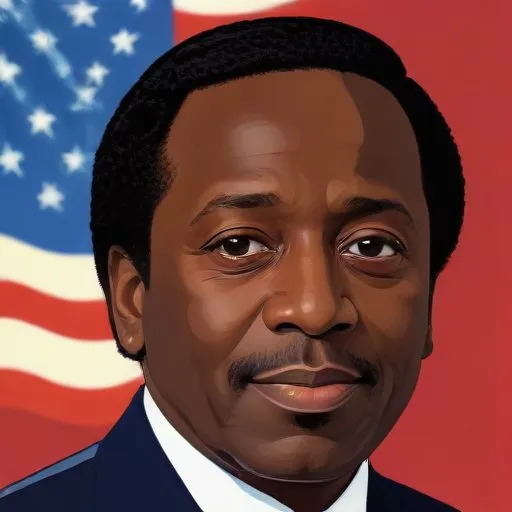
A diplomat and politician who served as Assistant Secretary of State for International Organization Affairs, known for his conservative views and presidential campaigns.
Alan Keyes, a stalwart of conservative values, is perhaps best known for his multiple bids for the presidency, as well as his unwavering dedication to upholding traditional American ideals.
Keyes' journey into politics began with his appointment as Assistant Secretary of State for International Organization Affairs under President Ronald Reagan in 1985. This marked the beginning of a long and distinguished career in public service, which would see him take on various roles, including Ambassador to the Economic and Social Council of the United Nations.
In 1996, Keyes made his first bid for the Republican presidential nomination, a move that would become a hallmark of his career. He went on to contest the nomination in 2000 and again in 2008, demonstrating an unrelenting passion for his country and its people.
Born on August 7, 1950, at the St. Albans Naval Hospital in Queens, New York, Keyes was raised in a military family, moving frequently during his childhood. This peripatetic upbringing did little to quell his thirst for knowledge, and he went on to earn a doctoral degree from Harvard University.
Keyes has been an outspoken advocate for conservative principles, often taking unconventional stands on issues such as abortion and same-sex marriage. He has been a vocal critic of the political establishment, unafraid to challenge the status quo.
Between 1994 and 1998, Keyes hosted "The Alan Keyes Show: America's Wake-Up Call," a popular radio program that delved into the pressing issues of the day. He briefly hosted a television commentary show, "Alan Keyes Is Making Sense," on MSNBC in 2002.
Keyes' commitment to public service has earned him numerous accolades, including the Distinguished Public Service Award from the Department of State.
As a conservative icon, Keyes has left an indelible mark on American politics. His unwavering dedication to his principles has inspired countless individuals, and his legacy continues to shape the national discourse.
Through his tireless advocacy and unstinting commitment to public service, Alan Keyes has cemented his place as a steadfast champion of conservative values, leaving behind a legacy that will continue to inspire and inform future generations.
Born in 1911
The charismatic leader who championed conservative policies, helped end the Cold War, and is often credited with restoring American pride and optimism. He's also remembered for his folksy, actor-honed communication style.
Born in 1924
The 41st President of the United States, a decorated war hero and skilled diplomat, led the country through the end of the Cold War and Gulf War. He's known for his foreign policy expertise and "kinder, gentler nation" vision.
80 Years Old
The 43rd President of the United States, a Republican leader who launched wars in Afghanistan and Iraq, and implemented significant tax cuts. He's also known for his response to the 9/11 attacks.
71 Years Old
The first African American woman to serve as Secretary of State, she played a crucial role in shaping US foreign policy during a tumultuous period, earning her a lasting legacy in international relations.
89 Years Old
The first African American to serve as Secretary of State, he played a crucial role in shaping US foreign policy during the Gulf War and War on Terror. He's also known for his diplomatic efforts and leadership in the military.
89 Years Old
The first female US Secretary of State, serving from 1997 to 2001, who played a key role in shaping American foreign policy during the Clinton administration. She's known for her strong diplomatic efforts and advocacy for democracy and human rights.
Born in 1923
A renowned diplomat and strategist who played a pivotal role in shaping global politics during the Cold War era, known for his Realpolitik approach and brokering peace agreements .
94 Years Old
The 13th United States Secretary of Defense, a high-ranking government official, oversaw the US military during the Iraq War and was known for his controversial decisions and quotes. He's infamous for his "known unknowns" phrase.
