


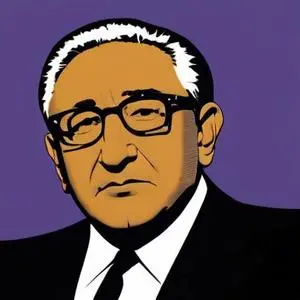
A renowned diplomat and strategist who played a pivotal role in shaping global politics during the Cold War era, known for his Realpolitik approach and brokering peace agreements .
Henry Kissinger is widely regarded as one of the most influential and controversial figures in modern American politics. As the United States' Secretary of State from 1973 to 1977 and National Security Advisor from 1969 to 1975, Kissinger's pragmatic approach to geopolitics, known as Realpolitik, shaped the country's foreign policy during a pivotal period in world history.
Born on May 27, 1923, in Fürth, Germany, Kissinger emigrated to the United States in 1938 as a Jewish refugee fleeing Nazi persecution. After serving in the U.S. Army during World War II, he attended Harvard University, where he excelled academically and earned a Ph.D. in government. Kissinger went on to become a professor of government at Harvard, earning an international reputation as an expert on nuclear weapons and foreign policy.
Kissinger's approach to geopolitics was characterized by a willingness to engage with nations that did not share American values, in the pursuit of national interest. This pragmatism led to several significant achievements, including:
Kissinger's accomplishments were recognized with the 1973 Nobel Peace Prize, which he was awarded for his role in negotiating the Paris Peace Accords. However, his legacy is also marred by controversies surrounding his support for authoritarian regimes, human rights abuses, and military interventions.
Some of the most notable controversies surrounding Kissinger's tenure include:
Throughout his life, Kissinger has been known for his intellectual intensity and strong work ethic. He has been married twice, first to Ann Fleischer and then to Nancy Maginnes. Kissinger has two children, David and Elizabeth, from his first marriage.
Kissinger's impact on modern society extends far beyond his time in government. His Realpolitik approach has shaped the way politicians and policymakers think about geopolitics, and his legacy continues to be felt in international relations today.
In addition to his work in government, Kissinger has been a prolific writer and thinker, publishing numerous books on foreign policy and international relations. His influence can be seen in the work of scholars, policymakers, and politicians around the world.
"The task of the leader is to get his people from where they are to where they have not been."
"The illegal we do immediately; the unconstitutional takes a little longer."
"Diplomacy: the art of restraining power."
Kissinger's life and work must be understood within the context of the Cold War and the tumultuous 1960s and 1970s. His Realpolitik approach was a response to the era's unique challenges, and his legacy reflects both the achievements and the controversies of that time.
Today, Kissinger remains a controversial figure, with some hailing him as a visionary statesman and others condemning him as a war criminal. Regardless, his impact on modern geopolitics is undeniable, and his legacy continues to shape the world we live in today.
Born in 1913
The 37th President of the United States, a polarizing figure who led the country through significant domestic and foreign policy changes, infamous for his involvement in the Watergate scandal.
Born in 1913
The 38th President of the United States, a former football star and lawyer, is known for being the first vice president to assume the presidency under the 25th Amendment and for his controversial pardon of Richard Nixon. He's also remembered for his humble and accidental rise to the presidency.
Born in 1908
A wealthy businessman and politician who served as Vice President under Gerald Ford, known for his moderate Republican views and influential role in shaping US foreign policy.
98 Years Old
A Polish-born American strategist and policymaker who served as National Security Advisor, shaping US foreign policy and advising presidents on global affairs. Known for his realist approach and expertise on geopolitics.
Born in 1924
The 41st President of the United States, a decorated war hero and skilled diplomat, led the country through the end of the Cold War and Gulf War. He's known for his foreign policy expertise and "kinder, gentler nation" vision.
Born in 1925
A highly respected military strategist and diplomat who served as the 9th United States National Security Advisor, playing a crucial role in shaping foreign policy and national security decisions.
96 Years Old
The 61st United States Secretary of State, a skilled diplomat and strategist, played a crucial role in shaping global politics during the Gulf War and beyond. He's known for his exceptional negotiation skills and ability to build international coalitions.
89 Years Old
The first female US Secretary of State, serving from 1997 to 2001, who played a key role in shaping American foreign policy during the Clinton administration. She's known for her strong diplomatic efforts and advocacy for democracy and human rights.
