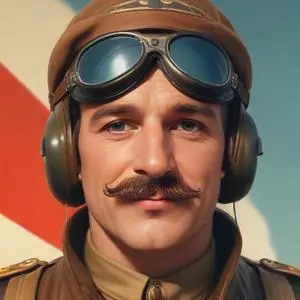
Albert Ball: The British Flying Ace of World War I
Aerial Victories and National Heroism
Albert Ball was a British fighter pilot during World War I, renowned for being the United Kingdom's leading flying ace at the time of his death, with an impressive 44 aerial victories to his name. He remained the fourth-highest scorer in British history, surpassed only by Edward Mannock, James McCudden, and George McElroy.
Early Life and Education
Born on 14 August 1896, in Lenton, Nottingham, Albert Ball was the son of Albert Ball, a successful businessman who later became Lord Mayor of Nottingham, and Harriett Mary Page. He had two siblings, a brother and a sister, and grew up in a loving and indulgent family. In his youth, Ball had a small hut behind the family house where he experimented with engines and machinery, foreshadowing his future in aviation.
Military Career
Ball joined the Sherwood Foresters at the outbreak of World War I and was commissioned as a second lieutenant in October 1914. He transferred to the Royal Flying Corps (RFC) the following year and gained his pilot's wings on 26 January 1916. Ball's military career was marked by rapid promotion and numerous accolades, including two Distinguished Service Orders and the Military Cross.
Aerial Achievements and Legacy
Ball's aerial victories earned him widespread recognition, and he became the first ace to become a British national hero. Even the famous German flying ace
Manfred von Richthofen remarked upon hearing of Ball's death that he was "by far the best English flying man." Ball's legacy extends beyond his military achievements, as he inspired a generation of British pilots and contributed to the development of aerial warfare.
Death and Honors
Tragically, Ball's life was cut short when his plane crashed into a field in France on 7 May 1917. His death sparked a wave of national mourning, and he was posthumously awarded the Victoria Cross for his actions during his final tour of duty. Ball's sacrifice and bravery have been remembered and honored in various ways, including the naming of a Nottingham City Transport bus in his honor.
Personal Milestones and Key Life Events
- Joined the Sherwood Foresters in 1914
- Transferred to the Royal Flying Corps in 1915
- Gained pilot's wings on 26 January 1916
- Posted to No. 13 Squadron RFC in France
- Posted to No. 11 Squadron, a fighter unit
- Returned to England on leave in October 1916
- Posted to No. 56 Squadron on the Western Front in April 1917
- Killed in action on 7 May 1917
Impact on Modern Society
Albert Ball's contributions to aviation and military history continue to inspire and influence modern society. His bravery, skill, and sacrifice have made him an enduring symbol of British heroism during World War I. As a pioneering figure in aerial warfare, Ball's legacy extends beyond his military achievements, shaping the course of military aviation and inspiring future generations of pilots.
FAQ
What was Albert Balls role in World War I?
Albert Ball was a British fighter pilot during World War I, credited with 44 aerial victories. He was one of the highest-scoring fighter pilots of the war.
What was Albert Balls most notable achievement?
Albert Balls most notable achievement was his string of victories against German fighter pilots, including the famous Red Baron. He was known for his exceptional flying skills and his ability to outmaneuver his opponents.
What was Albert Balls personality like?
Albert Ball was known for his bravery, skill, and modesty. He was a humble and unassuming individual who avoided publicity and preferred to focus on his flying.
What was the circumstances of Albert Balls death?
Albert Ball died in combat on May 7, 1917, when his plane crashed in France. The exact circumstances of his death are still disputed, with some accounts suggesting that he was shot down by Austrian ace Friedrich Navratil.
How is Albert Ball remembered today?
Albert Ball is remembered today as one of the greatest fighter pilots of World War I. He was awarded the Victoria Cross, the highest military honor in the British Empire, and is celebrated as a hero of British aviation.