


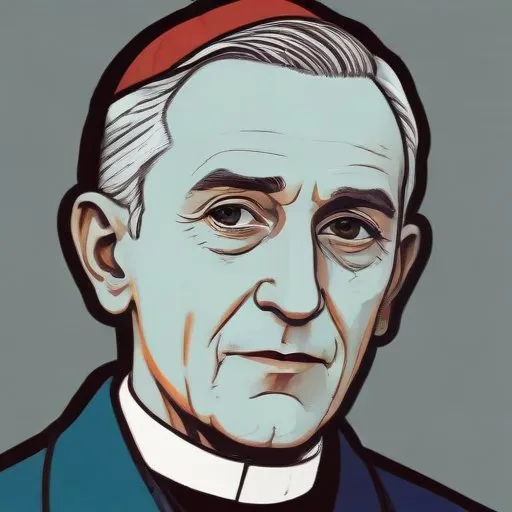
A Catholic priest and historian who documented Quebec's history and folklore, preserving the province's cultural heritage through his writings and photographs.
Albert Tessier, a French-speaking Canadian priest, historian, and filmmaker, is renowned for his immense contributions to the world of cinema and education. With a prolific career spanning over five decades, Tessier made more than seventy non-fiction films, leaving an indelible mark on the history of Quebec and beyond.
Born on March 6, 1895, in Sainte-Anne-de-la-Prade, Mauricie, Quebec, Tessier was ordained as a priest in 1920 and went on to earn a Ph.D. in Theology from Rome in 1922. His academic pursuits took him back to his native region in 1924, where he began teaching and eventually became a professor of history and literature.
Tessier's love for his native region of Mauricie was evident in his work. He coined the term "Mauricie" in 1933 to designate the area, replacing the earlier term "Saint-Maurice Valley." Through his films, Tessier aimed to inform the public about the rich history and culture of Mauricie, promoting local identity and pride.
From 1925 until his death, Tessier created over seventy films, showcasing his favorite subjects: nature, history, religion, education, and culture. His films not only educated but also entertained, leaving a lasting impact on the cinematic landscape of Quebec. Today, Tessier's legacy is celebrated through the Prix Albert-Tessier award, Avenue Albert-Tessier in Shawinigan, and Pavillon Albert-Tessier at Université du Québec à Trois-Rivières.
As a teacher and professor, Tessier's influence extended beyond the realm of cinema. He held the Chair in History of Canada at Université Laval from 1937, shaping the minds of future generations. Tessier's dedication to education and culture has inspired countless individuals, solidifying his place as a pioneer in Canadian history.
Albert Tessier's remarkable life and work have left an enduring impact on Quebec's cultural heritage. Through his films and teachings, he not only preserved but also promoted the region's history, traditions, and values. As a pioneering figure in Canadian cinema and education, Tessier's legacy continues to inspire and educate generations to come.
In conclusion, Albert Tessier's remarkable journey is a testament to the power of passion, dedication, and creativity. His contributions to education, cinema, and Quebec's cultural identity have earned him a revered place in Canadian history, ensuring that his legacy will continue to shine bright for years to come.
Born in 1920
A renowned Canadian journalist and author who wrote extensively on Canadian history and culture, making it accessible and engaging to a broad audience.
Born in 1878
A Canadian priest and historian who wrote extensively on French-Canadian history and identity, shaping the country's national narrative.
Born in 1809
A Canadian poet and historian who wrote extensively on the history of Quebec, particularly the French-Canadian people, and is considered one of the founders of Quebec's national literature. His works helped shape the province's identity and cultural heritage.
Born in 1912
A Canadian lawyer and politician who served as the 11th Premier of Quebec, known for modernizing the province's economy and education system. He led the Quiet Revolution, a period of significant social and political change in Quebec.
Born in 1922
A charismatic leader who championed Quebec's independence and shaped the province's distinct identity through his passionate politics and journalism. He's revered for his role in Quebec's Quiet Revolution.
Born in 1919
The charismatic leader who championed Canadian unity and implemented progressive policies, known for his iconic style and influential legacy in shaping modern Canada.
92 Years Old
The 20th Prime Minister of Canada, serving from 1993 to 2003, known for his leadership during the Quebec sovereignty movement and his role in shaping Canada's national unity. He implemented policies like the Clarity Act and the National Child Benefit.
