


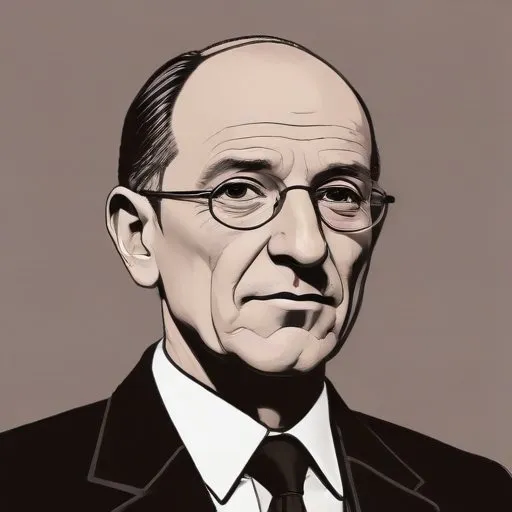
Designed over 700 buildings, mostly in Amsterdam, blending modernism with a focus on social housing and children's playgrounds, creating vibrant community spaces.
Aldo van Eyck, a Dutch architect, is renowned for his profound influence on the architectural movement of Structuralism. Through his innovative designs and philosophical contributions, van Eyck challenged the status quo of Modernism, paving the way for a more human-centered approach to architecture.
Vand Eyck was born on March 16, 1918, in Driebergen, Utrecht, to a family of intellectuals. His father, Pieter Nicolaas van Eyck, was a poet, critic, and philosopher, while his mother, Nelly Estelle Benjamins, was of Sephardic origin from Suriname. This eclectic upbringing instilled in van Eyck a deep appreciation for the arts and a critical thinking approach that would later shape his architectural philosophy.
Van Eyck's family moved to the United Kingdom in 1919, where he received his early education. He later studied at the ETH Zurich, graduating in 1942. During his time in Switzerland, he became acquainted with the avant-garde circle surrounding Carola Giedion-Welcker, wife of historian Sigfried Giedion.
Van Eyck's architectural philosophy was deeply rooted in Structuralism, a movement that emphasized the social and cultural context of buildings. He co-founded Team 10, a group of architects who sought to reject Functionalism and promote a more humanistic approach to design. As editor of the Dutch magazine Forum, van Eyck played a crucial role in disseminating the principles of Structuralism and Team 10's ideals.
Through his lectures and writings, van Eyck advocated for a more nuanced understanding of architecture, one that prioritized the user's experience and the cultural significance of buildings. His thoughts on the matter were instrumental in shaping the course of modern architecture, influencing generations of architects to come.
Some of van Eyck's most notable projects include the design for the village of Nagele, Noordoostpolder (1948-1954), and the Housing for the Elderly (1952-1961). These projects showcased his commitment to creating spaces that were not only functional but also aesthetically pleasing and socially responsible.
Van Eyck's work also extended to education, as he taught at the Amsterdam Academy of Architecture (1954-1959) and later became a professor at the Delft University of Technology (1966-1984).
VAn Eyck received the RIBA Royal Gold Medal in 1990, a testament to his significant contributions to the field of architecture.
Aldo van Eyck's influence on modern architecture is undeniable. His unwavering commitment to Structuralism and his advocacy for a more human-centered approach to design have left an indelible mark on the industry. As a philosopher, educator, and architect, van Eyck's legacy continues to inspire architects, designers, and thinkers around the world.
Today, his work serves as a beacon for a more sustainable and socially conscious approach to architecture, one that prioritizes the needs of people and the planet above aesthetics and functionality.
Aldo van Eyck's remarkable life and career serve as a testament to the power of innovative thinking, philosophical inquiry, and a deep commitment to creating a better world through design.
Born in 1887
A pioneer of modern architecture, famous for designing innovative, functional, and visually striking buildings that transformed urban landscapes. His works continue to inspire architects and designers worldwide.
Born in 1867
Visionary architect behind iconic, harmonious structures that blend seamlessly into their surroundings, redefining modern American architecture.
Born in 1883
A pioneer of modernist architecture, he designed iconic buildings that blended functionality with aesthetics, including the John F. Kennedy Federal Building. His work continues to inspire architects and designers today.
Born in 1886
A pioneering architect who revolutionized modern skyscraper design with sleek, minimalist, and functional buildings that redefined urban landscapes. His iconic creations continue to inspire architects and influence city skylines.
Born in 1910
A Finnish-American architect and furniture designer who created iconic, futuristic structures and designs that blended art and functionality, including the iconic Gateway Arch.
Born in 1901
A renowned architect celebrated for designing iconic, modernist buildings that blend functionality with aesthetic appeal, leaving a lasting impact on the world of architecture.
Born in 1892
A pioneering architect who designed iconic buildings that blended seamlessly into their surroundings, revolutionizing modernist architecture with his sleek, functional, and elegant style.
