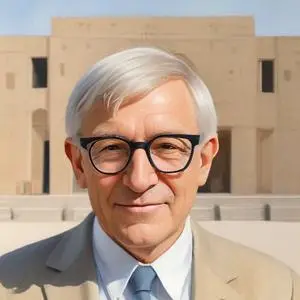
Louis Kahn: The Architect of Monumental Proportions
A Legacy of Monumental Designs
Louis Kahn is renowned for his bold, monumental, and monolithic architectural style that has redefined the built environment. His iconic structures, stripped of unnecessary ornamentation, exude a sense of weight, materiality, and construction, earning him the reputation as one of the most influential architects of the 20th century.
Early Life and Influences
Born Itze-Leib Schmuilowsky on March 5, 1901, in Estonia (then part of the Russian Empire), Kahn's early life was marked by hardship and migration. His family emigrated to the United States in 1906, settling in Philadelphia. Kahn's fascination with light and its effects on the human psyche began early, sparked by a childhood accident that left him with facial scars.
Rise to Prominence
Kahn's architectural journey began in the 1920s, working under notable architects such as Paul Philippe Cret and Zantzinger, Borie and Medary. He founded his own atelier in 1935, where he developed his distinctive style, characterized by the use of natural light, raw materials, and a focus on the spiritual and communal. His private practice flourished, and he became a respected professor of architecture at Yale School of Architecture (1947-1957) and later at the University of Pennsylvania (1957-1974).
Notable Works and Achievements
- Salk Institute for Biological Studies (La Jolla, California, 1959-1965): A masterpiece of modern architecture, this research institute's design has been hailed as one of the most important buildings of the 20th century.
- Kimbell Art Museum (Fort Worth, Texas, 1966-1972): Kahn's use of natural light and materials created a serene, contemplative atmosphere, making it a celebrated cultural institution.
- Bangladesh National Assembly Building (Dhaka, Bangladesh, 1962-1982): A testament to Kahn's ability to balance monumental scale with intimate spaces, this complex is a symbol of national identity.
Kahn's architectural philosophy was deeply rooted in his fascination with the human experience and the role of architecture in shaping our connection to the natural world. He believed that buildings should be designed to foster community, spirituality, and a sense of awe, rather than merely serving functional purposes.
Influence on Modern Society
Louis Kahn's work has inspired generations of architects, designers, and artists. His emphasis on natural light, materials, and spatial relationships has influenced modern buildings, from museums and government buildings to private residences and public spaces.
Awards and Honors
- AIA Gold Medal (1971)
- RIBA Gold Medal (1972)
Personal Milestones and Key Life Events
- Marriage to Esther Israeli in 1930
- Birth of daughter, Sue Ann, in 1934
- Death on March 17, 1974, in New York City
Legacy
Louis Kahn's architectural legacy extends beyond his iconic buildings to his profound impact on the way we experience and interact with the built environment. His work continues to inspire, educate, and fascinate, solidifying his position as one of the most influential architects of the 20th century.
FAQ
What were the key design principles of Louis Kahns architecture?
Kahns architecture was characterized by the use of natural light, simple geometric forms, and a focus on the relationship between buildings and their surroundings.
What were some of Louis Kahns most famous buildings?
Kahn designed several iconic buildings, including the Salk Institute, the Kimbell Art Museum, and the Bangladesh Parliament Building, which are renowned for their innovative use of space and light.
How did Louis Kahns background influence his architecture?
Kahns background as an immigrant and his experience of poverty in his early life influenced his approach to architecture, which focused on creating buildings that were accessible and empowering for their users.
What was Louis Kahns approach to urban planning?
Kahn believed in the importance of creating compact, walkable cities that prioritized human scale and community interaction. He designed several urban plans that incorporated green spaces and pedestrian-friendly areas.
What legacy did Louis Kahn leave in the field of architecture?
Kahns legacy in architecture is profound, as he inspired a generation of architects to focus on the human experience of buildings and the importance of natural light and materials.