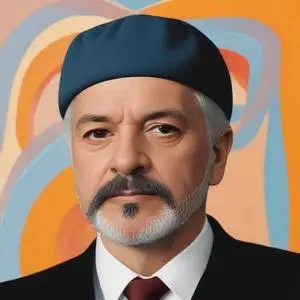
Alejandro Jodorowsky: The Visionary Maverick of Surrealist Cinema
Alejandro Jodorowsky is a Chilean-French filmmaker, known for his 1970s cult classics
El Topo and
The Holy Mountain, which have cemented his status as a pioneer of surrealist cinema. His films are a fusion of violently surreal images, mysticism, and religious provocation, earning him a devoted following among cult cinema enthusiasts.
A Troubled Childhood and Early Inspirations
Born on February 17, 1929, in Chile to Jewish-Ukrainian parents, Jodorowsky's childhood was marked by unhappiness and alienation. He found solace in reading and writing poetry, which became an escape from his tumultuous home life. Dropping out of college, he immersed himself in theater and mime, eventually founding his own theater troupe, the Teatro Mimico, in 1947.
The Early Years: Mime and Performance Art
In the early 1950s, Jodorowsky moved to Paris, where he studied traditional mime under Étienne Decroux. He put his miming skills to use in the silent film
Les têtes interverties (1957), directed with Saul Gilbert and Ruth Michelly. During this period, Jodorowsky co-founded the Panic Movement, a surrealist performance art collective that staged violent and shocking theatrical events.
The Breakthrough: Comics and Film
In 1966, Jodorowsky created his first comic strip,
Anibal 5, marking the beginning of his foray into the world of comics. The following year, he directed his first feature film,
Fando y Lis, a surrealist exploration that caused a huge scandal in Mexico and was eventually banned.
Cult Classics: El Topo and The Holy Mountain
Jodorowsky's next film,
El Topo (1970), became a hit on the midnight movie circuit in the United States, earning it the distinction of being the first-ever midnight cult film. The film's success caught the attention of
John Lennon, who convinced former Beatles manager
Allen Klein to provide Jodorowsky with $1 million to finance his next film. The result was
The Holy Mountain (1973), a surrealist exploration of western esotericism.
Disagreements and Hiatus
Disagreements with Klein led to both
The Holy Mountain and
El Topo failing to gain widespread distribution, although both became classics on the underground film circuit. Jodorowsky's attempt at filming
Frank Herbert's science fiction novel
Dune in the early 1970s was cancelled, marking a hiatus in his filmmaking career.
Lingering Legacy
Despite the setbacks, Jodorowsky's influence on modern cinema is undeniable. His experimental approach to filmmaking has inspired generations of directors, including
David Lynch,
Terry Gilliam, and
Dennis Hopper. Jodorowsky's work continues to inspire cult followings and artistic movements, cementing his status as a visionary maverick of surrealist cinema.
Philosophical Contributions and Beliefs
Jodorowsky's work is deeply rooted in his philosophical beliefs, which draw from mysticism, alchemy, and esotericism. He has spoken about the importance of exploring the subconscious and the role of art in revealing hidden truths. His films often blur the lines between reality and fantasy, challenging the viewer to question the nature of existence.
Personal Milestones and Key Life Events
Throughout his life, Jodorowsky has been driven by a fierce creative energy and a desire to push boundaries. From his early days as a mime to his current work as a filmmaker and comic book creator, Jodorowsky has remained true to his artistic vision, refusing to compromise his unique perspective.
Quotes and Memorable Sayings
"I'm not a filmmaker, I'm a mystic. I'm not making movies, I'm making rituals."
"I don't want to make a film, I want to make a dream."
Awards and Honors
Jodorowsky has received numerous awards and honors for his contributions to cinema, including the 1982 Sitges Film Festival Award for Best Film for
Tusk, and the 2006 Sitges Film Festival Award for Best Director for
The Dance of Reality.