


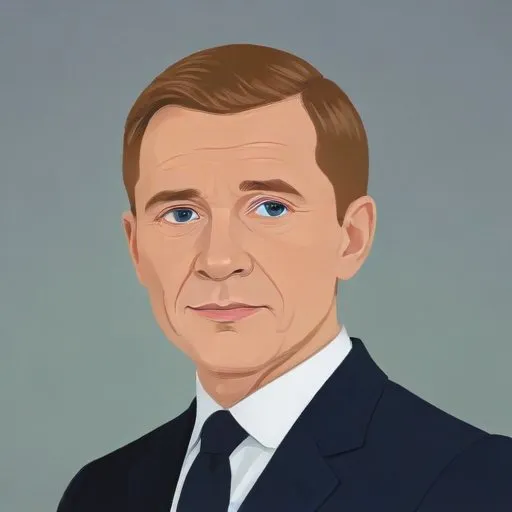
Estonian politician who served as the 6th Minister of Foreign Affairs, playing a key role in shaping the country's international relations during a pivotal period. Known for his diplomatic efforts in maintaining Estonia's sovereignty and independence.
Aleksander Hellat was a prominent Estonian politician who served as the Minister of Foreign Affairs of Estonia, leaving an indelible mark on the country's diplomatic landscape. Born on August 8, 1881, in Tartu, Estonia, Hellat's dedication to his country and its people would ultimately lead to his downfall.
Hellat was a member of the Estonian Social Democratic Workers' Party, a testament to his strong socialist beliefs. Throughout his career, he remained committed to the principles of social justice and equality, earning him respect and admiration from his peers.
As the Minister of Foreign Affairs, Hellat played a pivotal role in shaping Estonia's foreign policy during the tumultuous interwar period. He worked tirelessly to strengthen ties with other European nations, fostering a sense of cooperation and mutual understanding.
Tragically, Hellat's dedication to his country would ultimately lead to his downfall. Following Estonia's annexation by the Soviet Union in 1940, Hellat was arrested by the NKVD and deported to a prison camp in Siberia. Despite the harsh conditions, he remained resolute in his convictions, refusing to compromise his values.
Hellat's time in the prison camp would ultimately prove fatal. He passed away on November 28, 1943, at the age of 62, a victim of the Soviet regime's brutal suppression of dissenting voices.
Despite his untimely death, Hellat's legacy endures. His commitment to social justice and diplomacy continues to inspire generations of Estonians, serving as a powerful reminder of the importance of standing up for one's convictions in the face of adversity.
Aleksander Hellat's life was marked by several key milestones, including:
Hellat's contributions to Estonian politics cannot be overstated. His commitment to social democracy and diplomatic cooperation helped shape the country's foreign policy, paving the way for future generations of Estonian leaders.
Today, Aleksander Hellat's legacy serves as a powerful reminder of the importance of standing up for one's convictions, even in the face of overwhelming adversity. His story is a testament to the enduring power of courage and conviction.
72 Years Old
A Swedish-Estonian journalist and politician who served as the 4th President of Estonia, known for his efforts to promote e-government and digitalization in the country. He's a strong advocate for a free and open internet.
69 Years Old
Estonia's first Prime Minister to serve two consecutive terms, he led the country's digital revolution, making Estonia a global leader in e-government and digital innovation.
77 Years Old
The first Estonian to hold a high-ranking position in the European Commission, known for his efforts to modernize and integrate Estonia into the European Union. He played a key role in Estonia's accession to the EU and the eurozone.
83 Years Old
Estonian physician and politician who served as the Minister of Health and Labour from 1999 to 2002, known for his healthcare reforms and contributions to Estonia's EU accession.
48 Years Old
The 42nd Mayor of Tallinn, Estonia's capital, who served from 2005 to 2007 and later became the country's Prime Minister from 2016 to 2021, known for his efforts to strengthen Estonia's economy and digital infrastructure.
56 Years Old
The first female President of Estonia, serving from 2016 to 2021, known for her strong advocacy for climate action, digitalization, and e-government. She has been a vocal critic of authoritarianism and a champion of liberal democracy.
46 Years Old
The 16th Prime Minister of Estonia, serving from 2014 to 2016, known for his efforts to modernize the country's economy and digital infrastructure. He's also a strong advocate for e-government and digitalization.
