


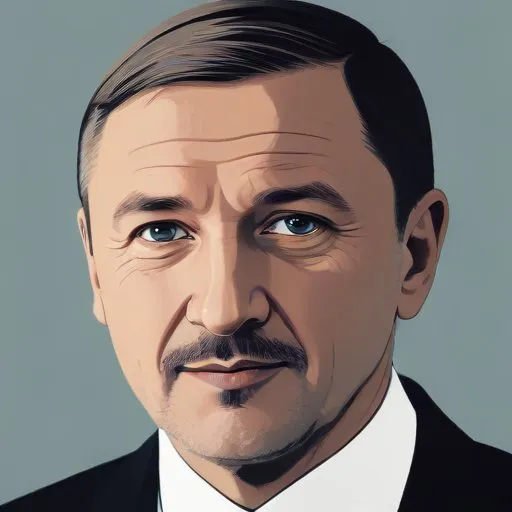
The first Estonian to hold a high-ranking position in the European Commission, known for his efforts to modernize and integrate Estonia into the European Union. He played a key role in Estonia's accession to the EU and the eurozone.
Siim Kallas, the esteemed Estonian politician, is renowned for his instrumental role in shaping Estonia's economic landscape, particularly during its transition to independence from the Soviet Union. As a key architect of the IME plan, Kallas paved the way for Estonia's adoption of a market economy, its own currency, and a tax system, ultimately earning him recognition as a champion of economic reform.
Born on October 2, 1948, Siim Kallas grew up during a time of significant political and economic change in Estonia. His early fascination with politics led him to become an active participant in the country's struggle for independence. In 1987, alongside Tiit Made, Edgar Savisaar, and Mikk Titma, Kallas co-authored the IME plan, a blueprint for Estonia's economic independence from the Soviet Union.
Kallas' involvement in the IME plan catapulted him to national prominence, and in 1989, he was elected to the Congress of Peoples Deputies of the Soviet Union, marking a significant milestone in Estonia's journey towards independence. Following Estonia's independence in 1991, Kallas was appointed President of the Bank of Estonia, where he successfully established a coherent structure for the bank and reintroduced the Estonian Kroon as the national currency.
In 1994, Kallas co-founded the liberal Estonian Reform Party, which enjoyed significant success in the 1995 elections. He went on to serve in various ministerial positions, including Minister of Foreign Affairs from 1995 to 1996 and Minister of Finance from 1999 to 2002. His leadership skills and vision earned him the role of Prime Minister of Estonia from 2002 to 2003.
In 2004, Kallas was appointed European Commissioner for Administrative Affairs, Audit, and Anti-Fraud, a position he held until 2009. He later became the European Commissioner for Transport from 2010 to 2014, during which he was also a Vice-President of the European Commission. His tenure was marked by significant reforms in the transport sector, including the introduction of the Single European Sky initiative.
Siim Kallas' contributions to Estonia's economic development and his commitment to European integration have left an indelible mark on the country's history. His leadership and vision have inspired a generation of Estonian politicians and policymakers. Though he may not have succeeded in his 2016 bid for the Estonian presidency, his legacy continues to shape Estonia's economic and political landscape.
Throughout his career, Siim Kallas has advocated for liberal economic policies, European integration, and good governance. His commitment to these principles has shaped Estonia's development and earned him recognition as a champion of economic reform.
Kallas' leadership and vision have not only transformed Estonia's economy but have also inspired a generation of policymakers and politicians. His contributions to European integration have promoted economic cooperation and coordination among European nations.
Siim Kallas' remarkable journey from a champion of Estonian independence to a respected European Commissioner is a testament to his unwavering commitment to economic reform and European integration. His legacy continues to inspire and shape Estonia's economic and political landscape.
70 Years Old
Estonia's first Prime Minister to serve two consecutive terms, he led the country's digital revolution, making Estonia a global leader in e-government and digital innovation.
72 Years Old
A Swedish-Estonian journalist and politician who served as the 4th President of Estonia, known for his efforts to promote e-government and digitalization in the country. He's a strong advocate for a free and open internet.
66 Years Old
Estonian historian and politician who served as Prime Minister of Estonia, leading the country's transition from Soviet rule to independence and implementing free-market reforms. He's known for his role in Estonia's rapid modernization and digitalization.
60 Years Old
Estonia's 14th Prime Minister, a lawyer-turned-politician, led the country from 2003 to 2005, known for his efforts to combat corruption and promote economic growth.
86 Years Old
Estonian geographer and politician who served as the 10th Prime Minister of Estonia, known for his role in the country's transition to independence from Soviet rule. He's also a prominent environmentalist and advocate for sustainable development.
83 Years Old
Estonian physician and politician who served as the Minister of Health and Labour from 1999 to 2002, known for his healthcare reforms and contributions to Estonia's EU accession.
50 Years Old
Estonian Minister of Foreign Affairs, known for promoting digitalization and e-governance, and strengthening EU and NATO relations.
47 Years Old
The 16th Prime Minister of Estonia, serving from 2014 to 2016, known for his efforts to modernize the country's economy and digital infrastructure. He's also a strong advocate for e-government and digitalization.
