


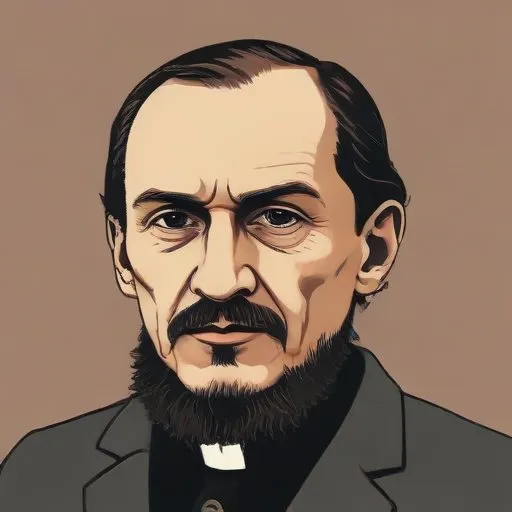
A Russian journalist, author, and poet who wrote influential works of science fiction and fantasy, including the trilogy "Aelita" and "The Hyperboloid of Engineer Garin". He's known for his imaginative and prophetic stories that explored the intersection of technology and humanity.
Aleksey Nikolayevich Tolstoy is renowned for his versatility as a Russian writer, effortlessly navigating multiple genres, including science fiction, historical fiction, and fantasy. His literary mastery is evident in his extensive bibliography, which boasts over 100 works, solidifying his position as a prominent figure in 20th-century Russian literature.
Tolstoy was born on January 10, 1883, to Alexandra Leontievna Turgeneva, a grandniece of Nikolay Turgenev, a Decembrist, and a relative of the celebrated Russian writer Ivan Turgenev. His mother's marriage to Count Nikolay Alexandrovich Tolstoy, a distant relative of Leo Tolstoy, added to the aristocratic Tolstoy family legacy. However, Tolstoy's biological father remains a subject of speculation, with some doubting his claim to the Tolstoy name.
Tolstoy's writing career spanned multiple genres, but he is most notable for his science fiction works, which explored themes of space travel, extraterrestrial life, and technological advancements. His novel, Aelita, published in 1923, is considered a pioneering work in the science fiction genre and has been adapted into numerous films, plays, and operas.
Tolstoy's literary achievements were recognized with numerous awards, including the Stalin Prize in 1941 for his novel Peter the First. He was also elected as a member of the Academy of Sciences of the Soviet Union in 1939.
Tolstoy's influence on Russian literature and science fiction is undeniable. His works paved the way for future generations of science fiction writers, inspiring notable authors like Stanislaw Lem and Ivan Yefremov. His literary contributions continue to captivate readers and inspire new adaptations, solidifying his position as a pioneering figure in Russian literary history.
Tolstoy's life was not without controversy. Despite initially opposing the Bolshevik Revolution in 1917, he later adapted his writing to conform to the Communist Party's ideology, earning him a privileged life as a highly paid author. This shift in allegiance sparked criticism from his peers, with some questioning his motives and loyalty.
Tolstoy's writing often explored philosophical themes, including the consequences of technological advancements on human society and the role of science in shaping our understanding of the world. His works reflect a deep fascination with the mysteries of the universe and the human condition.
Aleksey Nikolayevich Tolstoy's remarkable literary career, marked by its diversity and innovation, has left an indelible mark on Russian literature and science fiction. His legacy continues to inspire and captivate audiences, solidifying his position as a true pioneer in the world of literature.
