


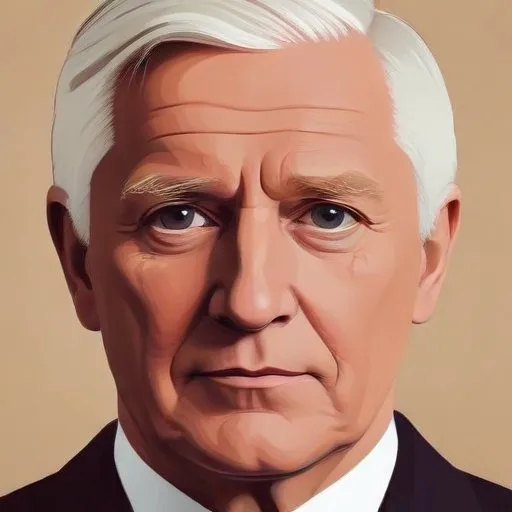
The second Prime Minister of Canada, serving from 1873 to 1878, known for establishing the Supreme Court of Canada and promoting unity among the provinces.
Alexander Mackenzie, the second Prime Minister of Canada, is known for his unwavering commitment to democratic principles and his pioneering efforts in nation-building. From 1873 to 1878, Mackenzie led the country, leaving an indelible mark on its history and development.
Born on January 28, 1822, in Logierait, Perthshire, Scotland, Mackenzie's life was marked by hardship and perseverance. Following his father's death, he left school at 13 to support his widowed mother and trained as a stonemason. In 1842, at the age of 19, Mackenzie immigrated to the Province of Canada, settling in what is now Ontario.
Mackenzie's masonry business flourished, allowing him to pursue other interests, including the editorship of the pro-Reformist newspaper, the Lambton Shield. His involvement in politics began in 1862, when he was elected to the Legislative Assembly of the Province of Canada as a supporter of George Brown. In 1867, he was elected to the House of Commons of Canada as a member of the Liberal Party.
In mid-1873, Mackenzie became the leader of the Liberal Party and the Leader of the Opposition. Following John A. Macdonald's resignation in the aftermath of the Pacific Scandal, Mackenzie succeeded him as Prime Minister. The Liberal Party won a clear majority in the 1874 election, and Mackenzie remained in office until 1878.
During his tenure as Prime Minister, Mackenzie implemented several significant reforms. He established the Supreme Court of Canada and the Royal Military College of Canada, and created the District of Keewatin to better administer Canada's newly acquired western territories. Although his government struggled to deal with the aftermath of the Panic of 1873 and made little progress on the transcontinental railway, Mackenzie's commitment to democratic principles earned him widespread popularity among the general public.
Mackenzie remained the leader of the Liberal Party for two years after his defeat in the 1878 election. He continued to serve as a Member of Parliament until his death on April 17, 1892, due to a stroke. Throughout his life, Mackenzie remained true to his humble beginnings, never forgetting his roots as a stonemason from Scotland.
Alexander Mackenzie's legacy extends far beyond his time in office. His commitment to democratic principles and nation-building has inspired generations of Canadian leaders. His humble background and rise to prominence serve as a testament to the power of perseverance and hard work.
“The greatest advantage of a free press is that it gives the people the right to know what is going on in their country.” – Alexander Mackenzie
“The democratic principle is the only principle that can be safely trusted to govern a people.” – Alexander Mackenzie
Alexander Mackenzie's life and career serve as a reminder of the power of democratic principles and the importance of nation-building. His legacy continues to inspire Canadians, and his commitment to democratic values has left an indelible mark on the country's history.
Born in 1815
The first Prime Minister of Canada, a key figure in the country's formation and development, known for shaping its early years and creating a unified nation.
Born in 1818
A Scottish-Canadian journalist and politician who served as the 10th Premier of West Canada, known for his leadership during a period of significant growth and development in the region. He was a strong advocate for education and infrastructure development.
Born in 1814
A key figure in Canadian Confederation, instrumental in shaping the country's early years through his leadership and negotiation skills. He played a crucial role in uniting the provinces under a single government.
Born in 1825
A passionate advocate for Canadian Confederation, he played a key role in shaping the country's early years through his writing and politics.
Born in 1809
Led the United States through its Civil War and ultimately abolished slavery, leaving a lasting legacy in American history.
Born in 1822
Led the Union Army to victory in the Civil War and later became President, known for issuing the Emancipation Proclamation and strengthening federal authority.
Born in 1804
A skilled politician who served as Prime Minister of the United Kingdom, known for his influential role in shaping the country's politics and economy during the 19th century.
