


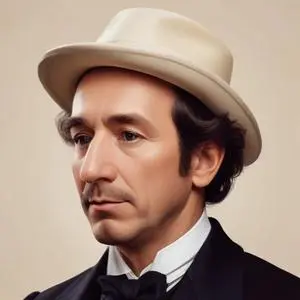
The first Prime Minister of Canada, a key figure in the country's formation and development, known for shaping its early years and creating a unified nation.
John A. Macdonald is renowned as the first Prime Minister of Canada, serving two non-consecutive terms from 1867 to 1873 and from 1878 until his passing in 1891. He is celebrated as the dominant figure of Canadian Confederation, having played a pivotal role in shaping the country's path to nationhood.
Born on January 11, 1815, in Ramsay, Scotland, Macdonald immigrated to Kingston, Upper Canada (now Ontario), with his family at a young age. He pursued a career in law, becoming involved in high-profile cases and rapidly gaining prominence in Kingston. In 1844, he was elected to the legislature of the Province of Canada, marking the beginning of his illustrious political career.
In 1864, Macdonald agreed to a proposal from his political rival, George Brown, to unite the parties in a Great Coalition, seeking federation and political reform. This pivotal moment led to the British North America Act and the establishment of Canada as a nation on July 1, 1867. Macdonald was the leading figure in the subsequent discussions and conferences, securing his place in Canadian history.
As the first Prime Minister of Canada, Macdonald established the North-West Mounted Police and expanded the country by annexing the North-Western Territory, Rupert's Land, British Columbia, and Prince Edward Island. During his first term, he also navigated the country through its formative years, establishing a strong foundation for the nation.
In 1878, Macdonald was re-elected and focused on implementing the National Policy, a key component of his economic agenda. This protective tariff aimed to promote Canadian industries and foster economic growth. Macdonald's commitment to the National Policy helped shape Canada's economic landscape and solidified his position as a champion of nation-building.
"Let us be English, or let us be French, or let us be Irish, but let us be Canadians above all."
Macdonald's legacy extends far beyond his time in office. He played a crucial role in shaping Canada's identity and fostering a sense of national unity. Today, he is remembered as the Father of Canadian Confederation, a testament to his unwavering commitment to building a strong and prosperous nation.
Macdonald's contemporaries, such as George Brown and Alexander Galt, played significant roles in shaping Canada's early years. However, Macdonald's unique ability to forge alliances and navigate complex political landscapes set him apart as a master politician and nation-builder.
Macdonald's vision for a unified Canada has had a lasting impact on modern society. His commitment to nation-building and economic development continues to shape Canada's identity and inform its policies.
John A. Macdonald's remarkable life and achievements have cemented his place in Canadian history. As a true nation-builder, he continues to inspire generations of Canadians, leaving behind a legacy that will be cherished for centuries to come.
Born in 1819
The monarch who ruled the British Empire for 63 years, overseeing the Industrial Revolution and expanding the empire's reach, earning the nickname "the Grandmother of Europe".
Born in 1818
A Scottish-Canadian journalist and politician who served as the 10th Premier of West Canada, known for his leadership during a period of significant growth and development in the region. He was a strong advocate for education and infrastructure development.
Born in 1814
A key figure in Canadian Confederation, instrumental in shaping the country's early years through his leadership and negotiation skills. He played a crucial role in uniting the provinces under a single government.
Born in 1825
A passionate advocate for Canadian Confederation, he played a key role in shaping the country's early years through his writing and politics.
Born in 1809
Led the United States through its Civil War and ultimately abolished slavery, leaving a lasting legacy in American history.
Born in 1804
A skilled politician who served as Prime Minister of the United Kingdom, known for his influential role in shaping the country's politics and economy during the 19th century.
