


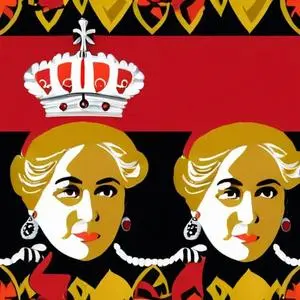
The monarch who ruled the British Empire for 63 years, overseeing the Industrial Revolution and expanding the empire's reach, earning the nickname "the Grandmother of Europe".
Queen Victoria, the longest-reigning British monarch, ruled the United Kingdom of Great Britain and Ireland for 63 years and 216 days, leaving an indelible mark on history. Her reign, which spanned from 1837 to 1901, constituted the Victorian era, a period of unprecedented industrial, political, scientific, and military change within the United Kingdom.
Victoria was born on May 24, 1819, to Prince Edward, Duke of Kent and Strathearn, and Princess Victoria of Saxe-Coburg-Saalfeld. After the deaths of her father and grandfather in 1820, she was raised under close supervision by her mother and her comptroller, John Conroy. At the tender age of 18, she inherited the throne after her father's three elder brothers died without surviving legitimate issue.
Victoria, a constitutional monarch, attempted to privately influence government policy and ministerial appointments, while publicly becoming a national icon identified with strict standards of personal morality. Her popularity soared as she embodied the values of the British people, making her a beloved figure across the nation.
In 1840, Victoria married her first cousin, Prince Albert of Saxe-Coburg and Gotha. Their union produced nine children, who went on to marry into royal and noble families across the continent, earning Victoria the sobriquet "Grandmother of Europe."
After Albert's untimely death in 1861, Victoria plunged into deep mourning and avoided public appearances. This period of seclusion led to a temporary surge in British republicanism, but her popularity recovered in the latter half of her reign.
Victoria's Golden and Diamond jubilees, celebrated in 1887 and 1897, respectively, were times of great public celebration, marking significant milestones in her remarkable reign.
Victoria died on January 22, 1901, at the age of 81, at Osborne House on the Isle of Wight. She was succeeded by her son, Edward VII of the House of Saxe-Coburg and Gotha, marking the end of the House of Hanover's reign. Her legacy as a model monarch, devoted wife, and loving mother continues to inspire generations.
Victoria's strong sense of duty, morality, and compassion shaped her reign and inspired a nation. Her commitment to the welfare of her people and her role as a unifying figure helped to strengthen the British monarchy.
Victoria's reign had a profound impact on modern society, shaping the course of British history, politics, and culture. Her influence extended beyond the British Isles, inspiring countless people around the world.
Queen Victoria's remarkable life and reign continue to captivate and inspire people around the world, making her one of the most enduring and beloved figures in history.
