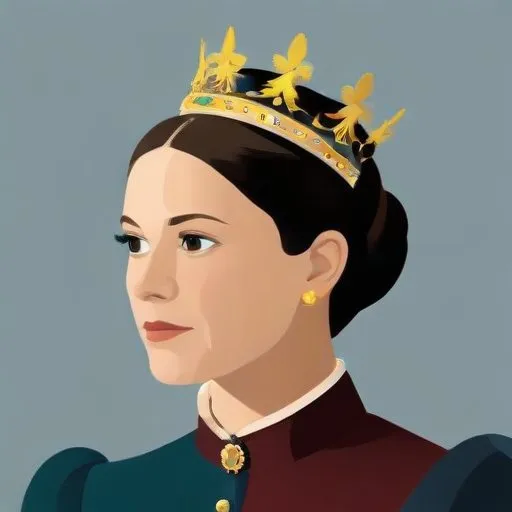
Princess Victoria of SaxeCoburgSaalfeld: The Mother of Queen Victoria
Princess Victoria of SaxeCoburgSaalfeld is best known for being the mother of
Queen Victoria of the United Kingdom, one of the most iconic monarchs in British history. Born on August 17, 1786, in Coburg, Holy Roman Empire of the German Nation, Victoria's life was marked by her royal connections, marriages, and strong will, which earned her a significant place in history.
Early Life and Family
Victoria was born as Marie Louise Victoire, the fourth daughter and seventh child of Franz Frederick Anton, Duke of SaxeCoburgSaalfeld, and
Countess Augusta Reuss of Ebersdorf. Her family was part of the SaxeCoburg and Gotha dynasty, which had a significant influence on European politics and royalty. Her brothers, Ernest I, Duke of SaxeCoburgGotha, and Leopold, future king of the Belgians, would go on to play important roles in shaping the fate of nations.
Marriages and Children
Victoria's life was marked by two significant marriages. Her first marriage was to Emich Carl, Prince of Leiningen, in 1803, with whom she had two children, Prince Carl and Princess Feodora of Leiningen. After the death of her first husband, she served as regent of the Principality of Leiningen during the minority of her son, Carl.
Second Marriage and Rise to Prominence
The death of Princess Charlotte of Wales, the wife of Victoria's brother Leopold, in 1817, prompted a succession crisis. This led to Victoria's second marriage to
Prince Edward, Duke of Kent and Strathearn, in 1818. This marriage was of great significance, as it produced a daughter, Alexandrina Victoria, who would later become Queen Victoria of the United Kingdom.
Legacy and Impact
Victoria's legacy is deeply intertwined with that of her daughter, Queen Victoria. As the mother of the monarch, Victoria played a crucial role in shaping the young queen's early years and influencing her policies. Her strong will and determination also earned her a place in history as a woman who defied convention and paved the way for future generations of women in royal families.
Personal Milestones and Key Life Events
- 17 August 1786: Born in Coburg, Holy Roman Empire of the German Nation
- 21 December 1803: Married Emich Carl, Prince of Leiningen
- 1804: Gave birth to Prince Carl
- 1807: Gave birth to Princess Feodora of Leiningen
- 1814: Became regent of the Principality of Leiningen
- 29 May 1818: Married Prince Edward, Duke of Kent and Strathearn
- 24 May 1819: Gave birth to Princess Alexandrina Victoria (later Queen Victoria)
- 16 March 1861: Died at Windsor Castle
Controversies and Public Perception
Victoria's life was not without controversy. Her second marriage was seen as a strategic move to secure the throne for her brother Leopold, and her role as regent of Leiningen was marked by power struggles with her son, Carl. However, her dedication to her children and her role as a mother earned her a reputation as a devoted and loving parent.
Historical Context and Legacy
Princess Victoria of SaxeCoburgSaalfeld lived during a time of great change and upheaval in Europe. The Napoleonic Wars, the rise of nationalism, and the Industrial Revolution all shaped the world around her. Her legacy is a testament to the enduring power of royal families and the influence of strong women on the course of history.
Trivia and Fun Facts
- Victoria's brother, Leopold, was the first king of the Belgians and played a crucial role in the country's formation.
- Her daughter, Queen Victoria, would go on to rule the United Kingdom for 63 years, earning the nickname "the Grandmother of Europe."
- Victoria's descendants include many European monarchs, including those of the United Kingdom, Belgium, and Sweden.
In conclusion, Princess Victoria of SaxeCoburgSaalfeld was a woman of great influence, strong will, and determination. Her life was marked by her royal connections, marriages, and dedication to her children. Her legacy continues to shape the course of history, and her impact on the world of royalty remains unparalleled.
FAQ
What was Princess Victoria of Saxe-Coburg-Saalfelds role in European royalty?
Princess Victoria of Saxe-Coburg-Saalfeld was a member of European royalty, marrying Prince Edward, Duke of Kent and Strathearn, and becoming a British princess.
What was Victorias relationship with her daughter, Queen Victoria?
Victoria was a devoted mother to Queen Victoria, and she played a significant role in her daughters upbringing and education, shaping her values and worldview.
How did Victorias German heritage influence British royalty?
Victorias German heritage had a significant impact on British royalty, introducing German traditions, culture, and customs to the British court and shaping the development of British aristocracy.
What was Victorias approach to royal duty?
Victorias approach to royal duty emphasized the importance of duty, protocol, and tradition, and she was known for her dedication to her royal responsibilities and her sense of obligation to the British people.
What is Victorias legacy in British history?
Princess Victoria of Saxe-Coburg-Saalfelds legacy in British history is one of duty, devotion, and cultural exchange, and she is remembered as a dedicated member of the British royal family and a devoted mother to Queen Victoria.