


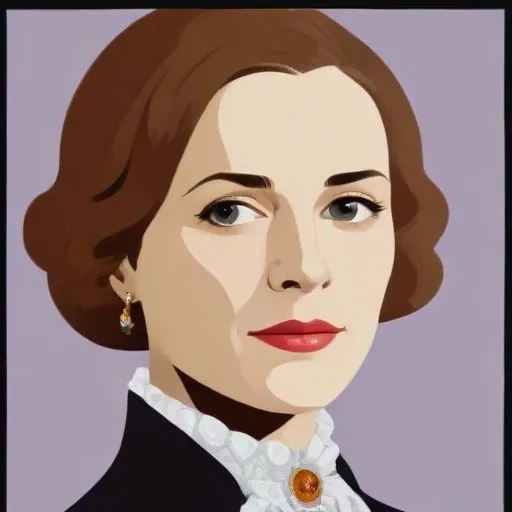
A German noblewoman and mother of several prominent European aristocrats, including Leopold I of Belgium and Princess Victoria of Saxe-Coburg-Saalfeld, mother of Queen Victoria of the United Kingdom.
Countess Augusta Reuss of Ebersdorf was a German noblewoman who left an indelible mark on European royalty, earning her the reputation as the grandmother and godmother of two of the most influential monarchs of the 19th century: Queen Victoria of the United Kingdom and Prince Albert of Saxe-Coburg and Gotha. Born on January 19, 1757, Augusta's life was a testament to her strong character, piety, and maternal instincts, which had a lasting impact on the development of European history.
Augusta was born in Ebersdorf, Thuringia, to Heinrich XXIV, Count Reuss of Ebersdorf, and Countess Karoline Ernestine of Erbach-Schnberg. Her family was deeply rooted in the Pietist movement, a Christian revivalist movement that emphasized personal faith and spirituality. This upbringing instilled in Augusta a strong sense of morality and compassion, which she would later pass on to her children and grandchildren.
In 1777, Augusta married Francis, Duke of Saxe-Coburg-Saalfeld, after a chance encounter sparked by a portrait of her painted by Johann Heinrich Tischbein. The Duke was smitten with Augusta's beauty and character, and their union produced 10 children, with seven surviving to adulthood. Among their notable offspring were Victoria, Duchess of Kent, and King Leopold I of Belgium, who would go on to shape European politics and royalty.
Countess Augusta's legacy extends far beyond her immediate family. She was a dedicated mother and grandmother, instilling in her descendants the values of hard work, compassion, and duty. Her grandchildren, who included Queen Victoria and Prince Albert, went on to shape the course of European history, with Victoria's reign marking the dawn of the British Empire's golden age.
Countess Augusta Reuss of Ebersdorf lived during a time of great change and upheaval in Europe. The French Revolution was reshaping the continent, and the Napoleonic Wars would soon follow. Against this backdrop, Augusta's steadfast commitment to her family and faith helped shape the course of European history. Her influence on her descendants, particularly Queen Victoria and Prince Albert, ensured that her values of duty, compassion, and hard work continued to shape European politics and society for generations to come.
Born in 1768
The last Holy Roman Emperor, who ruled from 1792 to 1806, oversaw the dissolution of the Holy Roman Empire and was a key figure in European politics during the Napoleonic Wars.
Born in 1717
The wife of Francis I, Holy Roman Emperor, ruled Austria and its territories with intelligence and diplomacy, implementing reforms and expanding the empire through strategic marriages. She's remembered for her strong leadership and cultural achievements.
Born in 1741
Reformer of the Habsburg dominions, abolishing serfdom and promoting religious tolerance, who implemented numerous reforms to modernize his empire.
Born in 1747
The last Habsburg ruler to hold the title of Holy Roman Emperor, he oversaw the dissolution of the empire and played a key role in European politics during the French Revolution.
Born in 1768
The last Holy Roman Emperor, who ruled from 1792 to 1806, oversaw the dissolution of the Holy Roman Empire and was a key figure in European politics during the Napoleonic Wars.
