


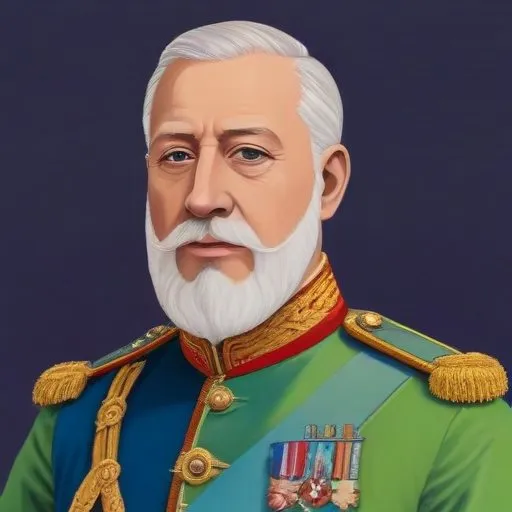
The last Habsburg ruler to hold the title of Holy Roman Emperor, he oversaw the dissolution of the empire and played a key role in European politics during the French Revolution.
Leopold II, the 44th Holy Roman Emperor, is remembered for his progressive reforms and humanitarian initiatives, earning him a reputation as one of the most sensible and shrewd monarchs in history. He ruled as King of Hungary, Croatia, and Bohemia, and Archduke of Austria from 1790 to 1792, and Grand Duke of Tuscany from 1765 to 1790, leaving a lasting impact on modern society.
Leopold II was born on May 5, 1747, in Vienna, as the third son of Empress Maria Theresa and Emperor Francis I. Initially, he was destined for a clerical career and received an education focused on theology. However, his life took a different turn when his older brother, Archduke Charles, passed away in 1761, and he was chosen to succeed his father as Grand Duke of Tuscany.
In 1765, Leopold married Maria Luisa, daughter of King Charles III of Spain and Maria Amalia of Saxony, and became Grand Duke of Tuscany upon the death of his father. During his rule in Tuscany, Leopold implemented several progressive reforms, abolishing the death penalty and torture in 1786, making Tuscany the first nation in modern history to do so. This act is still commemorated today as the Feast of Tuscany, held every November 30.
Leopold's reign as Holy Roman Emperor, although brief, was marked by his commitment to enlightened absolutism. He continued to push for reforms, emphasizing education, culture, and economic development. His moderate approach to governance earned him the respect of his contemporaries and historians alike, with Paul W. Schroeder describing him as "one of the most shrewd and sensible monarchs ever to wear a crown."
Leopold II's commitment to progressive reforms, education, and culture has left a lasting impact on modern society. His abolition of the death penalty and torture in Tuscany set a precedent for humanitarian initiatives in the centuries to come. As a champion of enlightened absolutism, he continues to inspire historians and scholars, solidifying his place as one of the most remarkable monarchs in history.
"Justice is the foundation of a stable and prosperous society. Without it, we risk collapsing into chaos and turmoil."
This quote, attributed to Leopold II, reflects his dedication to justice, humanity, and progressive reforms, which continue to inspire generations to come.
Born in 1768
The last Holy Roman Emperor, who ruled from 1792 to 1806, oversaw the dissolution of the Holy Roman Empire and was a key figure in European politics during the Napoleonic Wars.
Born in 1741
Reformer of the Habsburg dominions, abolishing serfdom and promoting religious tolerance, who implemented numerous reforms to modernize his empire.
Born in 1717
The wife of Francis I, Holy Roman Emperor, ruled Austria and its territories with intelligence and diplomacy, implementing reforms and expanding the empire through strategic marriages. She's remembered for her strong leadership and cultural achievements.
Born in 1712
Prussian king who ruled with Enlightenment values, promoting arts, education, and religious tolerance, while also being a skilled military strategist and expanding his kingdom through wars.
Born in 1729
Empress of Russia from 1762 to 1796, she transformed her country into a major European power, modernizing its culture, politics, and economy through numerous reforms and conquests.
Born in 1500
Ruling over a vast empire from 1519 to 1556, he was a powerful and influential leader who played a crucial role in shaping European politics and religion. He is most known for his efforts to unify Christian Europe and defend it against the Ottoman Empire.
Born in 1793
Emperor of Austria from 1835 to 1848, known for his role in the Revolutions of 1848 and his abdication in favor of his nephew Franz Joseph.
Born in 1832
The Archduke of Austria who was installed as the Emperor of Mexico, sparking a civil war, and is remembered for his liberal reforms and tragic fate.
