


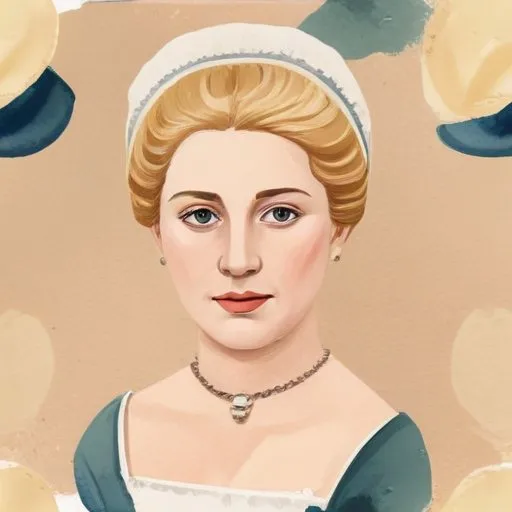
Queen of Naples and Sicily from 1738 to 1759, known for her cultural and artistic patronage, particularly in the development of the Royal Palace of Caserta.
Maria Amalia of Saxony, born on November 24, 1724, was a powerful and influential queen who ruled as the Queen of Spain from 1759 until her untimely death in 1760, and previously as the Queen of Naples and Sicily from 1738. She was renowned for her exceptional leadership, cultural patronage, and architectural contributions, leaving an indelible mark on the history of Spain and Naples.
Born at Dresden Castle in Dresden, Maria Amalia was the daughter of King Augustus III of Poland and Princess Maria Josepha of Austria. She was one of sixteen children, and her family connections were nothing short of impressive – her mother was the first cousin of Empress Maria Theresa, and her sister would go on to become the mother of Louis XVI of France.
Maria Amalia was educated in French, dance, and painting, and was an accomplished musician, playing the piano and singing from a young age. Her upbringing at the court of Dresden prepared her for the royal duties that lay ahead.
In 1738, Maria Amalia married Charles, King of Naples and Sicily, the future Charles III of Spain. The marriage was arranged by her future mother-in-law, Elizabeth Farnese, who had failed to secure a marriage between Charles and Archduchess Maria Anna of Austria.
As Queen of Naples and Sicily, Maria Amalia oversaw the construction of the magnificent Caserta Palace outside Naples, a testament to her exquisite taste and cultural patronage. She also promoted various other projects, earning her reputation as a wise and popular consort.
In 1759, Maria Amalia became Queen of Spain when her husband inherited the throne. Her influence on the affairs of state was notable, and she played a significant role in shaping the policies of her husband's government.
Maria Amalia's legacy extends far beyond her royal duties. She was a passionate advocate for the arts, and her patronage of architecture, music, and art helped to cultivate a rich cultural heritage in Spain and Naples.
Her architectural contributions, particularly the Caserta Palace, are a testament to her refined taste and sense of style. The palace, with its stunning gardens and ornate decorations, remains one of the most impressive examples of Baroque architecture in Europe.
Maria Amalia and Charles had thirteen children, seven of whom survived into adulthood. Her role as a mother and queen was marked by her devotion to her family and her people.
Despite her many accomplishments, Maria Amalia's life was cut short when she died on September 27, 1760, at the age of 35. Her untimely death was a tragic loss for her family and her people, who mourned the passing of a beloved queen.
Maria Amalia's life and reign took place during a time of significant political and cultural change in Europe. Her influence on the affairs of state and her patronage of the arts helped to shape the course of Spanish and Neapolitan history.
Today, Maria Amalia is remembered as a remarkable queen who left an indelible mark on the history of Spain and Naples. Her cultural contributions, architectural legacy, and personal story continue to inspire and fascinate historians and enthusiasts alike.
Born in 1797
King of Saxony from 1836 to 1854, known for his efforts to modernize and industrialize his country, and for his role in the Revolutions of 1848.
Born in 1670
A powerful Polish king who transformed his country into a major European power through military conquests and cultural achievements, earning him the nickname "the Strong".
Born in 1677
The last king of Poland before the country's partitions, he's known for his diplomatic skills and attempts to reform the Polish-Lithuanian Commonwealth. He's also famous for being the father-in-law of Louis XV of France.
Born in 1699
Daughter of Emperor Francis I and Empress Maria Theresa, she was a Habsburg archduchess and the last Dauphine of France before the French Revolution. She was known for her strong will and attempts to reform the French monarchy.
