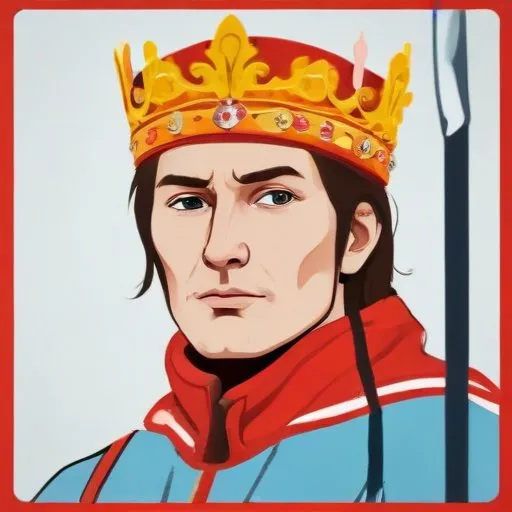
Stanisaw Leszczyski: The Twice-Crowned King of Poland and Grand Duke of Lithuania
A Life of Royal Intrigue and Power Struggles
Stanisaw Leszczyski, also known as Stanislaus I, is renowned for his remarkable achievement of being crowned King of Poland and Grand Duke of Lithuania not once, but twice. Born on October 20, 1677, Leszczyski's life was marked by a series of power struggles, alliances, and wars that shaped the fate of Eastern Europe during the early 18th century.
Rise to Power: The Great Northern War and Swedish Support
During the Great Northern War, Leszczyski emerged as a strong contender for the Polish throne, backed by Sweden, Russia's arch-nemesis. In 1704, he was crowned Stanisaw I, deposing Augustus the Strong, Elector of Saxony, with the support of
Charles XII of Sweden. This marked the beginning of Leszczyski's tumultuous reign, marked by battles, alliances, and territorial shifts.
Defeat, Exile, and Return
Leszczyski's reign was short-lived, as Charles XII's defeat at the Battle of Poltava in 1709 forced Leszczyski into exile.
Augustus II returned to the throne, and Leszczyski was relegated to the tiny state of Palatine Zweibrcken, a small state of the Holy Roman Empire. However, after Charles XII's death in 1719, Leszczyski moved to nearby Wissembourg in Alsace, where he bided his time, waiting for an opportunity to reclaim his throne.
The War of the Polish Succession and Second Reign
In 1725, Leszczyski's daughter, Marie Leszczyska, married
Louis XV of France, solidifying an important alliance. When Augustus II died in 1733, Leszczyski saw his chance and was elected king once again, this time with French support. However, his second reign was marked by continued turmoil, as Russian troops occupied parts of Poland, and Leszczyski was forced to navigate the treacherous landscape of European politics.
A Legacy of Power and Intrigue
Leszczyski's life was marked by an intricate web of alliances, battles, and power struggles. Despite his tumultuous reigns, he left a lasting impact on the history of Poland and Lithuania. His legacy serves as a testament to the complex and often treacherous nature of European politics during the early 18th century.
Personal Life and Family
Leszczyski's personal life was marked by family and relationships that played a significant role in his rise to power. His daughter, Marie Leszczyska, became Queen of France, cementing an important alliance. Leszczyski's family ties and strategic marriages were instrumental in shaping his career and the fate of Eastern Europe.
Philosophical Contributions and Beliefs
While Leszczyski's life was marked by power struggles and wars, he was also known for his cultural and philosophical pursuits. He was a patron of the arts and a supporter of education, encouraging the development of science, literature, and architecture in Poland and Lithuania.
Legacy and Historical Context
Leszczyski's legacy extends beyond his tumultuous reigns, shaping the course of European history and leaving an indelible mark on the fate of Poland and Lithuania. His story serves as a testament to the complex and often treacherous nature of European politics during the early 18th century, offering valuable insights into the intricate web of alliances, power struggles, and royal intrigue that defined the era.
- Major Works:
- Reforms in the Polish-Lithuanian Commonwealth
- Patronage of the arts and education
- Awards and Honors:
- King of Poland and Grand Duke of Lithuania (twice)
- Comparative Analysis with Contemporaries:
- Augustus II of Poland
- Charles XII of Sweden
Conclusion
Stanisaw Leszczyski's remarkable life, marked by power struggles, alliances, and wars, serves as a testament to the complex and often treacherous nature of European politics during the early 18th century. His legacy continues to shape our understanding of the era, offering valuable insights into the intricate web of alliances, power struggles, and royal intrigue that defined the lives of European monarchs.