


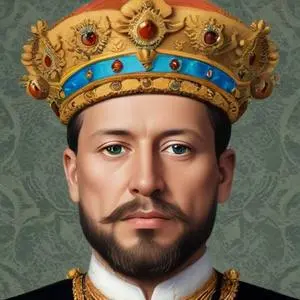
The Archduke of Austria who was installed as the Emperor of Mexico, sparking a civil war, and is remembered for his liberal reforms and tragic fate.
Best known for his brief yet tumultuous reign as the Emperor of the Second Mexican Empire, Maximilian I was an Austrian archduke who attempted to bring European royalty to the newly independent Mexico. His three-year rule from 1864 to 1867 was marked by controversy, optimism, and ultimately, tragedy.
Born on July 6, 1832, as Ferdinand Maximilian Josef Maria von Habsburg-Lothringen, Maximilian was a member of the prestigious House of Habsburg-Lorraine. As the younger brother of Emperor Franz Joseph I of Austria, he was groomed for a life of imperial duty. Before his Mexican venture, Maximilian served as the commander-in-chief of the small Imperial Austrian Navy and briefly held the position of Austrian viceroy of Lombardy-Venetia.
In the midst of Mexico's post-independence instability, conservative monarchists sought a European royal to bring order and stability to their country. Maximilian, with his Habsburg lineage and connections to Spain's colonial past, was seen as an ideal candidate. Following a meeting with French Emperor Napoleon III in Paris, Maximilian was approached with an offer to take the Mexican throne.
Initial hesitation aside, Maximilian eventually accepted the offer, but only with guarantees of French support. This misjudgment would prove fatal. Unbeknownst to Maximilian, the Mexican conservatives failed to account for his liberal inclinations, and he underestimated the resentment he would face as a foreign ruler. Despite his intentions to bring modernity and progress to Mexico, his reign was marked by internal strife, external pressures, and ultimately, his own downfall.
On June 19, 1867, Maximilian I was executed by firing squad by the forces of the Restored Republic, bringing an end to his short-lived empire. His legacy is complex and multifaceted, a testament to the intricate web of international politics, cultural identity, and personal ambition. While his reign was marked by controversy and tragedy, Maximilian's story serves as a poignant reminder of the complexities of nation-building and the blurred lines between progress and colonialism.
Maximilian's brief reign had a lasting impact on Mexican politics, identity, and culture. His attempts to introduce European modernity and liberal reforms, although ultimately unsuccessful, paved the way for future reforms and shaped Mexico's self-perception as a nation. Additionally, his story serves as a cautionary tale about the complexities of colonialism, imperialism, and the dangers of foreign intervention in domestic affairs.
Maximilian's reign coincided with the tumultuous years of the Mexican War of Reform and the French intervention in Mexico. His story is often compared to that of other colonial and imperial ventures, such as the French colonization of Algeria and the British Raj in India. A nuanced understanding of Maximilian's reign requires a deep appreciation for the complex historical context in which he operated.
Born in 1830
The longest-reigning ruler of Austria-Hungary, presiding over a vast empire that spanned across Central Europe, and remembered for his role in shaping European history through diplomacy and war.
Born in 1811
The son of Napoleon Bonaparte, he was the titular Emperor of the French from 1811 to 1832, although he never actually ruled. He's known for his brief, tumultuous life and mysterious death.
Born in 1826
The last Empress of France, known for her fashion sense and lavish lifestyle, which influenced European aristocracy and high society. She was a patron of the arts and a trendsetter in her time.
Born in 1806
A champion of democracy and indigenous rights, he modernized Mexico, abolished slavery, and limited church power. He's revered as a national hero for his progressive reforms.
Born in 1832
Unconstitutional president of Mexico who briefly seized power in 1832, known for his short-lived and tumultuous reign.
65 Years Old
The current head of the former ruling dynasty of Austria-Hungary, he is a politician and advocate for European unity and human rights, known for his efforts to promote democracy and reconciliation.
