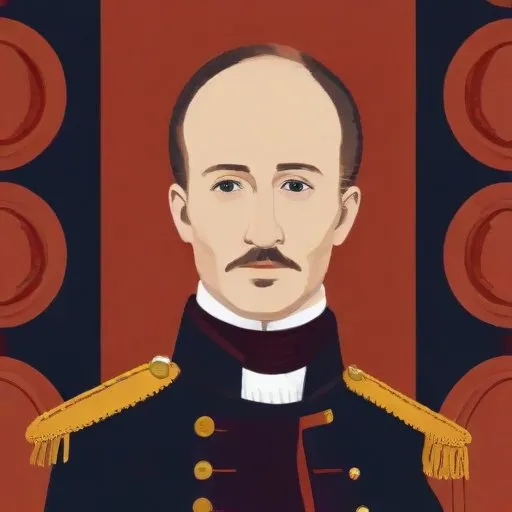
Alexander Mackenzie Stuart, Baron MackenzieStuart: A Trailblazing Scottish Judge
A Pioneer in European Justice
Alexander Mackenzie Stuart, Baron MackenzieStuart, was a Scottish advocate and judge who made history as the first judge from a United Kingdom jurisdiction to sit on the European Court of Justice in Luxembourg, later becoming its president. This remarkable achievement cemented his legacy as a trailblazer in the realm of European justice.
Early Life and Education
Born on November 18, 1924, in Aberdeen, Scotland, Mackenzie Stuart was the son of Professor A. Mackenzie Stuart, a renowned Kings Counsel and Professor of Scots Law at Aberdeen University. His mother, Amy Margaret Dean, was a homemaker. Mackenzie Stuart's educational background was marked by excellence, with him attending Fettes College in Edinburgh and later studying at Cambridge University, where he earned first-class honors in law.
War Service and Early Career
During World War II, Mackenzie Stuart served in the British Army, where he was commissioned in the Royal Engineers. His wartime experiences, including building bridges in northern Europe and dismantling mines on the Northumbrian coast, would later shape his perspective on the importance of international cooperation.
After the war, Mackenzie Stuart returned to Cambridge on a law scholarship, taking first-class honors in Part II of the Tripos in 1949. He then earned an LL.B. with distinction at Edinburgh University two years later. Admitted to the Faculty of Advocates in 1951, he quickly built a substantial practice, becoming a Queens Counsel in 1963.
Rise to Prominence
Mackenzie Stuart's judicial career spanned many years, with notable appointments including Sheriff of Aberdeen in 1971 and Senator of the College of Justice, with the judicial title Lord Mackenzie Stuart. However, his most significant appointment came in 1973, when he became a Judge of the European Court of Justice.
Presidency of the European Court of Justice
In 1984, Mackenzie Stuart was elected President of the European Court of Justice, a position he held until 1988. During his presidency, he oversaw significant developments in European law, including the introduction of the Single European Act and the Single Market program.
Legacy and Impact
Alexander Mackenzie Stuart's legacy extends far beyond his many achievements. He played a crucial role in shaping the European Union's legal framework, fostering greater cooperation among member states. His commitment to European integration and his tireless advocacy for human rights have inspired generations of lawyers, judges, and policymakers.
Awards and Honors
Mackenzie Stuart received numerous awards and honors for his services to law and justice, including:
- Knighted in 1973
- Created a Life Peer in 1988, taking the title Baron Mackenzie-Stuart
- Awarded the Grand Cross of the Order of Merit of the Federal Republic of Germany
Personal Life
Mackenzie Stuart married twice, first to Christian
Mary Wilson in 1954, with whom he had two sons, and then to Dr. Fiona Campbell in 1992. He passed away on April 1, 2000, leaving behind a legacy of dedication to justice, European integration, and human rights.
Conclusion
Alexander Mackenzie Stuart, Baron MackenzieStuart, was a trailblazing Scottish judge who left an indelible mark on the European legal landscape. His commitment to justice, human rights, and European integration continues to inspire generations of lawyers, judges, and policymakers. His remarkable achievements serve as a testament to his unwavering dedication to the pursuit of a more just and united Europe.
FAQ
What was Alexander Mackenzie Stuarts military career like?
Alexander Mackenzie Stuart served in the British Army during World War I and World War II, rising to the rank of brigadier general and earning several honors, including the Distinguished Service Order.
What were Alexander Mackenzie Stuarts achievements as a judge?
Alexander Mackenzie Stuart was a respected judge, serving on the Scottish Bench and later as a judge of the European Court of Justice, where he played a key role in shaping European law.
What honors did Alexander Mackenzie Stuart receive for his public service?
Alexander Mackenzie Stuart was knighted in 1954 and created a life peer in 1972, becoming Baron Mackenzie-Stuart of Halkin.
What was Alexander Mackenzie Stuarts role in promoting European integration?
Alexander Mackenzie Stuart was a strong supporter of European integration, working to advance cooperation between European nations and promote the rule of law in the European Community.
What was Alexander Mackenzie Stuarts legacy in Scottish and European law?
Alexander Mackenzie Stuarts legacy is marked by his contributions to the development of Scottish and European law, his commitment to public service, and his advocacy for European integration.