


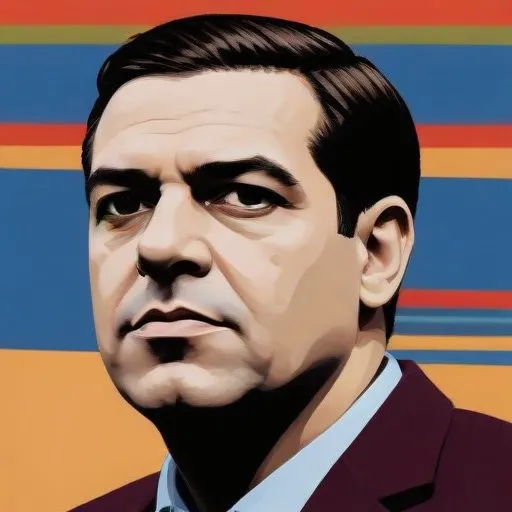
Greek engineer and politician who served as Prime Minister of Greece from 2015 to 2019, known for his efforts to restructure Greece's debt and implement progressive policies .
Alexis Tsipras, the charismatic Greek politician, is best known for leading the Coalition of the Radical Left (Syriza) to a historic victory in the 2015 Greek legislative election, becoming the Prime Minister of Greece at the age of 40. During his tenure, he navigated the country through the tumultuous Greek government-debt crisis, implementing austerity measures that sparked widespread protests and dissent.
Born on July 28, 1974, in Athens, Greece, Tsipras was raised in a family of moderate means. His parents, Pavlos and Aristi Tsipras, were both civil engineers. From a young age, Tsipras was drawn to politics, joining the Communist Youth of Greece in the late 1980s. He later became involved in student protests against education reform plans, serving as the movement's spokesperson. This early activism laid the foundation for his future political career.
Tsipras studied civil engineering at the National Technical University of Athens, graduating in 2000. He went on to pursue postgraduate studies in urban and regional planning. Before entering politics full-time, he worked as a civil engineer in the construction industry, primarily in Athens. His political career began in earnest when he served as the secretary of Synaspismos Youth from 1999 to 2003. He later joined Syriza, becoming its leader in 2008, succeeding Alekos Alavanos.
In January 2015, Tsipras led Syriza to a landslide victory in the Greek legislative election, winning 149 out of 300 seats in the Hellenic Parliament. This marked a significant shift in Greek politics, as Syriza became the first left-wing party to hold power in the country's modern history. Tsipras formed a coalition government with the Independent Greeks, and his party's victory sent shockwaves throughout the European Union.
Tsipras' government faced intense pressure from the European Union, the European Central Bank, and the International Monetary Fund to implement austerity measures in exchange for bailout funds. Despite initially resisting these demands, Tsipras eventually agreed to a third EU bailout package in July 2015. This marked a significant U-turn for Syriza, which had campaigned on an anti-austerity platform. The move sparked widespread protests and criticism from within his own party.
In August 2015, Tsipras resigned as Prime Minister, citing a loss of parliamentary majority following intraparty defections. He was succeeded by Vassiliki Thanou-Christophilou, a caretaker prime minister. Despite his resignation, Tsipras remains a significant figure in Greek politics, having led Syriza until 2023.
Tsipras has long been an advocate for democratic socialism, believing in the need for a more equitable distribution of wealth and power. He has also been critical of neoliberalism and the austerity measures imposed upon Greece during the debt crisis. Throughout his career, Tsipras has emphasized the importance of social justice and human rights.
Alexis Tsipras' tenure as Prime Minister had a profound impact on modern Greek society. His government's policies, particularly the implementation of austerity measures, continue to shape the country's economic landscape. Additionally, his leadership of Syriza has inspired a new generation of left-wing politicians in Greece and beyond.
Tsipras has faced criticism for his handling of the Greek debt crisis, with some accusing him of backtracking on his anti-austerity promises. His resignation as Prime Minister was also met with disappointment and frustration from many of his supporters. Despite these controversies, Tsipras remains a respected figure in Greek politics, known for his unwavering commitment to social justice and human rights.
"The Greek people have made it clear that they want a change. They want a different path, a different future."
"The troika is not the solution; it is the problem."
Alexis Tsipras' rise to power marked a significant shift in Greek politics, as Syriza became the first left-wing party to hold power in the country's modern history. His leadership during the Greek debt crisis will continue to be studied and debated by scholars and historians alike. Tsipras' legacy serves as a testament to the power of grassroots activism and the importance of standing up against oppressive systems.
65 Years Old
A Greek economist and politician who served as Minister of Finance, known for his unorthodox views on economics and his role in the Greek debt crisis negotiations. He's a prominent critic of austerity measures and advocate for a more democratic European Union.
75 Years Old
The 185th Prime Minister of Greece, a key figure in the country's economic and political landscape, known for his leadership during the European sovereign-debt crisis. He implemented austerity measures to address Greece's financial woes.
69 Years Old
A prominent Greek politician who served as Deputy Prime Minister and Minister of Foreign Affairs, known for his key role in shaping Greece's economic and foreign policy during a critical period.
Born in 1883
A Greek philosopher, author, and playwright who explored the human condition through novels like "Zorba the Greek" and "The Last Temptation of Christ", delving into themes of spirituality, morality, and individualism.
70 Years Old
Greek lawyer and politician who served as Prime Minister of Greece from 2004 to 2009, implementing significant economic and social reforms. He's known for his efforts to modernize Greece and strengthen its position within the EU.
74 Years Old
A Greek sociologist and politician who served as the Prime Minister of Greece from 2009 to 2011, known for his efforts to address the country's debt crisis.
