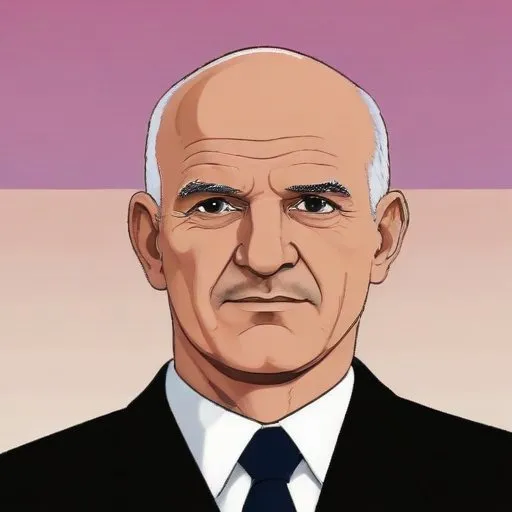
George Papandreou: The Greek Politician Who Shaped a Nation's Destiny
The Making of a Prime Minister
George Papandreou is known for his remarkable tenure as the 182nd Prime Minister of Greece, serving from 2009 to 2011. During this period, he navigated the country through the treacherous waters of the Greek government debt crisis, earning him a place in the annals of Greek political history.
A Dynasty of Leaders
Papandreou hails from a prominent political dynasty. His grandfather,
Georgios Papandreou, and father,
Andreas Papandreou, both served as Prime Ministers of Greece. Following in their footsteps, George Papandreou has created his own legacy, distinct from his family's influential shadow.
Early Life and Education
Born on June 16, 1952, in Saint Paul, Minnesota, George Papandreou was exposed to politics from a young age. He pursued his higher education at Amherst College in Massachusetts, later obtaining a Master's degree in Sociology from the London School of Economics.
Rise to Prominence
Papandreou's political career began in 1984, when he was elected to the Greek Parliament. He went on to serve as Minister for National Education and Religious Affairs from 1988 to 1989 and again from 1994 to 1996, under his father's government. Later, he held the position of Minister for Foreign Affairs from 1999 to 2004, under Prime Minister Costas Simitis.
Leadership and Legacy
In 2004, Papandreou became the leader of the Panhellenic Socialist Movement (PASOK) party, founded by his father. He held this position until 2012, when he resigned to form his own party, the Movement of Democratic Socialists (KIDISO). In 2017, KIDISO merged with the Democratic Alignment, a political alliance formed by PASOK and other center-left parties. This alliance later evolved into the Movement for Change, with Papandreou serving as an MP representing the region of Achaea.
Presidency of the Socialist International
From 2006 to 2022, Papandreou held the prestigious position of President of the Socialist International, a global organization of social democratic and socialist parties.
Controversies and Public Perception
Papandreou's premiership was marred by controversy, particularly during the Greek government debt crisis. His decision to resign in 2011, making way for a national unity government, was seen as a pragmatic move to address the country's financial woes. However, this move also sparked criticism and public backlash.
Philosophical Contributions and Beliefs
Throughout his career, Papandreou has been a vocal advocate for social democracy, European integration, and human rights. He has also emphasized the importance of education, innovation, and sustainable development in shaping Greece's future.
Net Worth and Financial Impact
As a politician, Papandreou's net worth is not publicly disclosed. However, his policies and decisions have had a significant impact on Greece's economy, shaping the country's financial landscape during his tenure as Prime Minister.
Personal Milestones and Key Life Events
- Married to Ada Papapanou, with two daughters, Andrea and Maria
- Served as an MP for the Movement for Change, representing the region of Achaea
- Founded the Movement of Democratic Socialists (KIDISO) in 2015
- Resigned as leader of PASOK in 2012 and left the party in 2015
Influence on Modern Society
Papandreou's leadership and policies have had a lasting impact on modern Greek society, shaping the country's political, economic, and social landscape. His commitment to social democracy and human rights has inspired a generation of Greek politicians and citizens alike.
Quotes and Memorable Sayings
- "We must have the courage to change, to innovate, and to take risks."
- "Greece is not just a country, it's a symbol of democracy and freedom."
Historical Context and Legacy
George Papandreou's legacy is inextricably linked with the complexities of Greek politics and the country's tumultuous financial history. His premiership will be remembered as a period of significant challenge and transformation, shaping the course of Greece's future.
FAQ
What is George Papandreous political career like?
George Papandreou is a Greek politician who served as the Prime Minister of Greece from 2009 to 2011, leading the Panhellenic Socialist Movement party.
What are George Papandreous academic credentials?
George Papandreou holds a degree in sociology from Amherst College and has completed graduate studies at the London School of Economics.
What is George Papandreous family background?
George Papandreou comes from a prominent Greek political family, being the son of Andreas Papandreou, a former Prime Minister of Greece, and grandson of George Papandreou, a former Prime Minister and Resistance leader.
What are George Papandreous achievements as Prime Minister?
During his tenure as Prime Minister, George Papandreou implemented several reforms, including pension and labor market reforms, and navigated Greece through the European sovereign-debt crisis.
What is George Papandreous current role?
George Papandreou remains active in Greek politics, currently serving as the President of the Socialist International and continuing to work on social democratic and progressive causes.