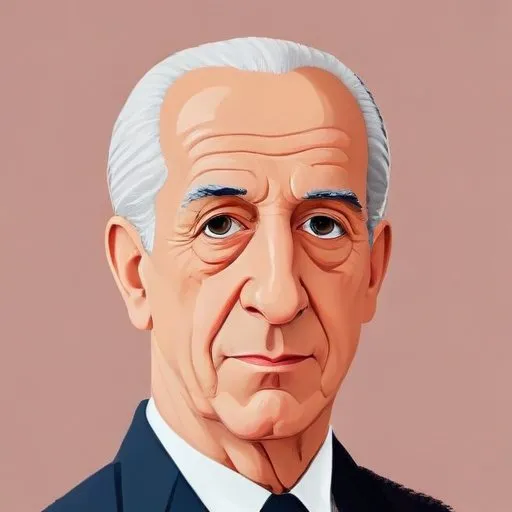
Karolos Papoulias, the esteemed Greek politician, is renowned for his two-term presidency of Greece from 2005 to 2015, during which he navigated the country through a period of significant economic and political upheaval. As a seasoned diplomat and member of the Panhellenic Socialist Movement (PASOK), Papoulias also held the position of Minister of Foreign Affairs on two separate occasions, from 1985 to 1989 and again from 1993 to 1996.
Karolos Papoulias was born on June 4, 1929, in the village of Molyvdoskepastos, Ioannina, Greece, to Major General Gregorios Papoulias. His educational pursuits took him to various institutions, including the University of Athens, where he earned a law degree, and the University of Milan, where he obtained a master's degree in public international law and international relations. He furthered his academic credentials by earning a doctorate in private international law from the University of Cologne, with a doctoral thesis titled "Erwerb und Verlust des unmittelbaren Besitzes im griechishen und deutschen Recht" (The Acquisition and Loss of Immediate Possession in Greek and German Law).
Minister of Foreign Affairs (1985-1989, 1993-1996): Papoulias played a crucial role in shaping Greece's foreign policy during these periods, fostering diplomatic relations with European nations and promoting regional cooperation.
President of Greece (2005-2015): As the sixth President of Greece, Papoulias worked to address the country's economic challenges, implement reforms, and strengthen international relations.
Chairman of the National Sports Association: Papoulias' involvement in sports led to the promotion of athletic events and the development of sports infrastructure in Greece.
Founding member and president of the Association for the Greek Linguistic Heritage: Papoulias' commitment to preserving and promoting Greek cultural heritage is reflected in his efforts to protect and promote the Greek language.
In 1941, during World War II, Papoulias joined the armed resistance against the German occupation of Greece. Later, in 1967, he headed the organization of the Democratic Socialist Union Abroad, mobilizing Greek workers, students, and scientists in Europe against the military junta that had taken power in Greece.
Papoulias' commitment to democracy, social justice, and human rights has been a hallmark of his political career. His involvement in various organizations and initiatives has demonstrated his dedication to promoting peace, stability, and cooperation in the region.
Karolos Papoulias' contributions to Greek politics and diplomacy have had a lasting impact on modern society. His efforts to strengthen international relations, promote regional cooperation, and address economic challenges have left a lasting legacy in Greece and beyond.
Papoulias' life and career are set against the backdrop of significant historical events, including World War II, the Cold War, and the rise of globalization. His commitment to democracy, social justice, and human rights has earned him a place in the annals of Greek history as a champion of progress and cooperation.
When compared to his contemporaries, Papoulias' unique blend of political acumen, diplomatic experience, and commitment to social justice sets him apart as a leader who has made a lasting impact on Greek politics and international relations.
"Democracy is not just a form of government, but a way of life." - Karolos Papoulias
Karolos Papoulias' net worth is estimated to be in the millions, accumulated through his long and distinguished career in politics and diplomacy. His financial impact on Greece has been significant, with his efforts to address economic challenges and promote investments contributing to the country's economic growth.
Papoulias' academic credentials and involvement in educational institutions have had a profound impact on the development of academic programs and research initiatives in Greece and beyond.
Throughout his career, Papoulias has been involved in various controversies and scandals, including allegations of corruption and cronyism. However, his commitment to democracy and social justice has earned him a reputation as a leader who has worked tirelessly to address the challenges facing Greece and promoting reform and accountability.
Karolos Papoulias has been involved in various charitable initiatives and social causes, including the promotion of education, healthcare, and social welfare programs. His commitment to giving back to society has earned him recognition as a philanthropist and humanitarian.
Papoulias' life story serves as an inspiration to many, demonstrating the importance of perseverance, dedication, and commitment to public service. His legacy continues to motivate future generations of leaders and policymakers.
FAQ
What is Karolos Papouliass role in Greek politics?
Karolos Papoulias served as the 5th President of Greece from 2005 to 2015, playing a crucial role in shaping the countrys politics and economy during his tenure. He was also a prominent figure in the Panhellenic Socialist Movement (PASOK) party.
What are Karolos Papouliass achievements as President of Greece?
During his presidency, Karolos Papoulias implemented several reforms, including improving Greeces relations with neighboring countries, supporting the countrys accession to the European Union, and advocating for social justice and human rights.
What is Karolos Papouliass early life and education?
Karolos Papoulias was born on March 4, 1929, in Ioannina, Greece. He studied law at the University of Athens and later earned a Ph.D. in law from the University of Munich.
What are Karolos Papouliass views on European integration?
As a strong supporter of European integration, Karolos Papoulias advocated for Greeces membership in the European Union and played a key role in the countrys accession process.
What is Karolos Papouliass legacy in Greek politics?
Karolos Papoulias is remembered as a dedicated public servant who worked tirelessly to promote Greeces interests and stability in the region. His presidency was marked by a commitment to social justice, human rights, and European integration.