


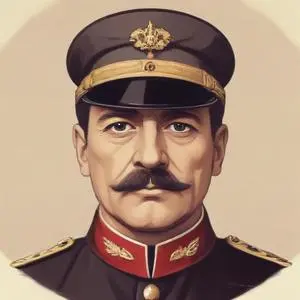
A French colonel wrongly accused of treason, sparking a national scandal that exposed deep-seated anti-Semitism and led to a major overhaul of the French justice system.
Alfred Dreyfus, a French artillery officer of Alsatian origin and Jewish ethnicity, is best known for being at the epicenter of one of the most infamous miscarriages of justice in modern history – the Dreyfus Affair. In 1894, Dreyfus was wrongfully accused and convicted of being a spy for the German Empire, sparking a major political crisis that would shake the foundations of the Third Republic.
Born on October 9, 1859, in Mulhouse, Alsace, Dreyfus was a dedicated military officer who had served his country with distinction. However, his life took a tragic turn when he was arrested and accused of treason in 1894. The alleged evidence against him was flimsy at best, but the antisemitic sentiment of the time, coupled with the army's desire to cover up its own mistakes, led to his conviction and subsequent deportation to the infamous Devil's Island penal colony.
The Dreyfus Affair, as it came to be known, was a complex web of deceit, corruption, and conspiracy that involved some of the highest echelons of the French military and government. The scandal erupted when evidence emerged that pointed to Dreyfus's innocence and the guilt of another officer, Ferdinand Esterhazy. The army's attempts to cover up the affair, led by officers such as General Auguste Mercier, only fueled the flames of controversy.
In 1898, the renowned writer Émile Zola published his famous manifesto, "J'Accuse...", accusing the army and government of covering up the affair and condemning the gross injustice meted out to Dreyfus. Zola's bold move galvanized public opinion and brought new momentum to Dreyfus's cause, eventually leading to his exoneration and rehabilitation in 1906.
After years of fighting for his freedom and reputation, Dreyfus was finally reinstated in the French army, albeit at a lower rank than his seniority warranted. However, the anti-Dreyfusard and antisemitic factions continued to view him with hostility, and he was even targeted in an assassination attempt during the transfer of Zola's remains to the Panthéon.
Despite the traumas he had endured, Dreyfus continued to serve his country with distinction, fighting bravely in World War I, notably at Verdun and the Chemin des Dames. He eventually retired from active duty and led a quiet life, passing away on July 12, 1935, in Paris.
The Dreyfus Affair had far-reaching consequences, exposing the deep-seated antisemitism and militarism that pervaded French society at the time. Dreyfus's story has become a powerful symbol of the fight against injustice and a testament to the human spirit's ability to persevere in the face of adversity. Today, his legacy continues to inspire generations, serving as a reminder of the importance of standing up against discrimination and fighting for the truth.
Born in 1840
A pioneering figure in naturalist literature, known for his influential novels that exposed social ills and championed reform, such as "Germinal" and "Nana".
Born in 1841
A French journalist, physician, and politician who served as Prime Minister of France during World War I, leading the country to victory and playing a key role in shaping the Treaty of Versailles. He's also known for his strong leadership and witty humor.
Born in 1872
A French lawyer and politician who served as Prime Minister of France, known for his leadership during the Popular Front government and his role in shaping the country's social and economic policies.
Born in 1860
A French statesman who served as President of France during a tumultuous period, playing a crucial role in shaping the country's response to World War I. He's also known for his efforts to reform the French economy and stabilize the franc.
Born in 1890
A French military leader who led the Free French Forces during WWII and later became President of France, known for his strong leadership and vision for a unified Europe.
Born in 1916
A French lawyer and politician who served as the 21st President of France, known for his socialist policies and role in shaping the European Union. He's also remembered for his controversial past and complex personality.
93 Years Old
A French military officer and statesman who served as President of France from 1995 to 2007, known for his opposition to the US-led invasion of Iraq and his efforts to strengthen the European Union.
