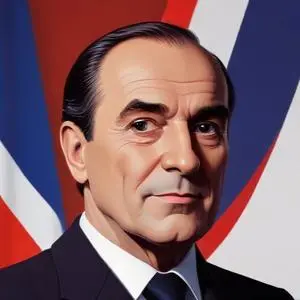
Franois Mitterrand: The Iconic French President Who Redefined the Country's Political Landscape
A Legacy of Radical Change and Visionary Leadership
Franois Mitterrand, the longest-serving President of France, left an indelible mark on the country's history, politics, and culture. From 1981 to 1995, he steered the nation through a period of monumental transformation, introducing far-reaching reforms and ambitious projects that continue to shape France's contemporary identity.
Early Life and Political Roots
Born on October 26, 1916, in Jarnac, Charente, Mitterrand was influenced by his family's Catholic nationalist leanings, which initially drew him to the right-wing of French politics. However, during World War II, he became involved with the French Resistance, shifting his allegiance to the left. This pivotal moment in his life laid the foundation for his future as a socialist leader.
Rise to Prominence
Mitterrand's ascent to power was marked by his tenure as the First Secretary of the Socialist Party, a position he held from 1971 to 1981. During this period, he successfully integrated the party's various factions, paving the way for his eventual presidential bid. In 1965 and 1974, he contested the presidential elections, losing to
Charles de Gaulle and
Valéry Giscard d'Estaing, respectively. Undeterred, he continued to build his political capital, ultimately winning the presidency in 1981.
A Radical Agenda for Change
Mitterrand's presidency was characterized by a bold and radical agenda, which aimed to transform France's economy, social fabric, and cultural landscape. Some of his notable initiatives included:
- Nationalization of key industries, such as banking and energy
- Introduction of a 39-hour work week and increased minimum wage
- Abolition of the death penalty and liberalization of social laws
- End of government monopoly in radio and television broadcasting
These reforms, though contentious at the time, have had a lasting impact on French society and politics.
Cultural and Architectural Legacy
Mitterrand was an ardent promoter of French culture and commissioned several grandiose architectural projects, known as the
Grands Projets. These iconic landmarks, including the Louvre Pyramid, the Opéra Bastille, and the Grande Arche de La Défense, have become synonymous with modern France.
Controversies and Criticisms
Mitterrand's presidency was not without controversy. He faced criticism for his handling of the
Rainbow Warrior bombing in 1985 and his perceived laxity towards communist and socialist extremist groups. Additionally, his appointment of Édith Cresson as the first female Prime Minister in 1991 was seen as a tokenistic gesture.
Personal Life and Final Years
Mitterrand's personal life was marked by a complex web of relationships and alliances. He was known for his charismatic persona and ability to forge close bonds with world leaders. After departing the presidency in 1995, Mitterrand retired to his country home in Latche, where he passed away on January 8, 1996.
Legacy and Impact
Franois Mitterrand's presidency was a defining moment in French history, leaving an indelible mark on the country's politics, economy, culture, and architecture. As a shrewd politician and visionary leader, he navigated the complexities of French society, introducing reforms that continue to shape the nation's identity. His legacy serves as a testament to the power of radical change and the importance of visionary leadership.
FAQ
What is François Mitterrands political career like?
François Mitterrand was a French lawyer and politician who served as the 21st President of France from 1981 to 1995. He was a key figure in French politics for over 30 years.
What is François Mitterrands early life like?
François Mitterrand was born in Jarnac, France, and studied law at the University of Paris. He began his political career as a member of the French Resistance during World War II.
What is François Mitterrands presidency like?
As President, François Mitterrand oversaw several significant reforms, including the abolition of the death penalty, the decentralization of power, and the integration of France into the European Union.
What is François Mitterrands legacy in French politics?
François Mitterrands legacy in French politics lies in his ability to unite the French left and implement significant reforms. He is remembered as a skilled politician and statesman who served France during a transformative period.
What is François Mitterrands personal life like?
François Mitterrand was known for his complex and sometimes controversial personal life. He was married to Danielle Gouze and had two sons with her, but also had a long-term affair with Anne Pingeot, with whom he had a daughter.