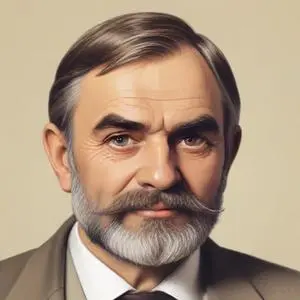
Alfred Nobel: The Explosive Genius Behind the Nobel Prize
The Man Behind the Prize
Alfred Nobel, a Swedish chemist, inventor, and engineer, is most notoriously known for inventing dynamite, a revolutionary explosive that transformed the face of construction and warfare. However, his legacy extends far beyond this explosive innovation, as he is also the founder of the prestigious Nobel Prize, a revered award that acknowledges outstanding contributions to humanity.
Early Life and Education
Born on October 21, 1833, in Stockholm, Sweden, Alfred Nobel was the third son of Immanuel Nobel, an inventor and engineer, and Andriette Nobel (née Ahlsell).
Growing up in a family of modest means, Alfred's early aptitude for science and learning was evident. He became fluent in six languages and filed his first patent at the tender age of 24. This early fascination with chemistry and innovation set the stage for his future accomplishments.
The Road to Dynamite
Nobel's most famous invention, dynamite, was patented in 1867. This groundbreaking explosive used nitroglycerin, a highly unstable substance that Nobel successfully stabilized with silica and other inert materials. The development of dynamite revolutionized the construction industry, enabling the creation of tunnels, canals, and other infrastructure projects that transformed the urban landscape.
A Business Empire
Alfred Nobel was not only a brilliant inventor but also a shrewd businessman. He co-founded the company Bofors, a Swedish iron and steel producer, which he later developed into a major manufacturer of cannons and other armaments. This business acumen allowed him to amass a significant fortune, which he would later use to establish the Nobel Prize.
The Nobel Prize
Upon his death on December 10, 1896, Alfred Nobel left behind a remarkable legacy. In his will, he bequeathed his fortune to establish the Nobel Prize, an annual award that recognizes outstanding contributions to humanity in the fields of physics, chemistry, medicine, literature, and peace.
Philosophical Contributions and Beliefs
Nobel's philosophical outlook was shaped by his humanitarian ideals. He believed that scientific progress should be harnessed for the betterment of humanity, rather than solely for personal gain or destructive purposes. This vision is reflected in the Nobel Prize, which continues to inspire generations of scientists, writers, and peacemakers.
Personal Milestones and Key Life Events
- 1867: Patented dynamite
- 1876: Co-founded Bofors, a Swedish iron and steel producer
- 1895: Wrote his last will and testament, establishing the Nobel Prize
- 1896: Died on December 10, leaving behind a legacy of innovation and humanitarianism
Impact on Modern Society
Alfred Nobel's contributions have had far-reaching implications for modern society. His inventions and business ventures paved the way for advancements in construction, medicine, and science. The Nobel Prize, which bears his name, continues to inspire and recognize outstanding achievements, promoting global progress and cooperation.
Quotes and Memorable Sayings
"I intend to leave behind a reputation, not a fortune."
"My dynamite will sooner lead to peace than a thousand world conventions. As soon as men will find that in one instant, whole armies can be destroyed, they will surely think twice before making war."
Legacy and Controversies
While Alfred Nobel's legacy is undeniably significant, it is not without controversy. Critics have argued that his involvement in the arms industry and the development of destructive technologies contradict his humanitarian ideals. Nevertheless, his contributions to science, innovation, and the pursuit of peace continue to inspire and influence modern society.
A Lasting Impact
As we reflect on Alfred Nobel's remarkable life, we are reminded of the transformative power of innovation, entrepreneurship, and humanitarianism. His legacy serves as a testament to the potential of human endeavor, inspiring future generations to strive for greatness and make a lasting impact on the world.
FAQ
What was Alfred Nobels invention of dynamite?
Alfred Nobel invented dynamite in 1866, which revolutionized the explosives industry and led to numerous applications in mining, construction, and warfare.
What was Alfred Nobels establishment of the Nobel Prize?
Alfred Nobel established the Nobel Prize in 1895, which awards outstanding contributions in the fields of physics, chemistry, medicine, literature, and peace.
Where was Alfred Nobel born?
Alfred Nobel was born on October 21, 1833, in Stockholm, Sweden.
What was Alfred Nobels relationship with Bertha von Suttner?
Alfred Nobel was a close friend and collaborator of Bertha von Suttner, a Austrian pacifist and novelist. She influenced his views on peace and international cooperation.
How did Alfred Nobel die?
Alfred Nobel died on December 10, 1896, at the age of 63, in Sanremo, Italy. He died of natural causes after a long illness.