


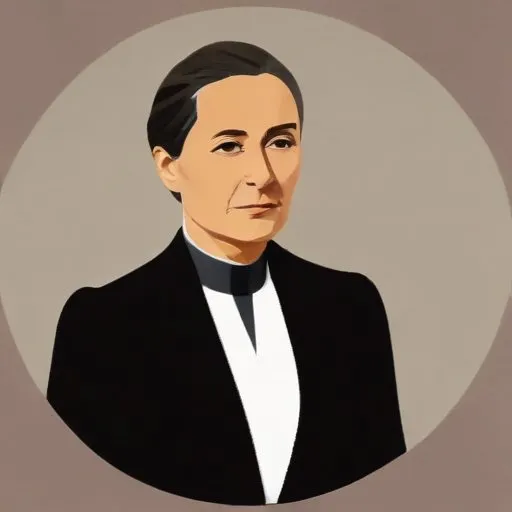
A pioneering pacifist and writer, she championed international disarmament and peace, earning the first Nobel Peace Prize awarded to a woman. Her groundbreaking work inspired a generation of peace activists.
Bertha von Suttner, an Austro-Bohemian noblewoman, novelist, and devoted pacifist, made history by becoming the first woman to receive the Nobel Peace Prize in 1905. Her groundbreaking work, "Die Waffen Nieder!" (Lay Down Your Arms!), rallied against the devastating consequences of war, cementing her legacy as a beacon of peace and inspiration.
Born on June 9, 1843, at Kinsk Palace in Prague, Bertha Kinsk was the daughter of Austrian Lieutenant General Franz Michael de Paula Josef Graf Kinsky von Wchinitz und Tettau and his young wife, Sophie Wilhelmine von Krner. Despite her father's illustrious lineage, Bertha faced exclusion from the Austrian high nobility due to her mixed descent. This early experience of marginalization would later fuel her advocacy for justice and equality.
In 1889, Bertha published her seminal novel, "Die Waffen Nieder!" (Lay Down Your Arms!), a scathing critique of war and its destructive impact on humanity. The book's instant success propelled her to the forefront of the pacifist movement, earning her recognition as a leading voice for peace. Through her writing, Bertha sought to humanize the victims of war, emphasizing the devastating consequences on families, communities, and entire nations.
In 1905, Bertha von Suttner's tireless efforts were rewarded with the Nobel Peace Prize, solidifying her position as a pioneer in the pursuit of peace. This prestigious honor not only recognized her literary achievements but also her unwavering commitment to creating a more peaceful world. As the first woman to receive this esteemed award, Bertha paved the way for future generations of female peace activists and humanitarians.
Bertha von Suttner's remarkable life and achievements serve as a testament to the power of individual activism and the importance of promoting peace and understanding. Her work continues to inspire generations, reminding us of the urgent need for collective action against the devastating consequences of war.
Bertha von Suttner's remarkable journey, marked by courage, conviction, and perseverance, has left an indelible mark on the pursuit of peace and human rights. As we reflect on her extraordinary life, we are reminded of the boundless potential of individual action to shape a more just and peaceful world.
Born in 1833
A Swedish chemist and engineer who invented dynamite and established a prestigious award recognizing outstanding contributions in fields like literature, peace, and science.
Born in 1822
A French economist and academic who was awarded the Nobel Peace Prize in 1901 for his efforts to establish the International Committee of the Red Cross and promote international arbitration. He is known for his pioneering work in promoting peace and conflict resolution.
Born in 1828
Co-founder of the Red Cross, a humanitarian organization providing aid in war zones and natural disasters, and a Nobel Peace Prize winner for his efforts. He pioneered the concept of international humanitarian law.
Born in 1828
A Russian literary giant who penned sweeping novels like "War and Peace" and "Anna Karenina", exploring the human condition with profound insight and masterful storytelling.
Born in 1869
Indian freedom fighter, activist, and philosopher who led India to independence from British rule through non-violent civil disobedience, inspiring civil rights movements worldwide.
97 Years Old
A prominent leader in the civil rights movement, advocating for racial equality and social justice through nonviolent means, leaving a lasting impact on American history.
Born in 1860
A pioneering social worker and peace activist, she founded Hull House, a settlement that provided social services to immigrants and the working poor, and was awarded the Nobel Peace Prize in 1931.
