


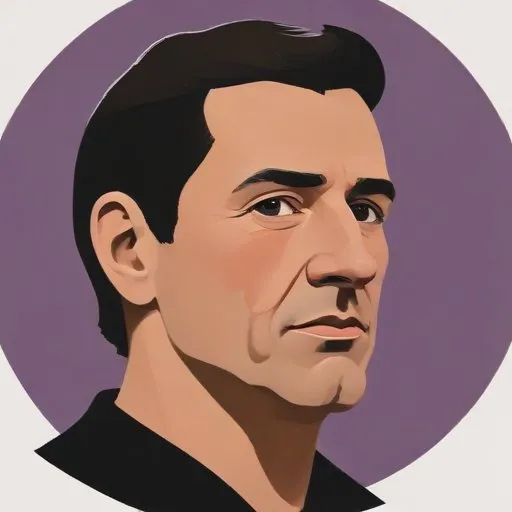
A Chiricahua Apache artist, he created sculptures and paintings that explored Native American identity and experiences, blending traditional and modern styles. His work humanized and dignified Native American people, challenging stereotypes and promoting cross-cultural understanding.
Allan Houser, a renowned Chiricahua Apache sculptor, painter, and book illustrator, left an indelible mark on the art world with his pioneering fusion of Native American heritage and modernist techniques. With a career spanning over five decades, Houser's work continues to inspire generations of artists, scholars, and art enthusiasts alike.
Born on June 30, 1914, in Oklahoma, Houser was raised on the family farm near Apache and Fort Sill, Oklahoma, into the Warm Springs Chiricahua Apache tribe. His early life was deeply rooted in his tribal heritage, with his father, Sam Haozous, serving as a translator for the legendary Geronimo.
In 1934, Houser left Oklahoma to study at Dorothy Dunn's Art Studio at the Santa Fe Indian School in Santa Fe, New Mexico. Dunn's innovative method, which encouraged working from personal memory and stylization of Native iconography, had a profound impact on Houser's artistic development.
Houser's professional career took off in 1939, with his work showcased at the New York World's Fair and the Golden Gate International Exposition. This marked the beginning of a prolific period, during which he received numerous commissions, including a major public commission to paint murals at the Main Interior Building in Washington, D.C.
In the 1940s, Houser's artistic scope expanded to include sculpture, under the guidance of Swedish muralist Olle Nordmark. This newfound passion would eventually earn him recognition as a leading modernist sculptor of the 20th century.
Houser's work can be found in esteemed institutions such as the Smithsonian Museum of American Art, the National Museum of the American Indian, the National Portrait Gallery in Washington, D.C., and the Oklahoma State Capitol Building. His iconic piece, Offering of the Sacred Pipe, is on display at the United States Mission to the United Nations in New York City.
His work is also featured in numerous major museum collections throughout North America, Europe, and Japan, cementing his status as a visionary artist who bridged cultural divides.
Throughout his illustrious career, Houser received numerous awards and honors, including the Grand Prize at the 1951 NMFA Indian Art Competition and the 1962 Indian Achievement Award.
Allan Houser's remarkable body of work not only celebrates his Native American heritage but also transcends cultural boundaries, inspiring future generations of artists, educators, and art lovers. His pioneering spirit, artistic innovation, and cultural significance continue to resonate, ensuring his legacy as a true visionary in the world of art.
79 Years Old
A Native American artist who blended traditional tribal styles with modern pop art, creating vibrant, thought-provoking works that explored identity, culture, and social justice.
Born in 1885
A pioneering artist of the 20th century, known for blending realism and abstraction in monumental sculptures and murals, often depicting the human figure in dynamic, expressive forms.
Born in 1867
Designed the iconic Mount Rushmore presidential monument, carving four giant faces into South Dakota's Black Hills. This monumental work of art has become an American symbol and popular tourist attraction.
Born in 1900
A pioneering graphic designer, painter, and photographer who merged art and technology to create visually striking and influential works, particularly in typography and corporate branding.
