


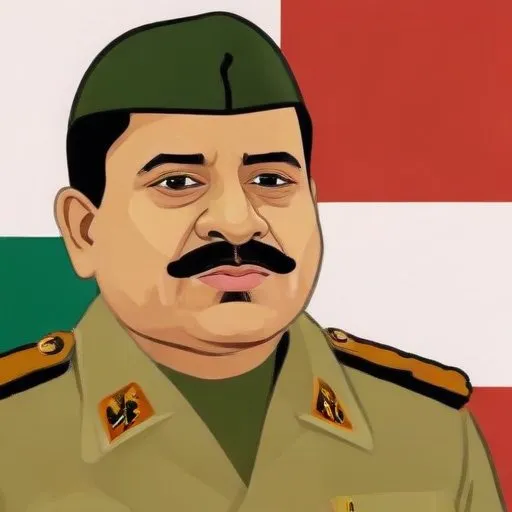
A Pakistani-British politician who founded the Muttahida Qaumi Movement (MQM) party, known for his influential role in Pakistani politics and alleged involvement in organized crime.
Altaf Hussain is a British Pakistani politician and the founder of the Muttahida Qaumi Movement (MQM), a prominent political party in Pakistan. Known for his charismatic leadership and influence on the country's political landscape, Hussain has been a key figure in Pakistani politics for over three decades.
Altaf Hussain was born on September 17, 1953, in Karachi, Pakistan, to Nazir Hussain and Khurseed Begum. His family migrated to Pakistan from Agra, India, during the partition of India in 1947. Hussain's father was an officer with the Indian Railways, and his paternal grandfather, Maulana Ramzan Hussain, was the Grand Mufti of Agra.
Hussain's rise to prominence began in the 1980s, when he founded the MQM, a party that aimed to represent the interests of the Muhajir community, who were Urdu-speaking people who migrated from India to Pakistan during the partition. Under Hussain's leadership, the MQM became a dominant force in Pakistani politics, particularly in the city of Karachi.
Hussain's philosophy is centered around the idea of empowering the Muhajir community and promoting their rights in Pakistan. He believes in the principles of democracy, social justice, and equality, and has advocated for the rights of marginalized communities throughout his career.
Hussain's career has been marked by his tireless efforts to promote the rights of the Muhajir community and to democratize Pakistani politics. He has written several books and articles on politics, democracy, and social justice, and has been a vocal critic of human rights abuses in Pakistan.
Hussain's influence on modern Pakistani society is undeniable. He has inspired a generation of young politicians and activists, and his party has played a significant role in shaping the country's political landscape.
Hussain has been the subject of controversy and criticism throughout his career, with some accusing him of promoting hatred and violence against rival political groups. However, his supporters see him as a champion of democracy and human rights.
"Democracy is not just a system of government; it's a way of life. It's about respecting the rights and dignity of every individual."
"The struggle for democracy is not just a struggle for power; it's a struggle for justice, equality, and freedom."
Altaf Hussain's legacy is complex and multifaceted. While he has been a polarizing figure, he has undoubtedly played a significant role in shaping Pakistani politics and promoting the rights of marginalized communities. His influence will be felt for generations to come.
73 Years Old
The first female Prime Minister of a Muslim-majority country, known for her efforts to democratize Pakistan and promote women's rights. She was a symbol of hope for a more liberal and tolerant Pakistan.
76 Years Old
The 12th Prime Minister of Pakistan, known for his three non-consecutive terms in office and his role in shaping the country's economy and foreign policy. He was ousted from power in 2017 due to corruption charges.
83 Years Old
The Pakistani general and politician who seized power in a military coup and ruled Pakistan from 1999 to 2008, known for his controversial presidency and attempted assassination. He played a key role in Pakistan's politics and foreign policy during a tumultuous period.
71 Years Old
The 11th President of Pakistan, a shrewd politician and businessman who navigated the country's complex political landscape, known for his cunning and resilience in the face of adversity.
74 Years Old
A legendary cricketer who led Pakistan to World Cup victory in 1992, and later became the country's Prime Minister, known for his charismatic leadership and anti-corruption stance.
70 Years Old
A Pakistani politician and diplomat who served as the country's Foreign Minister, known for his efforts to improve Pakistan's international relations and resolve regional conflicts.
