


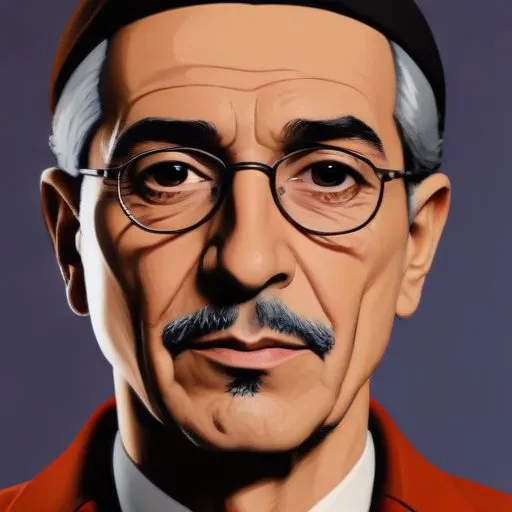
Designed ornate Baroque buildings and frescoes in 17th-century Italy, blending art and architecture in grand, dramatic style. His works adorn churches and palaces, showcasing his mastery of light and color.
Alziro Bergonzo, a renowned Italian architect and painter, is best known for his iconic Rationalized Stile Littorio style, which left an indelible mark on the country's architectural landscape. Born on December 30, 1906, in Bergamo, Italy, Bergonzo's life was a testament to his passion for design, creativity, and innovation.
Bergonzo was the son of Luigi Bergonzo, an engineering graduate from Bern who had settled in Bergamo in the early 1900s. He pursued his early education at the Liceo Sarpi before enrolling at the Faculty of Architecture at the Polytechnic University of Milan in 1925. It was during his time at the university that he met fellow architects Franco Albini and Giancarlo Palanti, with whom he would later collaborate on various projects.
Bergonzo's studies were interrupted by military service, but he eventually graduated in 1933 and began working in his father's established studio. This exposure helped him gain firsthand experience working with renowned professionals and artists in the field of decoration. His early work quickly gained recognition, and he started receiving commissions from various public and private clients, mainly in Bergamo.
When World War II broke out, Bergonzo relocated his studio to Rome, where he participated in the EU42 competition and collaborated with Luigi Moretti on the Foro Italico project. However, the war had a profound impact on Bergonzo's career, as he was purged from the professional register for political reasons. But in 1946, he was reinstated and went on to win a competition for the Lido di Venezia.
Bergonzo's post-war work includes some of his most notable projects, such as the Casa Trussardi in Bergamo, the Teatro Manzoni in Milan, port works in Saudi Arabia, and a theatre in Cairo. He also designed the fourth City Gate of Valletta, Malta, in the mid-1960s. Bergonzo's versatility and adaptability enabled him to excel in a wide range of projects, from public works to private commissions.
In the later years of his life, Bergonzo reserved his projects for private clients and devoted more time to painting. His dedication to his craft is a testament to his passion and love for art and architecture. Bergonzo passed away on May 22, 1997, in Milan, leaving behind a legacy that continues to inspire generations of architects and artists.
His final major work, the new Piazza della Libertà in Bergamo, was inaugurated shortly before his passing, a fitting tribute to a life spent creating and innovating.
Born in 1720
A renowned 18th-century artist who created intricate, imaginative etchings of ancient Roman architecture and fantastical prisons, influencing generations of artists and architects.
Born in 1598
A renowned Baroque master who crafted exquisite sculptures and paintings that captivated 17th-century Rome, leaving an indelible mark on the art world.
Born in 1475
Renaissance master of iconic works like the ceiling of the Sistine Chapel, creating breathtakingly beautiful and emotionally powerful art that continues to inspire and awe.
Born in 1404
Renaissance mastermind who excelled in various artistic and intellectual pursuits, leaving a lasting impact on the development of humanism and art theory.
Born in 1508
A renowned Renaissance architect and theorist, famous for designing iconic buildings that harmoniously blend classical and modern elements, including a majestic church and a historic theater.
