


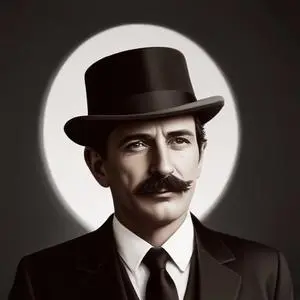
Founded a prestigious university in California that bears his name, and made his fortune in the railroad industry.
Amasa Leland Stanford, a name etched in history as the founder of Stanford University and the mastermind behind the First Transcontinental Railroad, left an indelible mark on the United States. He is most famously known for driving the golden spike that united the East and West Coasts of America, revolutionizing the country's transportation landscape.
Born on March 9, 1824, in Watervliet, New York, Stanford was the son of Josiah and Elizabeth Phillips Stanford. He grew up on a farm, where he developed a strong work ethic and entrepreneurial spirit. After studying law at Cazenovia College and later at the Albany Law School, Stanford ventured to California in 1852, during the height of the Gold Rush.
In California, Stanford's business acumen flourished as he invested in real estate, mercantile, and banking ventures. He co-founded the Whitney, Stanford & Company mercantile firm, which became a significant player in the state's economy. His success in business led him to enter politics, and in 1859, he was elected as the Governor of California, serving until 1862.
Stanford's most notable achievement came in 1869, when he, along with Charles Crocker, Mark Hopkins, and Collis Huntington, founded the Central Pacific Railroad. This venture aimed to connect the East and West Coasts of America through a transcontinental railroad. On May 10, 1869, Stanford drove the golden spike at Promontory Summit, Utah, marking the completion of the First Transcontinental Railroad.
In 1885, Stanford's only son, Leland Stanford Jr., died of typhoid fever. This personal tragedy led Stanford and his wife, Jane, to establish the Leland Stanford Junior University in 1887, as a tribute to their son. The university, which would later become one of the world's most prestigious institutions, was founded with the goal of promoting public welfare and advancing human knowledge.
Stanford's vision for a transcontinental railroad revolutionized America's transportation infrastructure, catalyzing economic growth and bridging the East and West Coasts. His legacy extends beyond the railroad, as Stanford University has become a hub for innovation, entrepreneurship, and academic excellence, shaping the minds of leaders and change-makers worldwide.
"The Napoleon of the Pacific," as Stanford was often referred to, left behind a plethora of inspiring quotes, including: "The object of the founders of this university is not to make students or scholars, but to make people of action, who will contribute to the good of the world."
Amasa Leland Stanford's remarkable life and achievements serve as a testament to his boundless energy, entrepreneurial spirit, and commitment to public welfare. His contributions to American history, education, and innovation have left an indelible mark, solidifying his place as one of the most influential figures of the 19th century.
As we reflect on the life and legacy of Amasa Leland Stanford, we are reminded of the power of vision, perseverance, and philanthropy. His extraordinary achievements continue to inspire generations, leaving behind a golden spike of innovation and progress that will forever be etched in American history.
Born in 1821
A railroad magnate who played a crucial role in the development of the American railroad system, particularly the Chesapeake and Ohio Railway and the Southern Pacific Railroad.
Born in 1822
Built the Central Pacific Railroad, a crucial part of the First Transcontinental Railroad, revolutionizing transportation and commerce in the United States.
Born in 1826
Founded the Central Pacific Railroad, playing a crucial role in connecting the east and west coasts of the United States by rail. He's credited with envisioning and promoting the first transcontinental railroad.
