


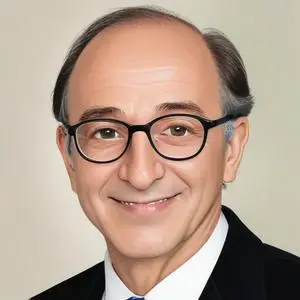
A renowned expert in sustainable energy and climate change, known for developing innovative solutions to reduce carbon emissions and promoting a transition to renewable energy sources.
Imagine a world where energy efficiency and renewable sources reign supreme, and the notion of fossil fuels is a relic of the past. This is the vision of Amory Lovins, a renowned American physicist, writer, and former chairman/chief scientist of the Rocky Mountain Institute. For over four decades, Lovins has been a leading voice in the energy policy arena, advocating for a radical transformation of the way we generate, distribute, and consume energy.
Born on November 13, 1947, in Washington, D.C., Lovins grew up in a family of intellects. His father, Gerald H. Lovins, was an engineer, and his mother, Miriam Lovins, worked in social services administration. Lovins' brother, Julie Beth Lovins, is a computational linguist who developed the first stemming algorithm for word matching.
Lovins' academic journey began at Harvard College, where he entered as a National Merit Scholar in 1964. He later transferred to Oxford, becoming a junior research fellow at Merton College in 1969. Although he left Oxford without a degree in 1971, Lovins' determination to pursue a career in energy led him to London and eventually back to the United States in 1981.
Lovins' groundbreaking research and advocacy have focused on promoting energy efficiency, renewable energy sources, and decentralized energy generation. He has been a vocal proponent of the "negawatt revolution," which emphasizes the importance of reducing energy waste rather than simply increasing energy production.
One of Lovins' most notable projects is the Hypercar, an ultra-efficient automobile designed to reduce energy consumption and emissions. This innovative concept has inspired a new generation of sustainable transportation solutions.
Lovins is a prolific author, having published 31 books on energy policy and related topics. Some of his notable works include Reinventing Fire, Winning the Oil Endgame, Small is Profitable, Brittle Power, and Natural Capitalism. His expertise has also been sought in various capacities, including expert testimony before government bodies and international organizations.
Lovins' work is rooted in a deep understanding of the interconnectedness of human, economic, and environmental systems. He believes that by prioritizing energy efficiency and renewables, we can create a more sustainable, equitable, and prosperous future.
Amory Lovins' tireless advocacy and innovative work have inspired a global movement towards a cleaner, more sustainable energy future. His contributions have far-reaching implications for industries, policymakers, and individuals, empowering us to reimagine the way we live, work, and interact with the world around us.
As we navigate the complexities of the 21st century, Lovins' vision serves as a beacon of hope, illuminating the path towards a brighter, more sustainable tomorrow.
78 Years Old
The 45th Vice President of the United States and Nobel Prize laureate is a prominent advocate for environmental protection, particularly climate change awareness, and has produced influential documentaries on the subject.
92 Years Old
A pioneering consumer advocate and presidential candidate, known for his tireless crusade against corporate greed and government negligence, particularly in the areas of environmental protection and product safety.
Born in 1854
A German physician and biologist who discovered the first effective treatment for syphilis and developed the concept of chemotherapy, earning a Nobel Prize in Physiology or Medicine in 1908.
Born in 1919
A pioneer in environmental science, he proposed the Gaia hypothesis, suggesting the Earth's physical and biological systems are interconnected and behave like a single living organism.
83 Years Old
A Nobel Prize-winning economist and academic who has made significant contributions to the field of economics, particularly in the areas of information economics and globalization.
93 Years Old
A pioneering economist who challenged traditional theories by showing how communities can successfully manage shared resources, leading to a Nobel Prize in Economics in 2009.
