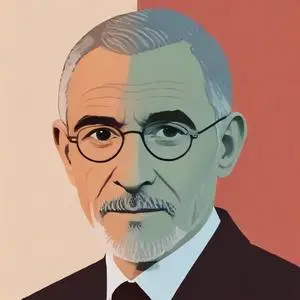
Paul Ehrlich

Paul Ehrlich

Paul Ehrlich was born on March 14th, 1854

Full Name: Paul Ehrlich
Place of Birth: Strzelin, Prussia
Zodiac Sign: Scorpio
Profession: Physician and biologist
Nationality: German
Awards: Nobel Prize in Physiology or Medicine
Notable Discoveries: Chemotherapy
Influences: Robert Koch

A German physician and biologist who discovered the first effective treatment for syphilis and developed the concept of chemotherapy, earning a Nobel Prize in Physiology or Medicine in 1908.

Timeline
1854
Born in Strehlen, Germany
Paul Ehrlich was born on March 14, 1854, in Strehlen, Germany. He would go on to become a renowned physician and biologist.
1878
Earned Medical Degree
Ehrlich earned his medical degree from the University of Leipzig in 1878.
1891
Developed the Side-Chain Theory
Ehrlich developed the side-chain theory, which proposed that antibodies were formed by the binding of toxins to specific cells.
1908
Awarded Nobel Prize in Physiology or Medicine
Ehrlich was awarded the Nobel Prize in Physiology or Medicine in 1908 for his work on immunology.
1915
Died at Age 61
Paul Ehrlich died on August 20, 1915, at the age of 61, leaving behind a legacy as a pioneer in the field of immunology.
Paul Ehrlich

Paul Ehrlich Quiz

What field of study did Paul Ehrlich primarily contribute to?

Score: 0/5
FAQ
What is Paul Ehrlichs most famous discovery?
Paul Ehrlichs most famous discovery is the development of Salvarsan, the first effective treatment for syphilis, which revolutionized the field of medicine and earned him the Nobel Prize in Physiology or Medicine in 1908.
How did Paul Ehrlichs work on chemotherapy influence modern medicine?
Paul Ehrlichs work on chemotherapy laid the foundation for modern medicine, leading to the development of new treatments for diseases and paving the way for advancements in cancer therapy.
What is Paul Ehrlichs contribution to the field of immunology?
Paul Ehrlichs work on immunology led to a greater understanding of the immune system and the development of new treatments for diseases, earning him the Nobel Prize in Physiology or Medicine in 1908.
What is Paul Ehrlichs background and early life like?
Paul Ehrlich was born in 1854 in Strehlen, Prussia, to a Jewish family. He studied medicine at the University of Leipzig and later worked at the Charité Hospital in Berlin.
What is Paul Ehrlichs legacy in the world of science?
Paul Ehrlichs legacy in the world of science is immense, with his groundbreaking discoveries and innovations in the fields of medicine, immunology, and chemotherapy continuing to inspire scientists and medical professionals to this day.

Related People:

Emil von Behring

Born in 1854

Developed the first vaccine against diphtheria and tetanus, revolutionizing the treatment of bacterial infections. Pioneered the field of immunology and saved countless lives.

Robert Koch

Born in 1843

A pioneering microbiologist and physician who discovered the bacteria that cause tuberculosis, cholera, and anthrax, revolutionizing the field of microbiology and saving countless lives.

Hermann Emil Fischer

Born in 1852

A German chemist and academic who won the Nobel Prize for synthesizing amino acids and sugars, and establishing the structure of purines, revolutionizing the field of organic chemistry.

Karl Landsteiner

Born in 1868

Discovered blood types and developed a system for classifying them, revolutionizing blood transfusions and saving countless lives. Pioneering work in immunology and serology also shed light on disease mechanisms.

Hans Buchner

Born in 1483

A Renaissance composer who wrote sacred music, including masses and motets, and was a prominent figure in the development of the Franco-Flemish style. His works showcase complex counterpoint and rich harmonies.