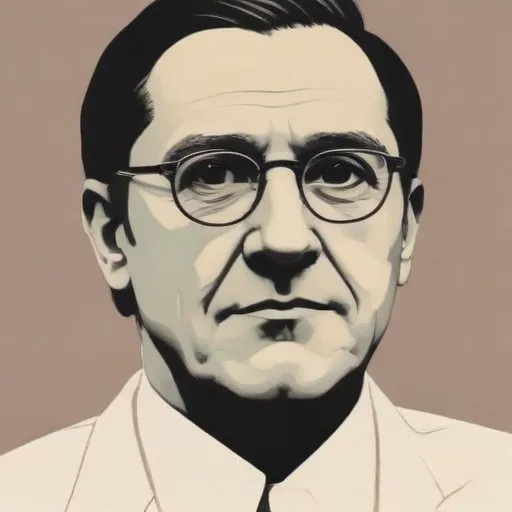
Anders Eliasson: The Swedish Maestro of Symphonic Innovation
Early Life and Musical Genesis
Anders Eliasson, a luminary of Swedish classical music, is renowned for his symphonic masterpieces that blend tradition with innovative flair. Born on April 3, 1947, in Borlänge, Sweden, Eliasson's musical journey began with self-taught experiments, long before formal training.
The Formative Years: Shaping a Composer
Eliasson's early musical experiences were largely self-directed, with no classical music influences in his childhood. Instead, he would imagine sounds while marching his toy soldiers, only later learning to describe them as an orchestra. At nine, he took up the trumpet, and by ten, he was writing arrangements for a small jazz orchestra. A jazz bass player introduced him to chords, and at fourteen, he began studying harmony and counterpoint with organist Uno Sandén. This foundation would later shape his distinctive compositional style.
Counterpoint and the Influence of the Masters
Under the guidance of Valdemar Söderholm, Eliasson delved into the works of Palestrina, Orlando di Lasso, and
Johann Sebastian Bach, whose music he described as the "highest form of energy." This period of intense study laid the groundwork for his future symphonic compositions.
Career Highlights and Major Works
Eliasson's breakthrough came with his choral work,
Canto del vagabondo (1979), followed by his First Symphony (1989), which earned him the Nordic Council Music Prize for its originality, authenticity, and musical clarity. Other notable works include:
- Karolinas smån, a monodrama for soprano and 27 instrumentalists (2000)
- Symphony No. 4, premiered by the Royal Stockholm Philharmonic Orchestra (2003)
Influence on Modern Society and Legacy
Anders Eliasson's contributions to Swedish classical music have had a profound impact on the country's cultural landscape. His music has been performed by leading orchestras and ensembles, cementing his position as a prominent composer of his generation. As a composer, Eliasson's legacy extends beyond his own works, inspiring future generations of musicians and composers.
Awards and Honors
Eliasson's accolades include:
- Nordic Council Music Prize (1989)
- Composer in residence at the Lapland Festival in Arjeplog (1991)
- Visiting professor at Sibelius Academy Helsinki (1993-1994)
Personal Milestones and Key Life Events
Throughout his life, Eliasson remained dedicated to his craft, balancing composition with teaching and advocacy. His commitment to promoting Swedish classical music earned him recognition and respect within the musical community.
Historical Context and Comparative Analysis
Eliasson's oeuvre can be seen as a continuation of the Swedish symphonic tradition, drawing inspiration from the Romantic era while incorporating modernist elements. His unique voice sets him apart from contemporaries, solidifying his position as a prominent figure in Swedish classical music.
Philosophical Contributions and Beliefs
As a composer, Eliasson believed in the power of music to evoke emotion and create connections between people. His compositions reflect this philosophy, often blending intensity with lyricism, and chaos with order.
In Memoriam: A Lasting Legacy
Anders Eliasson passed away on May 20, 2013, leaving behind a rich musical heritage. His compositions continue to inspire and influence new generations of musicians, ensuring his legacy as a master of Swedish classical music.
FAQ
What is Anders Eliassons style of composition?
Anders Eliassons music is known for its lyricism and expressiveness, often incorporating elements of jazz and folk music.
What is Anders Eliassons most famous work?
Anders Eliassons most famous work is likely his Cello Concerto, which has been performed by cellists around the world.
What awards has Anders Eliasson won?
Anders Eliasson has won several awards, including the Nordic Council Music Prize and the Royal Swedish Academy of Musics Medal.
What is Anders Eliassons teaching experience?
Anders Eliasson has taught at several music schools and universities, including the Royal College of Music in Stockholm.
What is Anders Eliassons early life and background?
Anders Eliasson was born in Borlänge, Sweden, and began composing at a young age, eventually studying at the Royal College of Music in Stockholm.