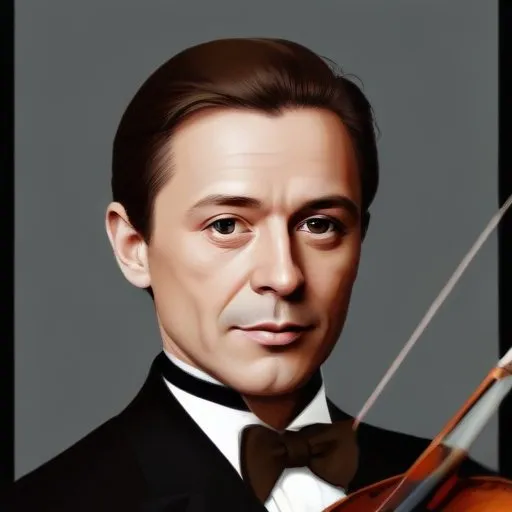
Hugo Alfvén: The Swedish Maestro of Late Romantic Music
A Prolific Composer, Conductor, and Violinist
Hugo Alfvén is renowned for being one of Sweden's most prominent composers of his time, alongside his contemporary
Wilhelm Stenhammar. With a career spanning over six decades, Alfvén left an indelible mark on the world of classical music, earning him the nickname "The Swedish Maestro."
Early Life and Education
Born on May 1, 1872, in Stockholm, Sweden, Alfvén began his musical journey at the Royal College of Music (Kungliga Musikhögskolan) from 1887 to 1891, where he studied violin as his primary instrument under the tutelage of Lars Zetterquist. He also received private composition lessons from Johan Lindegren, a leading counterpoint expert.
A Life of Travel and Inspiration
In the late 1890s, Alfvén embarked on a decade-long journey across Europe, where he further honed his skills as a violinist and conductor. He studied violin technique in Brussels with Csar Thomson and learned conducting in Dresden with Hermann Ludwig Kutzschbach. This period of travel not only broadened his musical horizons but also deepened his understanding of different cultural traditions.
A Distinguished Career
In 1903, Alfvén was appointed professor of composition at the Royal Conservatory, Stockholm, a position he held until 1939. He later became the Director musices (music director) at the University of Uppsala, a post he held from 1910 to 1939. During this time, he also directed the male voice choir Orphei Drängar (O.D.) until 1947.
Conducting and Recordings
Alfvén was an acclaimed conductor, leading orchestras in festivals across Europe, including Uppsala (1911), Dortmund (1912), Stuttgart (1913), Gothenburg (1915), and Copenhagen (1918-1919). In 1954, he made the first classical stereo recordings in Sweden, which were later released on LP in the United States by Westminster Records. A three-CD collection of his recordings as a conductor has been issued.
Music and Legacy
Alfvén's music is characterized by its late Romantic idiom, showcasing his mastery of orchestration and colorful instrumentation, reminiscent of
Richard Strauss. He wrote a considerable amount of program music, which has become an integral part of Sweden's cultural heritage. Today, Alfvén is celebrated as one of the most important Swedish composers of his time, leaving behind a rich legacy that continues to inspire musicians and music lovers alike.
Awards and Honors
Throughout his illustrious career, Alfvén received numerous awards and honors, including an honorary Ph.D. from Uppsala University in 1917 and membership in the Royal Academy of Music in Stockholm in 1908.
Personal Life and Milestones
Alfvén's personal life was marked by significant milestones, including his marriage to Maria Morberg in 1912, with whom he had two children. He passed away on May 8, 1960, leaving behind a legacy that continues to echo through the halls of classical music.
Trivia and Fun Facts
- Alfvén was not only a talented musician but also a skilled painter, with many of his works displayed in Swedish art galleries.
- He was known for his charismatic personality and was often referred to as "The King of Uppsala" due to his long association with the city.
- Alfvén's music has been performed by leading orchestras around the world, including the Berlin Philharmonic and the Vienna Philharmonic.
In Conclusion
Hugo Alfvén's remarkable life and career serve as a testament to his dedication to the world of classical music. As a composer, conductor, and violinist, he has left an indelible mark on Sweden's cultural heritage, cementing his place as one of the most important figures in Swedish musical history.
FAQ
What was Hugo Alfvéns contribution to Swedish music?
Hugo Alfvén was a renowned Swedish composer, conductor, violinist, and painter who made significant contributions to Swedish music. He was particularly known for his romantic and nationalistic compositions, which drew inspiration from Swedish folk music and poetry.
What is Hugo Alfvéns most famous musical work?
Hugo Alfvéns most famous musical work is his cantata Swedens Song, which was composed in 1900 and became a national anthem of sorts. The work showcases Alfvéns ability to blend folk melodies with romantic harmony and orchestration.
How did Hugo Alfvéns work influence Swedish cultural identity?
Hugo Alfvéns work had a profound impact on Swedish cultural identity, as it helped to promote a sense of national pride and identity. His compositions drew heavily from Swedish folk music and mythology, which contributed to the development of a distinctly Swedish cultural heritage.
What role did Hugo Alfvén play in Swedish musical circles?
Hugo Alfvén played a prominent role in Swedish musical circles, serving as a conductor, composer, and educator. He was also involved in various musical organizations, using his influence to promote the work of other Swedish composers and musicians.
What is Hugo Alfvéns legacy in the world of music?
Hugo Alfvéns legacy in the world of music is that of a pioneering composer who helped shape the course of Swedish music. His innovative compositions, which blended folk and romantic elements, continue to inspire generations of musicians and composers.