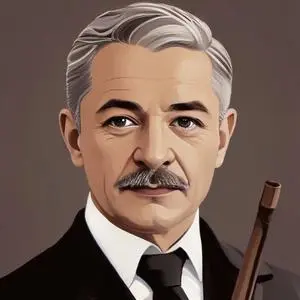
Carl Nielsen: Denmark's Musical Treasure
The Composer, Conductor, and Violinist
Carl Nielsen, a Danish composer, conductor, and violinist, is widely recognized as his country's most prominent composer. He is celebrated for his six symphonies, concertos, and choral music, which are now internationally acclaimed.
Early Life and Musical Beginnings
Born on June 9, 1865, on the island of Funen, Denmark, Nielsen demonstrated his musical abilities at an early age. His parents, although poor, were musically talented, and he was raised in a household that encouraged his passion for music.
Rise to Prominence
Nielsen's musical career took off when he premiered his Op. 1, Suite for Strings, in 1888, at the age of 23. He then went on to play in the Royal Danish Orchestra under the conductor Johan Svendsen, where he performed in
Giuseppe Verdi's Falstaff and Otello at their Danish premieres.
Teaching and Compositional Style
In 1916, Nielsen took a post teaching at the Royal Danish Academy, where he continued to work until his death. His compositional style was heavily influenced by Brahms and Grieg, but he soon developed his own unique voice, experimenting with progressive tonality and later diverging from the standards of composition common at the time.
Notable Works
Nielsen is especially noted for his:
- Six symphonies, which are now considered some of the most important works in the Danish classical music repertoire
- Wind Quintet, a staple of the wind quintet repertoire
- Concertos for violin, flute, and clarinet, which are known for their technical challenges and beauty
- Opera Maskarade, which has become an integral part of Denmark's national heritage
Personal Life and Challenges
Nielsen's personal life was marked by many difficulties, which often reflected in his music. His marriage to the sculptor Anne Marie Brodersen was turbulent, and the works he composed between 1897 and 1904 are sometimes referred to as his "psychological period".
Legacy and Impact
Nielsen's music has had a profound impact on Denmark's cultural heritage, and he is now considered one of the country's most important composers. His unique compositional style and contributions to the world of classical music have made him a beloved figure in Denmark and beyond.
Final Years and Death
Nielsen died from a heart attack on October 3, 1931, at the age of 66. He is buried in Vestre Cemetery, Copenhagen, where he remains a celebrated figure in Danish cultural history.
FAQ
What are the key features of Carl Nielsens compositional style?
Carl Nielsens compositional style is characterized by its lyricism, energy, and use of complex rhythms. His music often features bold, innovative harmonies and a strong sense of Nordic folklore.
How did Carl Nielsens work influence Danish music in the early 20th century?
Carl Nielsens work had a profound influence on Danish music in the early 20th century, particularly through his compositions for orchestra and chamber ensembles. His music helped to establish Denmark as a major center for musical innovation.
What are some of Carl Nielsens most notable compositions?
Carl Nielsens most notable compositions include his Symphony No. 5, his Clarinet Concerto, and his Wind Quintet. These works showcase his mastery of form, harmony, and melody.
How did Carl Nielsens career intersect with the Danish arts scene?
Carl Nielsens career intersected with the Danish arts scene through his relationships with writers, artists, and musicians. He was known for his collaborations with poets and his music was often inspired by Danish folklore and mythology.
What is Carl Nielsens place in the history of Danish music?
Carl Nielsens place in the history of Danish music is that of a national hero and a pioneering composer who helped to shape the course of modern Danish music. His work continues to be celebrated for its beauty, energy, and innovation.