


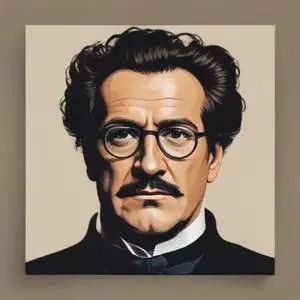
A visionary composer and conductor who expanded symphonic music's emotional depth and complexity, creating works of profound beauty and intensity.
Gustav Mahler, an Austro-Bohemian Romantic composer and conductor extraordinaire, is revered for bridging the 19th-century Austro-German tradition with the modernism of the early 20th century. His symphonies, song cycles, and operas continue to enthrall audiences, solidifying his position as one of the most frequently performed and recorded composers of all time.
Born on July 7, 1860, in Kaliště, Bohemia (then part of the Austrian Empire), to Jewish parents of humble origins, Mahler displayed his musical gifts at an early age. His talent was nurtured by his parents, who encouraged him to take piano lessons, and later, composition classes.
After graduating from the Vienna Conservatory in 1878, Mahler held a succession of conducting posts in European opera houses, including the Vienna State Opera, where he became director in 1897. During his tenures, he earned a reputation as a meticulous and innovative conductor, particularly in his interpretations of Wagner, Mozart, and Tchaikovsky's stage works.
Sporadically composing throughout his conducting career, Mahler's oeuvre is relatively limited, but incredibly diverse. His works, often designed for large orchestral forces, showcase his mastery of symphonic form, harmony, and orchestration. Notable compositions include:
Mahler's life was marked by personal struggles, including his conversion to Catholicism in 1897 to secure the directorship of the Vienna Court Opera, and his brief tenure as director of the New York Metropolitan Opera and the New York Philharmonic.
After his death on May 18, 1911, Mahler's music experienced a period of relative neglect, exacerbated by the Nazi ban on his works during World War II. However, his rediscovery in the post-war era propelled him to unprecedented popularity, solidifying his position as one of the most beloved and performed composers of all time.
Mahler's symphonies have inspired numerous artistic adaptations, including:
Mahler's legacy continues to captivate audiences worldwide, transcending genres and artistic mediums. As a composer and conductor, he will forever be remembered as a masterful bridging figure between tradition and innovation.
Born in 1813
A revolutionary composer who transformed opera with his epic, mythological works, creating a new era of musical storytelling. His iconic operas, such as "Der Ring des Nibelungen," continue to captivate audiences worldwide.
Born in 1824
A renowned composer of symphonies and sacred music, known for his complex harmonies and innovative orchestration. His works are considered a bridge between Romanticism and modern classical music.
Born in 1833
A renowned pianist and composer, he crafted complex, expressive works that blended traditional and innovative techniques, leaving an indelible mark on classical music.
Born in 1811
A virtuosic pianist and composer who revolutionized classical music with his technically demanding and emotionally expressive works, blending Hungarian folk influences with Romantic-era drama.
Born in 1810
A renowned Romantic-era composer and influential music critic, known for his expressive and emotionally charged works, including symphonies, piano music, and art songs.
Born in 1809
A renowned 19th-century musician who masterfully blended classical and romantic styles, creating iconic works like the "Wedding March" and "Elijah" oratorio. His compositions continue to inspire and influence generations of artists.
Born in 1840
A renowned Russian composer and educator, he is best known for his iconic and beloved ballets, such as Swan Lake and The Nutcracker, which continue to enchant audiences worldwide.
Born in 1882
A Russian master of music, renowned for revolutionizing classical music with bold, avant-garde compositions that blended traditional and modern elements. His iconic works, such as "The Rite of Spring," continue to inspire and influence artists across genres.
