


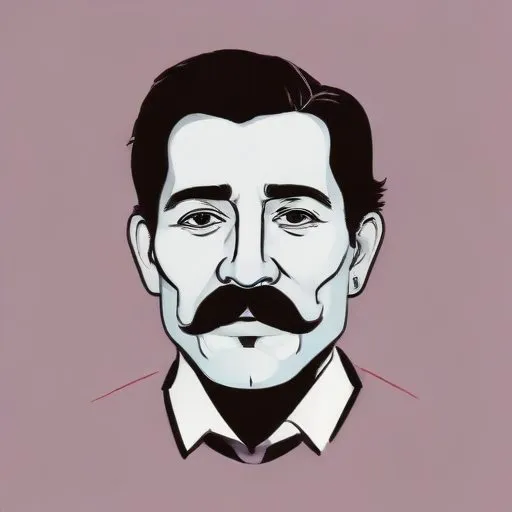
A Brazilian poet and author celebrated for his whimsical and imaginative works that often blended fantasy and reality, exploring themes of love, nature, and the human condition.
Anderson Bigode Herzer was a Brazilian writer and poet known for his poignant and powerful verses that captured the essence of his tumultuous life. His unique voice and perspective as a transsexual man have made him a celebrated figure in Brazilian literature, and his works continue to inspire and influence readers to this day.
Born on June 10, 1962, in Rolândia, Paraná, Brazil, Herzer's life was marked by trauma and hardship from a very young age. His father was killed when he was just four years old, and his mother, a prostitute, was unable to care for him, leading to his institutionalization in the Fundação Estadual para o Bem Estar do Menor (FEBEM), a state-run institution for the protection of minors.
Herzer's time in FEBEM was marked by behavioral problems, substance abuse, and struggles with his identity. He was known to engage in fights, use street drugs, and consume alcohol, and his school records reveal a troubled student. Despite these challenges, Herzer found solace in writing, and his poems and verses became a reflection of his inner struggles and emotions.
Herzer's unique talent was discovered by Eduardo Suplicy, a renowned member of parliament, who was touched by his poems and difficult life. Suplicy took Herzer under his wing, hiring him as an intern in his office and providing much-needed support and guidance.
During this time, Herzer's writing flourished, and his poetry became a testament to his resilience and determination. His verses, collected in his book "A Queda para o Alto" (Descending Upwards), offer a glimpse into his world, one marked by pain, loss, and ultimately, hope.
Herzer's life and works have inspired a feature film, "Vera," directed by Sérgio Toledo, which tells the story of his life and struggles. His poetry has also been celebrated for its raw emotion and unflinching honesty, providing a voice for the marginalized and vulnerable.
In addition to his literary contributions, Herzer's legacy extends to the LGBTQ+ community, where he is recognized as a pioneering figure in Brazilian transgender literature. His courage and determination to live authentically, despite the challenges he faced, have inspired countless individuals and continue to resonate with readers today.
Anderson Bigode Herzer's life was marked by tragedy and hardship, but it was also a testament to the transformative power of art and the human spirit. His poetry and legacy continue to inspire and influence, serving as a beacon of hope for those who have been marginalized and silenced.
Herzer's poetry is filled with powerful and poignant quotes, but one of his most memorable sayings is: "Eu sou um poeta, eu sou um homem, eu sou um transsexual" (I am a poet, I am a man, I am a transsexual).
This quote captures the essence of Herzer's identity and artistic vision, highlighting the intersections of his poetry, gender, and humanity. It is a testament to his courage and determination to live authentically, and it continues to inspire readers and writers today.
Born in 1902
A leading figure in Brazilian modernism, known for his introspective and lyrically rich poetry that explores themes of love, nature, and the human condition.
Born in 1913
A renowned poet, playwright, and composer who merged Brazilian rhythms with French existentialism, creating iconic bossa nova songs like "The Girl from Ipanema".
Born in 1909
A champion of the poor and oppressed, he fought for social justice and human rights, particularly in Brazil's rural areas. His advocacy inspired a generation of activists and theologians.
98 Years Old
Pioneering filmmaker behind socially conscious movies that explored Brazil's cultural identity and social issues, earning international acclaim and influencing generations of Latin American directors.
Born in 1912
A celebrated writer of novels and poetry that vividly capture the spirit of Brazil's people and culture, exploring themes of love, social justice, and identity. His works are considered some of the most important in Brazilian literature.
