


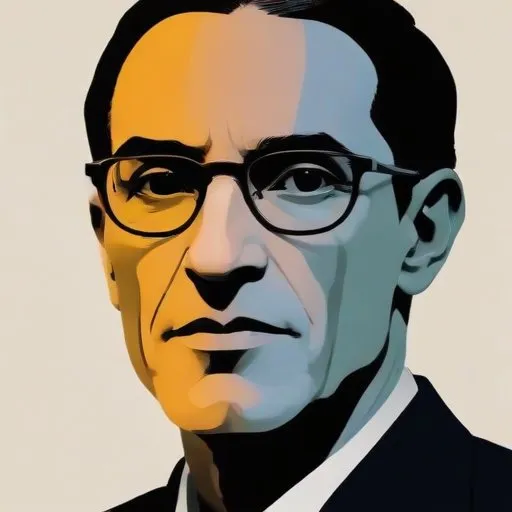
A leading figure in Brazilian modernism, known for his introspective and lyrically rich poetry that explores themes of love, nature, and the human condition.
Carlos Drummond de Andrade, widely regarded as the greatest Brazilian poet of all time, left an indelible mark on the nation's literary landscape. His work, characterized by elegance, satire, and a remarkable ability to capture the essence of everyday life, has made him a cultural icon in Brazil.
Born on October 31, 1902, in Itabira, a mining village in Minas Gerais, Brazil, Drummond's early life was marked by a strong connection to his rural roots. His parents, farmers of Portuguese descent, instilled in him a love for literature and the arts. He went on to study pharmacy in Belo Horizonte, but never pursued a career in the field, opting instead to work as a civil servant.
Drummond's early poems, formal and satirical, eventually gave way to a more modernist approach, influenced by the work of Mário de Andrade. He developed a unique voice, marked by fluidity of thought and speech, and an ability to capture the beauty in the mundane. His poetry often blended elements of elegance and simplicity, elevating everyday experiences to a level of profound significance.
Beyond his literary pursuits, Drummond dedicated his life to public service. He worked as a director for the National Historical and Artistic Heritage Service of Brazil, preserving the nation's cultural heritage. His commitment to his craft and his country earned him widespread recognition and respect.
Drummond's work is divided into distinct segments, reflecting his diverse interests and styles. From his quotidian poems to his more politicized and metaphysical works, he consistently managed to tap into the pulse of Brazilian life. His poetry addressed the concerns of the common man, making him a beloved figure in Brazilian literature.
Throughout his life, Drummond received numerous accolades for his contributions to Brazilian literature. His work has been featured on the 50-centavo novo bill, cementing his status as a national cultural symbol. His legacy extends beyond Brazil, with his poetry translated into multiple languages and admired by readers worldwide.
"The world is a poem, and we are its verses."
"Poetry is the art of revealing the hidden truths of the human heart."
Drummond's poetry has had a profound impact on Brazilian culture, influencing generations of writers, artists, and intellectuals. His work has also inspired social change, encouraging Brazilians to engage with their history and cultural heritage. His legacy continues to shape the nation's literary identity, ensuring his place as one of the most important figures in Brazilian cultural history.
Carlos Drummond de Andrade's life and work are inextricably linked to the cultural and historical context of Brazil during the 20th century. His poetry reflects the nation's struggles, its people, and its heritage. As a cultural icon, he continues to inspire generations of Brazilians, solidifying his place in the nation's collective consciousness.
Drummond's work is often compared to that of his contemporaries, such as Jorge Amado and Clarice Lispector. While each writer has their unique style and approach, they share a common commitment to exploring the complexities of Brazilian identity and culture.
Drummond's poetry has influenced various aspects of Brazilian popular culture, from music to film. His work has been referenced and adapted in numerous art forms, ensuring his legacy extends beyond the realm of literature.
Carlos Drummond de Andrade's image has been featured on the 50-centavo novo bill, symbolizing his status as a national cultural icon. This recognition solidifies his place in Brazilian history, acknowledging his profound impact on the nation's literary and cultural heritage.
Born in 1912
A celebrated writer of novels and poetry that vividly capture the spirit of Brazil's people and culture, exploring themes of love, social justice, and identity. His works are considered some of the most important in Brazilian literature.
Born in 1904
A Chilean poet and diplomat who wrote passionate and evocative poetry that explored love, politics, and the human condition, and was awarded the Nobel Prize in Literature in 1971.
Born in 1914
A Mexican poet and diplomat who won the Nobel Prize in Literature in 1990 for his work that explores the intersection of poetry, philosophy, and politics. He's known for his lyrical and introspective style that explores the human condition.
90 Years Old
A Nobel Prize-winning writer and politician who explored the complexities of Peruvian society through his novels and essays, and later ran for president. His works often blended politics, history, and fiction.
99 Years Old
A Colombian journalist and author who crafted magical realism, a literary style that blends fantasy and reality, and won the Nobel Prize in Literature in 1982. His works are known for their vivid storytelling and exploration of human experience.
Born in 1913
A renowned poet, playwright, and composer who merged Brazilian rhythms with French existentialism, creating iconic bossa nova songs like "The Girl from Ipanema".
Born in 1902
A Portuguese journalist who covered several international conflicts, including the Portuguese Colonial War and the Carnation Revolution, providing firsthand reports from the front lines.
