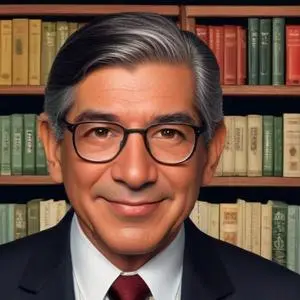
Mario Vargas Llosa: The Peruvian Literary Giant
A Life Dedicated to Words and Wisdom
Mario Vargas Llosa, the Peruvian novelist, journalist, essayist, and former politician, is one of Latin America's most significant literary figures. With a writing career spanning over six decades, he is renowned for his exquisite prose, profound insights, and unwavering commitment to exploring the complexities of human experience.
The Literary Landscape
Vargas Llosa's literary oeuvre is a testament to his boundless creativity and intellectual curiosity. He has written novels that defy genre classification, effortlessly blending elements of comedy, murder mystery, historical fiction, and political thriller. Notable works include
The Time of the Hero (1963),
The Green House (1966), and
Conversation in the Cathedral (1969), which have been translated into numerous languages and have earned him international acclaim.
The Nobel Laureate
In 2010, Vargas Llosa was awarded the Nobel Prize in Literature "for his cartography of structures of power and his trenchant images of the individual's resistance, revolt, and defeat." This prestigious honor recognized his lifelong dedication to chronicling the intricacies of human existence, as well as his unwavering commitment to democratic values and social justice.
Awards and Honors
Throughout his illustrious career, Vargas Llosa has been bestowed with numerous awards and honors, including the:
A Career in Politics
In addition to his literary pursuits, Vargas Llosa has been an active participant in Peruvian politics. In 1990, he ran for president, advocating for market-oriented reforms and democratic values. Although he lost the election, his candidacy sparked a national conversation about the country's economic and political future.
Influences and Inspirations
Vargas Llosa's literary vision has been shaped by his Peruvian heritage, as well as his fascination with European modernism and the works of writers such as
Gustave Flaubert,
Virginia Woolf, and
James Joyce. His writing often explores themes of identity, morality, and the human condition, reflecting his deep engagement with the complexities of contemporary life.
Legacy and Impact
Mario Vargas Llosa's contributions to literature and culture extend far beyond his own country's borders. He has inspired generations of writers, thinkers, and intellectuals, and his works continue to be widely read and studied around the world. As a champion of free expression and democratic values, he remains a powerful voice in the global literary community.
Personal Milestones
- Born on March 28, 1936, in Arequipa, Peru
- Married to Patricia Llosa, with three children
- Elected to the Acadmie franaise in 2021
Vargas Llosa's Wisdom
"I don't believe in the existence of a single truth, but rather in the coexistence of multiple truths that converge and diverge at the same time."
"I think that fiction is a way to express the complexity of human experience, to explore the mysteries of human nature, and to try to understand the world around us."
"Writing is a way to live, to experience life more intensely, to feel more, to think more, to dream more."
Vargas Llosa's remarkable body of work is a testament to the power of literature to inspire, to challenge, and to transform. As we continue to navigate the complexities of our globalized world, his words remain a beacon of wisdom, guiding us toward a deeper understanding of ourselves and our place within the world.
FAQ
What is Mario Vargas Llosas literary style?
Mario Vargas Llosa is a Peruvian writer known for his innovative and eclectic literary style, which blends elements of realism, surrealism, and magical realism. His works often explore themes of politics, history, and personal identity.
What is Mario Vargas Llosas most famous novel?
Mario Vargas Llosas most famous novel is Conversations in the Cathedral, which won the Rómulo Gallegos Prize in 1972. The novel explores the complexities of Peruvian society and politics during the 1950s and 1960s.
What awards has Mario Vargas Llosa received?
Mario Vargas Llosa has received numerous awards for his literary contributions, including the Nobel Prize in Literature in 2010, the Cervantes Prize in 1994, and the Prince of Asturias Award for Literature in 1986.
What is Mario Vargas Llosas political background?
Mario Vargas Llosa was a presidential candidate in Peru in 1990, running on a platform of neoliberal reforms. Although he lost the election, he remains involved in Peruvian politics and continues to write about issues related to democracy and human rights.
What is Mario Vargas Llosas current role?
Mario Vargas Llosa continues to write novels, essays, and articles, and is widely regarded as one of the most important literary figures in the Spanish-speaking world. He has also served as a professor of literature at several universities and has been involved in various cultural and intellectual organizations.