


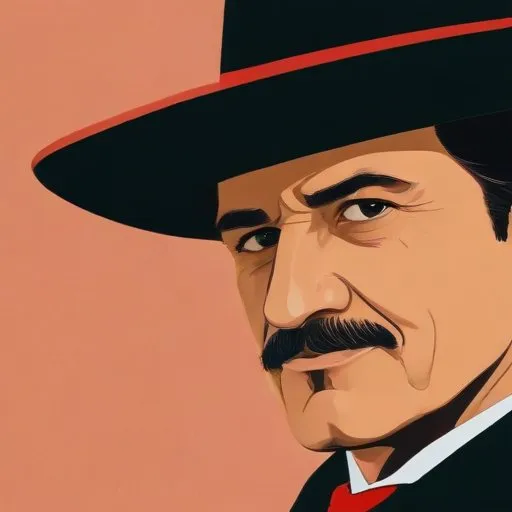
A renowned Mexican writer, celebrated for his novels and essays that explored the complexities of Mexican identity, politics, and culture. His works often blended mythology, history, and fantasy to create a unique narrative style.
Carlos Fuentes, one of the most admired writers in the Spanish-speaking world, left an indelible mark on Latin American literature. Best known for his novels The Death of Artemio Cruz, Aura, Terra Nostra, The Old Gringo, and Christopher Unborn, Fuentes' work had a profound impact on the Latin American literary boom of the 1960s and 1970s.
Born on November 11, 1928, in Panama City, Fuentes was the son of Berta Macas and Rafael Fuentes, a Mexican diplomat. His childhood was marked by frequent moves to various Latin American capital cities, an experience that would later shape his unique perspective on Latin America. During his time in Washington, D.C., Fuentes became fluent in English and began to write, creating his own magazine, which he shared with neighbors.
Fuentes' writing career took off in the 1960s, with the publication of The Death of Artemio Cruz, a novel that critiqued the Mexican Revolution and its aftermath. This was followed by Aura, a haunting tale of love and identity. His subsequent works, including Terra Nostra and The Old Gringo, cemented his reputation as a masterful storyteller and thinker.
Fuentes' writing style was characterized by its lyricism, depth, and complexity. His novels often explored themes of identity, history, politics, and the human condition. His work was heavily influenced by the poetry of Pablo Neruda and the ideals of socialism, which he saw as a means to create a more just and equitable society.
Fuentes' contributions to literature were recognized with numerous awards and honors. He was awarded the Miguel de Cervantes Prize, Spain's highest literary honor, and Mexico's highest award, the Belisario Domínguez Medal of Honor, in 1999. Although he was often mentioned as a likely candidate for the Nobel Prize in Literature, he never received the award.
Carlos Fuentes' passing on May 15, 2012, left a void in the literary world. However, his legacy continues to inspire and influence new generations of writers and thinkers. His work remains a testament to the power of literature to shape our understanding of ourselves and the world around us.
Fuentes was a strong advocate for socialism and saw it as a means to create a more just and equitable society. He believed in the power of literature to shape our understanding of ourselves and the world around us, and his work reflected his commitment to social justice and humanism.
Fuentes' work has had a profound impact on modern society, inspiring new generations of writers, thinkers, and social activists. His influence can be seen in the work of authors such as Gabriel García Márquez, Mario Vargas Llosa, and Isabel Allende, among many others.
"The writer's job is to get the main character up a tree, and then once they are up there, throw rocks at them."
"History is not a burden, it is a challenge."
"The novel is the most flexible, the most complex, the most human of all literary forms."
Fuentes' life and work are inextricably linked to the tumultuous history of Latin America in the 20th century. His writing reflects the hopes, dreams, and struggles of a continent in flux, and his legacy continues to inspire and challenge new generations of writers, thinkers, and social activists.
Fuentes' passing in 2012 marked the end of an era, but his work remains a testament to the enduring power of literature to shape our understanding of ourselves and the world around us.
Born in 1914
A Mexican poet and diplomat who won the Nobel Prize in Literature in 1990 for his work that explores the intersection of poetry, philosophy, and politics. He's known for his lyrical and introspective style that explores the human condition.
99 Years Old
A Colombian journalist and author who crafted magical realism, a literary style that blends fantasy and reality, and won the Nobel Prize in Literature in 1982. His works are known for their vivid storytelling and exploration of human experience.
90 Years Old
A Nobel Prize-winning writer and politician who explored the complexities of Peruvian society through his novels and essays, and later ran for president. His works often blended politics, history, and fiction.
Born in 1899
A visionary writer who crafted intricate, philosophical tales that blurred reality and fantasy, influencing generations of authors and thinkers. 82
Born in 1914
A pioneering figure in magical realism, blending fantastical elements with everyday life in his novels and short stories, exploring the human condition and social commentary.
94 Years Old
A prominent Mexican intellectual and journalist, known for her in-depth interviews and writings on politics, culture, and social issues, shedding light on the lives of ordinary people and prominent figures.
76 Years Old
A celebrated author and screenwriter, best known for crafting magical realist novels and adapting them into films, including the iconic "Like Water for Chocolate".
Born in 1917
A pioneering writer and photographer who blended magical realism with stark social commentary, capturing the essence of rural Mexico through his poignant and evocative works.
