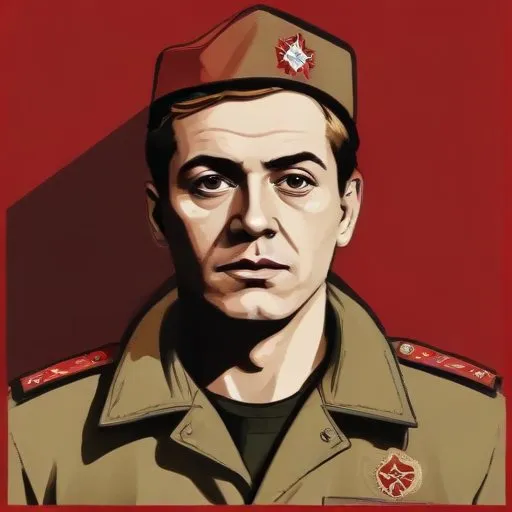
Andreas Baader: The Fiery Leader of the Red Army Faction
A Life of Revolution and Controversy
Andreas Baader, a German communist and leader of the left-wing militant organization Red Army Faction (RAF), also known as the Baader-Meinhof Group, was a figure synonymous with rebellion and radical change. Through his activism and violent tactics, Baader sought to challenge the establishment and ignite a revolution in post-war West Germany.
Early Life and Influences
Born on May 6, 1943, in Munich, Baader was raised by his mother, aunt, and grandmother after his father, Dr. Berndt Phillipp Baader, a historian and archivist, disappeared during World War II. This unstable childhood had a profound impact on Baader's worldview, shaping his anti-authoritarian stance and fueling his desire for social justice.
The Red Army Faction and the Era of Radicalization
In 1968, Baader and his girlfriend, Gudrun Ensslin, were convicted of arson bombing a department store in Frankfurt, protesting the public's indifference to the Vietnam War. Their actions were seen as a call to arms, inspiring a generation of disillusioned youth to take a stand against the establishment. After fleeing West Germany, Baader and Ensslin traversed Europe, networking with like-minded individuals and radical groups, ultimately returning to West Germany in 1970 to continue their campaign of militant resistance.
Philosophical Contributions and Beliefs
Baader's ideology was deeply rooted in Marxist-Leninist thought, emphasizing the need for a radical transformation of society through armed struggle. He believed that only through violence and revolution could the existing power structures be dismantled, paving the way for a socialist utopia. This unyielding commitment to his beliefs earned him both admiration and criticism, cementing his status as a polarizing figure in German politics.
Personal Milestones and Key Life Events
- 1962: Participated in the Schwabing riots, a pivotal moment in his radicalization
- 1968: Convicted of arson bombing a department store in Frankfurt, along with Gudrun Ensslin
- 1969: Fled West Germany, networking with radical groups across Europe
- 1970: Returned to West Germany, continuing his militant activities with the RAF
Influence on Modern Society
Baader's legacy is complex and contested. While his actions sparked a wave of radicalization in the 1970s, they also led to violence, bloodshed, and the deaths of numerous innocent bystanders. Nevertheless, his unwavering commitment to his beliefs and his willingness to challenge the status quo continue to inspire and provoke, making him a fascinating, if controversial, figure in modern German history.
Controversies and Public Perception
Baader's actions, particularly the RAF's involvement in a string of violent attacks and kidnappings, sparked outrage and debate across West Germany. Critics labeled him a terrorist, while sympathizers saw him as a champion of social justice. This Janus-faced public perception reflects the contradictions and complexities of Baader's life and ideology.
Historical Context and Legacy
Baader's story is inextricably linked to the turbulent decade of the 1960s and 1970s, a time of global upheaval and radical change. His actions, for better or worse, contributed to the shaping of modern Germany, forcing the nation to confront its darker past and reevaluate its relationship with authority. As a symbol of resistance and rebellion, Baader's legacy continues to captivate and provoke, serving as a testament to the power of individual action to shape the course of history.
FAQ
What was Andreas Baaders role in the Red Army Faction?
Andreas Baader was a co-founder of the Red Army Faction, a left-wing terrorist organization that carried out a series of bombings, kidnappings, and killings in Germany during the 1970s. He was a key figure in the groups early years, advocating for violent revolution against the German state.
What led to Andreas Baaders imprisonment?
Andreas Baader was imprisoned in 1972 after being arrested for participating in a series of arson attacks on department stores in Frankfurt. He was later convicted of murder and sentenced to life imprisonment.
How did Andreas Baader die?
Andreas Baader died in prison in 1977, allegedly by suicide, although many have raised questions about the circumstances of his death. The event sparked widespread protests and conspiracy theories.
What was Andreas Baaders relationship with Ulrike Meinhof?
Andreas Baader and Ulrike Meinhof were key figures in the Red Army Faction and had a close personal and political relationship. Meinhof was a journalists who became radicalized and joined the RAF, eventually participating in several violent attacks.
How has Andreas Baader been portrayed in popular culture?
Andreas Baader has been portrayed in several films, books, and documentaries, often as a complex and controversial figure. His life and actions have been the subject of much debate and analysis in Germany and beyond.