


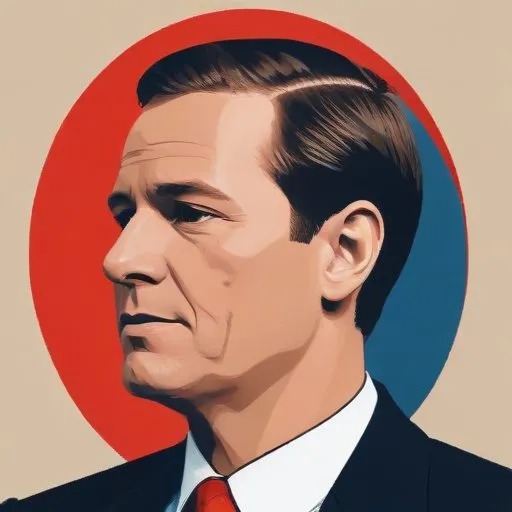
Author of the Volstead Act, a Prohibition-era law banning the manufacture, sale, and transportation of intoxicating liquors, which led to widespread bootlegging and organized crime.
When the words "Prohibition" and "Volstead Act" are mentioned, one name comes to mind: Andrew Volstead. This American politician's name is inextricably linked with the National Prohibition Act of 1919, a legislation that aimed to rid the United States of the evils of alcohol. As the primary sponsor of the bill, Volstead's name became synonymous with the enforcement of Prohibition, which lasted for over a decade.
Andrew Volstead was born on October 31, 1860, in Kenyon, Minnesota, to Norwegian-American parents. He pursued higher education at St. Olaf College, becoming a lawyer and eventually serving as the mayor of Granite Falls, Minnesota, from 1900 to 1902. This marked the beginning of his long and storied career in public service.
Volstead's congressional career spanned over two decades, during which he served as the chairman of the House Judiciary Committee from 1919 to 1923. His most notable achievement came when he collaborated with Wayne Wheeler of the Anti-Saloon League to draft the Volstead Act. Although Wheeler conceived the bill, Volstead championed its passage, using his influence to secure its enactment.
Passed on October 28, 1919, the Volstead Act prohibited the manufacture, sale, and transportation of intoxicating liquors in the United States. While its intention was to promote temperance and reduce crime, the Act's implementation led to widespread bootlegging, gang violence, and corruption. The Act's unpopularity ultimately contributed to Volstead's defeat in the 1922 election.
Volstead's contributions extended beyond the Volstead Act. He co-authored the Capper-Volstead Act, which allowed farmers to form cooperatives without fear of prosecution under the Sherman Antitrust Act. This legislation remains in effect to this day. After leaving Congress, Volstead served as legal advisor to the National Prohibition Enforcement Bureau. He eventually returned to private practice in Granite Falls, Minnesota, where he lived out the rest of his life until his passing on January 20, 1947.
Andrew Volstead's legacy is a complex one. While the Volstead Act failed to achieve its intended goals, it played a significant role in shaping American history. Volstead's contributions to the field of law and his commitment to public service are undeniable. As a testament to his enduring impact, his former home in Granite Falls, Minnesota, now serves as a reminder of his life and times.
Through his tireless efforts, Andrew Volstead left an indelible mark on American politics and society. As a champion of Prohibition, his name has become synonymous with a tumultuous period in American history. As we reflect on his life and legacy, we are reminded of the power of one individual to shape the course of a nation.
Born in 1856
The 28th President of the United States, a Nobel Peace Prize winner, and a historian who played a key role in shaping international relations and global governance after World War I. He's most known for his idealistic vision of a League of Nations and his efforts to promote peace and diplomacy.
Born in 1865
The 29th President of the United States, a journalist-turned-politician, led the country through a period of post-war prosperity and scandalous corruption. He's infamous for his administration's numerous scandals and his own extramarital affairs.
Born in 1874
The 31st President of the United States was a humanitarian and politician who led the country through the Great Depression and is known for his humanitarian efforts and infrastructure development. He's also infamous for his inability to mitigate the economic crisis.
Born in 1882
Led the United States through the Great Depression and World War II, implementing a series of reforms known as the New Deal and helping to establish the country as a global superpower.
Born in 1858
A pioneering leader who championed progressive reforms, trust-busting, and conservation, earning a Nobel Peace Prize for mediating the Russo-Japanese War. He's also famous for his rugged outdoorsmanship and "big stick" diplomacy.
Born in 1899
Notorious leader of a powerful organized crime syndicate during the Prohibition era, infamous for bootlegging and brutal tactics.
Born in 1895
The first Director of the FBI, who led the agency for nearly five decades, building it into a powerful force in American law enforcement, and notorious for his secretive and authoritarian style. He's infamous for his surveillance and harassment of political dissidents, civil rights leaders, and celebrities.
Born in 1884
The 33rd President of the United States, a strong leader who made tough decisions, including dropping atomic bombs on Japan and establishing the Marshall Plan to rebuild Europe after WWII.
