


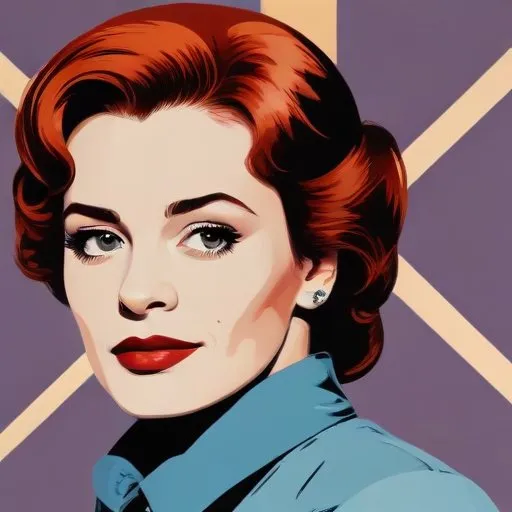
A British film and television actress, known for her leading roles in 1940s and 1950s dramas, often playing strong, independent women.
Anne Crawford, a British film actress, was the epitome of glamour and talent in the 1940s. Best known for her riveting performances in Millions Like Us (1943), Two Thousand Women (1944), and They Were Sisters (1945), Crawford captivated audiences with her versatility and emotional depth.
Born on November 22, 1920, in Palestine to a Scottish father and English mother, Crawford was raised in Edinburgh. Her upbringing instilled in her a strong sense of discipline and determination, which would eventually propel her to stardom.
In the 1940s, Crawford emerged as a leading lady in British cinema, alongside contemporaries Margaret Lockwood and Phyllis Calvert. Her breakthrough role in Millions Like Us (1943), a wartime drama, showcased her remarkable range and ability to convey the emotional turmoil of women during World War II.
Her subsequent performances in Two Thousand Women (1944) and They Were Sisters (1945) solidified her position as a sought-after actress, earning her critical acclaim and a devoted fan base.
In 1953, Crawford married Wallace Douglas, and the couple enjoyed a blissful three years together. Tragically, her life was cut short when she succumbed to leukemia on October 17, 1956, at the tender age of 35.
In her final days, Crawford demonstrated an extraordinary act of kindness by adding a codicil to her will, bequeathing her eyes to the International Eye Bank. This selfless gesture has inspired countless individuals and continues to serve as a testament to her compassion and generosity.
In addition to her film career, Crawford was an accomplished stage actress. At the time of her passing, she was performing in Agatha Christie's The Spiders Web at London's Savoy Theatre. Her final stage production, The Gift , poignantly highlighted her talent and dedication to her craft.
Anne Crawford's contributions to British cinema are undeniable. Her powerful performances and captivating on-screen presence helped shape the cinematic landscape of the 1940s. Her influence can be seen in the generations of actresses who followed in her footsteps, and her legacy continues to inspire new talent.
Anne Crawford's remarkable story serves as a poignant reminder of the transience of life and the enduring power of art. Though her life was tragically cut short, her impact on British cinema and her selfless legacy continue to inspire and captivate audiences to this day.
Born in 1913
A talented actress who won two Academy Awards for her iconic portrayals of Southern belles in "Gone with the Wind" and "A Streetcar Named Desire".
Born in 1907
A renowned thespian who dominated the British stage and screen, bringing Shakespearean characters to life with his commanding presence and rich voice.
Born in 1899
A renowned English actor, playwright, and composer, known for his witty humor, sophisticated style, and iconic works like "Private Lives" and "Blithe Spirit".
Born in 1908
Acclaimed filmmaker behind epic, visually stunning movies like "Lawrence of Arabia" and "Doctor Zhivago", known for his meticulous attention to detail and sweeping cinematography.
Born in 1902
A renowned stage and screen actor, celebrated for his distinctive voice and authoritative presence, starring in iconic films like "David Copperfield" and "Doctor Zhivago".
Born in 1908
A renowned stage and screen actress, best known for her iconic role in the 1945 film "Brief Encounter", which remains a timeless classic of British cinema.
Born in 1913
A renowned English actor, starring in iconic films like "Brief Encounter" and "The Third Man", bringing depth and nuance to his characters.
Born in 1921
A renowned actress of Hollywood's Golden Age, starring in iconic films like "From Here to Eternity" and "The King and I", earning six Academy Award nominations.
