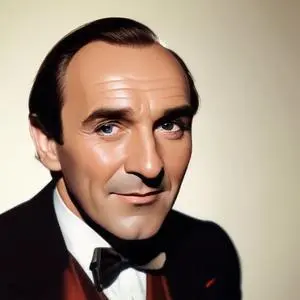
The Master of the Stage: Ralph Richardson's Enduring Legacy
A Titan of British Theatre
Ralph Richardson was a towering figure in British theatre, one of the trinity of male actors who dominated the 20th century stage alongside
John Gielgud and
Laurence Olivier. With a career spanning over five decades, Richardson left an indelible mark on the world of acting, earning himself a reputation as a master of character roles.
Early Life and Discovery
Born on December 19, 1902, Richardson came from an artistic but not theatrical background. It wasn't until he watched a production of Hamlet in Brighton that he was inspired to become an actor. He honed his craft in the 1920s with a touring company and later the Birmingham Repertory Theatre.
Rise to Stardom
In 1931, Richardson joined the Old Vic, where he played mostly Shakespearean roles. He succeeded Gielgud as the company's leader the following season, a position that taught him much about stage technique and catapulted him to stardom.
A Golden Era of Collaboration
The 1940s saw Richardson codirect the Old Vic company alongside Olivier and John Burrell. This fruitful collaboration led to some of his most celebrated roles, including Peer Gynt and Falstaff. The trio's success took them to Europe and Broadway in 1945 and 1946, before their eventual dismissal from the company in 1947.
A Prolific Career in Film
Richardson's film career began as an extra in 1931, but he soon landed leading roles in British and American films. Some of his notable works include
Things to Come (1936),
The Fallen Idol (1948),
Long Day's Journey into Night (1962), and
Doctor Zhivago (1965).
A Stage Partnership for the Ages
Richardson's frequent stage partnership with Gielgud was a highlight of his later years. Together, they worked with
Peter Hall's National Theatre, creating unforgettable performances that continue to inspire generations of actors.
Awards and Honors
- Appointed Knight Bachelor in 1953
- Won the BAFTA Award for Best British Actor for Long Day's Journey into Night in 1963
- Nominated for three Academy Awards
Legacy and Impact
Richardson's influence on modern society is undeniable. He was a master of character acting, bringing depth and nuance to complex roles. His work continues to inspire actors, directors, and writers, cementing his place as one of the greatest actors of the 20th century.
Richardson's remarkable career was cut short by his sudden death on October 10, 1983, at the age of 80. However, his legacy lives on, a testament to the power of his craft and the enduring impact he had on the world of theatre and film.
FAQ
Who is Ralph Richardson?
Ralph Richardson was an English actor who was one of the leading figures of the British theatre and film industry in the mid-20th century.
What were Ralph Richardsons most famous roles?
Richardsons most famous roles include his iconic performances in the films The Fallen Idol and The Heiress, for which he received Academy Award nominations.
What was Ralph Richardsons style of acting?
Richardson was known for his naturalistic and nuanced style of acting, which emphasized subtlety and understatement. He was highly respected by his peers and critics alike.
What awards did Ralph Richardson receive?
Richardson received several awards and honors for his work, including a BAFTA Award for Best British Actor and a Tony Award for Best Actor in a Play.
When did Ralph Richardson pass away?
Richardson passed away on October 10, 1983, at the age of 80, leaving behind a legacy of dedicated service to the British theatre and film industry.