


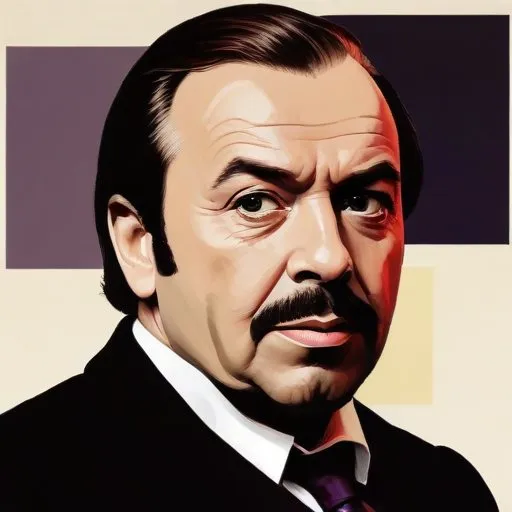
A renowned urban studies expert and prolific author, known for his groundbreaking work on urban planning, geography, and economic development.
Peter Hall, renowned as the most important figure in British theatre for half a century, was a trailblazing director who left an indelible mark on the world of theatre, opera, and film. With a career spanning over six decades, Hall was instrumental in shaping the artistic landscape of Britain, earning him unparalleled respect and admiration.
Born on November 22, 1930, in Bury St Edmunds, Suffolk, Hall was the only son of Grace Florence and Reginald Edward Arthur Hall. His early life was shaped by his father's profession as a stationmaster, which granted him a unique perspective on the world. Hall's passion for the arts was ignited during his time at The Perse School in Cambridge, where he won a scholarship to study English at St. Catharine's College, Cambridge.
Before embarking on his professional journey, Hall completed his National Service in Germany and produced and acted in several plays during his time at Cambridge. His directorial debut came in 1953 with The Letter by W. Somerset Maugham. This early success paved the way for Hall's future triumphs, including the UK premiere of Samuel Beckett's Waiting for Godot in 1955, which introduced London audiences to the Irish playwright's work.
In 1960, Hall co-founded the Royal Shakespeare Company, a venture that cemented his reputation as a visionary director. Under his guidance, the company flourished, producing iconic works that redefined the boundaries of theatre. Hall's subsequent tenure as director of the National Theatre (1973-1988) further solidified his position as a leading figure in British theatre.
Hall's creative prowess extended beyond the realm of theatre, as he ventured into opera, film, and television. He was artistic director of Glyndebourne Festival Opera (1984-1990) and later formed the Peter Hall Company (1998-2011). His work in television and film includes adaptations of Shakespearean plays, such as Hamlet (1969) and A Midsummer Night's Dream (1968).
In recognition of his immense contributions to the arts, Hall was appointed a Commander of the Order of the British Empire (CBE) in 1963. The Laurence Olivier Awards posthumously honored him by renaming the Best Director award the Sir Peter Hall Award for Best Director in 2018. Hall's passing on September 11, 2017, marked the end of an era, but his legacy continues to inspire generations of artists, directors, and audiences alike.
"Theatre is the most immediate, the most intimate, the most direct of all the arts. It is the only art form that can make you laugh, cry, and think all at the same time."
"Theatre is not a mirror held up to society, but a hammer with which to shape society."
Peter Hall's unwavering commitment to public funding for the arts has left a lasting impact on modern society. His tireless advocacy for the importance of arts in education and society has inspired numerous initiatives, ensuring the continued vibrancy of the arts in Britain.
Sir Peter Hall's extraordinary life and career serve as a testament to the transformative power of art. His boundless energy, creative vision, and unwavering dedication to his craft have left an indelible mark on the world of theatre, opera, and film. As we reflect on his remarkable journey, we are reminded of the profound influence he continues to exert on our cultural landscape.
Born in 1907
A renowned thespian who dominated the British stage and screen, bringing Shakespearean characters to life with his commanding presence and rich voice.
Born in 1904
A renowned thespian, celebrated for his commanding stage presence and iconic performances in Shakespearean plays and films, earning him a knighthood.
Born in 1902
A renowned stage and screen actor, celebrated for his distinctive voice and authoritative presence, starring in iconic films like "David Copperfield" and "Doctor Zhivago".
Born in 1882
A renowned stage actress of the early 20th century, celebrated for her powerful performances in Shakespearean plays and advocacy for women's rights in the theater.
Born in 1877
A pioneering figure in British theatre, known for innovative productions and plays that probed the human condition, influencing the development of modern drama.
Born in 1911
A renowned playwright and screenwriter of the 20th century, known for crafting intricate, emotionally charged dramas that probed the British upper class, often exploring themes of love, morality, and social convention.
Born in 1899
A renowned English actor, playwright, and composer, known for his witty humor, sophisticated style, and iconic works like "Private Lives" and "Blithe Spirit".
Born in 1923
A renowned actor, director, and producer who brought iconic films like "Gandhi" and "Jurassic Park" to life, earning numerous awards and accolades.
